Pages

Showing posts with label bad ideas. Show all posts

Wednesday, January 11, 2017

Work to Stop the DeVos Nomination to the Department of Education

You may already know that Betsy DeVos has been nominated to be the U.S. Secretary of Education. The confirmation hearing is scheduled for next week, currently scheduled for January 17th, 2017.

Senator Elizabeth Warren has written a letter with a lot of detail about DeVos' record. Read it here.

Here's Mark Maynard's summary of her letter. He's got pretty pictures.

The Network for Public Education is (and I am) asking you to take action to oppose the DeVos nomination.

As NPE writes:

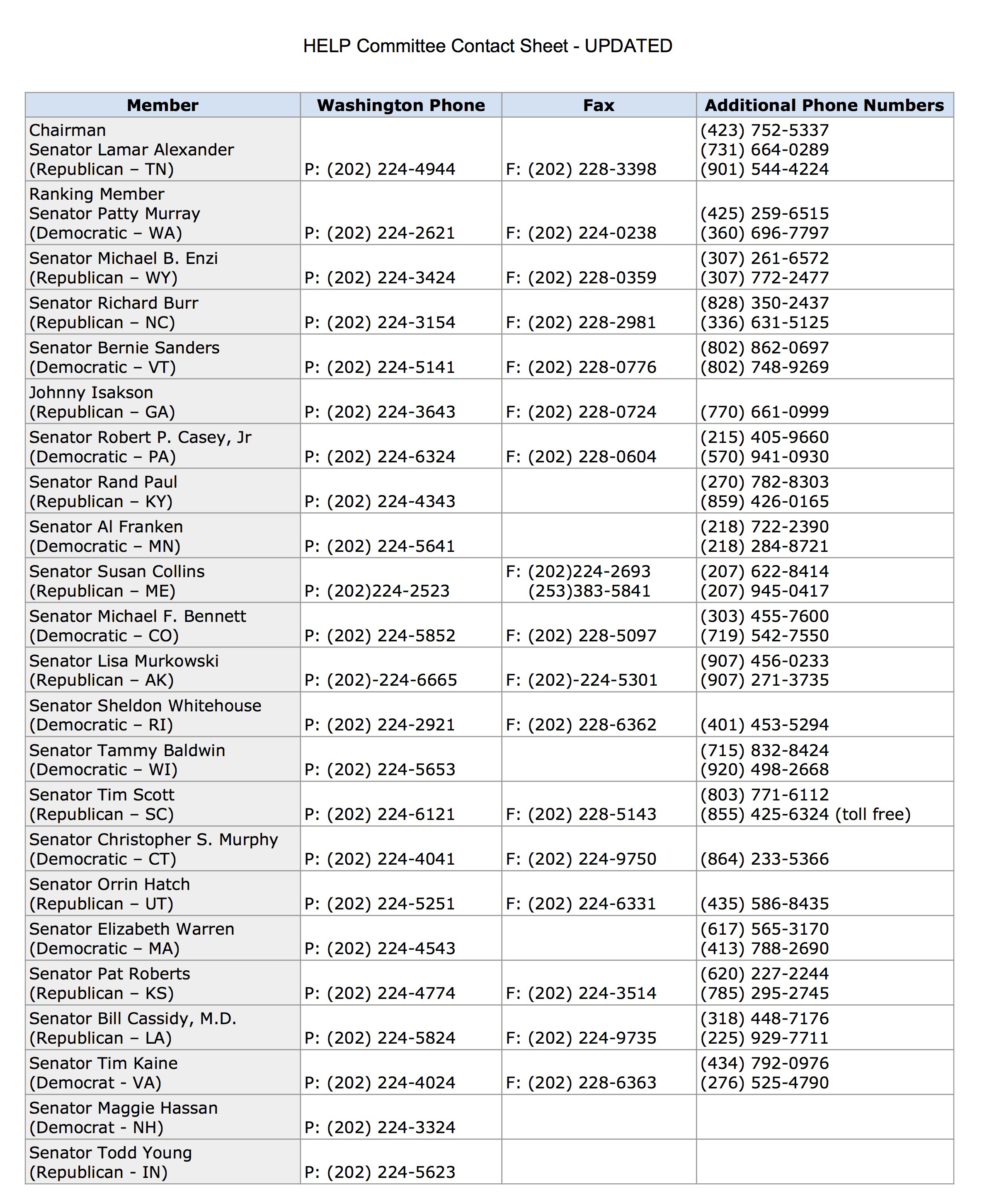
Below are committee members, along with their Washington phone number, fax numbers and local phone numbers. Often Washington numbers are busy. 
Please be sure to call every member prior to the January 17 hearing. 

Sample script: 
My name is xxxx and I am calling to let the Senator know that I would like him/her to oppose the appointment of Betsy DeVos for Secretary of Education.
DeVos and her family heavily lobbied the Michigan legislature to shield the charter industry from greater oversight. She pushes for-profit charter schools and online schools, which consistently fail the students that they are supposed to serve.
I want my tax dollars to stay in my community to support my public schools.  Betsy DeVos is bad for American education. She is unqualified to serve as Secretary of Education. 
(If you want to say more, read Sen. Warren's letter for lots of detail and ideas.)


US Senate Health, Education, Labor & Pensions (HELP) Committee


Consider subscribing to Ann Arbor Schools Musings by Email!

Wednesday, September 7, 2016

Good, And Plenty

Exactly three years ago I wrote a post about how I hate the "Exceptional" tag that the Ann Arbor Public Schools uses to promote their schools. You can read that post here.

I've thought some more about it. I still hate it. Because exceptional doesn't mean good, or excellent; exceptional means that we are better than everybody else.

That's not my goal. We don't need to think of ourselves as better than everybody else. I was thinking about it earlier this summer, and I believe there is a candy that represents my goal.


Here's what I want, for all schools.

Schools that are good, and that have plenty of opportunities for all kids.

That's my new slogan: Good, and Plenty


Consider subscribing to Ann Arbor Schools Musings by Email!

Friday, May 6, 2016

State House Burns Detroit Schools in Middle of Night Session

While we were sleeping, the State House Republicans pushed through some awful legislation that burns the Detroit schools. (In case you are wondering, the State Senate legislation is better, although in my opinion it is not better enough. But it is bipartisan.)


Pushed through. At 4:30 in the morning. That's a great time for decision-making, right?

Phone lines are open: Feel free to call House Speaker Kevin Cotter and give him a piece of your mind. Phone: 517-373-1789; Email: KevinCotter@house.mi.gov. 

The point, people, is that we would never. ever. ever. accept what they are doing to the Detroit Schools as equitable or just or reasonable or in the students' interests in Ann Arbor, Chelsea, Dexter, Okemos, East Grand Rapids...OR EVEN IN schools with a higher percentage of students of color like Southfield or Ypsilanti. 

Never. Ever. And that's because it's not equitable, just, reasonable, or in the students' interests.

[For instance--would we accept saying that all of the teachers have to apply for their jobs back, no guarantees, no union, and if they don't get them back, or don't apply, we can bring in uncertified teachers to teach our kids? I don't think so.]

And it's the same shameful thinking--death of a thousand cuts--that brings us the Flint lead crisis.

Which--in an educational sense--we will be paying for, for many years, because kids with lead poisoning will need special education services, which are mandated. [And by the way, a little shout out to all the Washtenaw County voters who said yes to the special education millage. Totally off topic, but...phew! We needed that.] Back to Detroit, where the schools probably need that money more.

What we can be proud of, folks, is the House Democratic caucus. There were some outstanding speeches. I am just sorry that some folks are either too thick skulled or too "in the pocket" of special interests (yes, I'm talking about the DeVos family agenda) to listen.

But do listen to the speeches:

Rep. Sherry Gay-Dagnogo of Detroit, and former DPS teacher:

"The package today builds on that foundation of institutional racism."


Rep. Sam Singh of East Lansing:

"Just because you say it's about the kids, doesn't mean it's about the kids."


Rep. Adam Zemke of Ann Arbor:

From his Facebook post:  
In the middle of the night, House Republicans rammed through a partisan package of bills created specifically to set Detroit Public Schools down a path of continued systemic financial and academic inadequacy. 
This package is intentionally designed to provide inadequate debt service toDPS, to incorporate uncertified teachers in their classrooms and to allow the continued proliferation of unchecked, low-quality schools in the City of Detroit. 
It's despicable, low-down and dirty politics to satisfy the sick desires of one family on the west side of the state. The House Republican's plan reflects that they are bought and paid for.


Last, but not least--

Seth Meyers, of Late Night with Seth Meyers, stands with Detroit teachers:


Consider subscribing to Ann Arbor Schools Musings by Email!

Thursday, October 15, 2015

State Legislation: Thank You, Local School Boards, Superintendents, Representatives

I think I would be remiss if I didn't thank the school board and superintendent (and, in fact, not just of Ann Arbor, but of Lincoln schools and maybe some other local ones as well), for taking policy issues to the legislators.

1. Ann Arbor Superintendent Jeanice Swift testified at a Senate Committee hearing against the idea of having guns, whether open carry or concealed carry, in schools. 

Here is an excerpt of her statement:
My remarks today are directed specifically toward the question of allowing concealed carry in pre K-12 schools.  
We recognize the proposed legislation is considered by some as a ‘fix,’ a compromise, an effective way to close the ‘open carry loophole’ that currently exists in Michigan law. Clearly, some consider ‘concealed carry’ as an improvement over ‘open carry.’ 
We understand that the stated intent of the legislation may in part be designed to remove the concerns with weapons that are visibly displayed in school and so prove a disruption to ensuring a safe, secure, learning environment. However, it is overwhelmingly clear that guns, visible or concealed, pose a significant risk to the safety and wellbeing of students, staff, and families at school.
You should read the rest, because Dr. Swift gives some shocking examples that happened in real life, that explain why guns in schools are a bad idea.

2. On the "third grade retention bill," which would provide interventions for struggling readers but also would require kids to be retained, the bill has passed out of the House more or less on party lines. My representative, Adam Zemke, originally was a co-sponsor but withdrew his support. According to this article,

The proposal was approved in a 57-48 vote, mostly along party lines, and now heads to the Senate. Democratic Rep. Adam Zemke of Ann Arbor, an original co-sponsor of the bill and key player in negotiations, withdrew support on the floor and removed his name from the measure.
Zemke had proposed an amendment to allow struggling readers to advance to fourth grade if they were working to improve under an individualized reading plan and had support from school administrators and parents. The amendment was rejected.
"This bill, without that amendment, then tells Johnny none of that (work) matters," Zemke said. "We're going to hold you back regardless. I am not going to remove the hope of a 9-year-old, period."

Thank you Lincoln Consolidated Schools Board for opposing this bill!
Thank you, Representative Zemke! The bill now goes to the Senate.

The bills go to the Senate next. The Capitol is
pretty. What's going on inside? Not so much.

3. The Teacher Evaluation bill passed the House. It's better than it was, but it's still (in  my opinion) bad, and I appreciate Rep. Jeff Irwin's opposition to this bill. He wrote on facebook:

I also have concerns about SB 103, the educator evaluation policy. My opposition stems in part from my opposition to the changes made to the tenure act in 2011. But, my opposition is deeper than my desire to stunt the effect of those changes. Mainly, I'm opposed to the bill because it accepts the toxic notion that education will be improved by more testing and more motivation for the teachers. This bill accelerates the problem we have with teaching to the test. If we want educators to teach to the test, the best way is to approve legislation like this that bases their employment and promotion on testing.
Also, I don't think the tests we're mandating produce consistent and reliable results. In other states that have adopted similar policies relying on testing growth (or value added), teachers are rated highly effective one year and then ineffective the next. The assessments bounce all over and this legislation will provide unreliable information to parents and school leaders. Our students and educators d
eserve better. 
(Emphasis added.)
Consider subscribing to Ann Arbor Schools Musings by Email!

Wednesday, May 13, 2015

Major Changes in Ann Arbor Schools Policies Again Put on Agenda at the Last Minute

Someone just alerted me to three new proposed policies, named the "prohibited subjects policies," that have been placed on tonight's board agenda, but were only placed there this afternoon...

I find the substance of the policies a bit shocking (although I assume they are influenced in some way by Michigan's right-to-work law, but I don't know much about the ins and outs of the law). But what is really shocking is that they are being added to the agenda at the last minute, especially given their content.

You can always look at the agenda and policies of the Ann Arbor schools board on BoardDocs, but if you were to look at them yesterday, you wouldn't (it seems) know what would be on the agenda tonight.

Here is the link to the proposed policies, but I'm just going to paste them in below as well, on the theory that most people will not click on the link. They're not that long....

BY THE WAY--
First Briefing means there is still time to let the Board of Education know what you are thinking: boe@aaps.k12.mi.us.

Policy #1:
Book AAPS Policies & Regulations Section 4000: Human Resources Title Placement of Teachers Number 4800 Status DRAFT Legal MCL §423.215(3)G).
The Superintendent or designee shall determine teacher placement based on qualifications (as defined by the District, which shall include but not be limited to state and federal requirements such as certification, highly qualified requirements, endorsements, etc.), the academic needs and best interest of District students, and the District's educational program. At all times, the District shall strive to place the most effective and qualified teachers in assignments aligned with student and District needs. Decisions about teacher placement, and the impact of such decisions on the individual teacher or the bargaining unit, shall not be the subject of any terms or conditions within a collective bargaining agreement between the District and a collective bargaining representative of such teachers. The Superintendent or designee may develop and adopt administrative regulations related to teacher placement. This policy supersedes all other policies on this issue.

Policy #2:
Book AAPS Policies & Regulations Section 4000: Human Resources Title Performance Evaluation Systems Number 4810 Status DRAFT Legal MCL 423.215(3)(!) MCL 38.93, as amended by Public Acts 100, 101 and 102, effective July 19, 2011 MCL 38.83a MCL 380.1248 MCL 380.1249, as amended by Public Act 257, effective June 30, 2014
The Ann Arbor Public Schools is responsible for the employment and supervision of all personnel. The District shall comply with Section 1249 of the Revised School Code, as amended from time to time, which mandates the inclusion of certain components within the District's performance evaluation system for teachers and school administrators who are regularly involved in instructional matters. Pursuant to Section 1249, the District shall: Adopt and implement for all teachers and school administrators a rigorous, transparent, and fair performance evaluation system. Evaluate the job performance of teachers and administrators using multiple rating categories that take into account data on student growth as a significant factor. Provide timely and constructive feedback to teachers and administrators regarding their job performance. Establish clear approaches to measuring student growth and provide teachers and school administrators with relevant data on student growth. Use the evaluations to inform its decisions on: the effectiveness of teachers and school administrators; promotion, retention, and development of teachers and school administrators, including providing relevant coaching, instructional support, and professional development; whether or not to grant tenure or full certification to teachers and school administrators; removing ineffective tenured and untenured teachers and school administrators. The District shall also comply with the requirements of the Michigan Teachers' Tenure Act with respect to the evaluation of teachers, as applicable. Decisions regarding the development, content, standards, procedures, adoption, and implementation of performance evaluation systems, and decisions about the content of performance evaluation systems, and the impact of such decisions on the individual employee or the applicable bargaining unit, shall not be the subject of any terms and conditions within a collective bargaining agreement between the District and a collective bargaining representative of its employees. The Board of Education delegates to the Superintendent or designee, the responsibility for taking appropriate action, including developing administrative regulations as needed, to adopt and implement a rigorous, transparent, and fair performance evaluation system in compliance with Section 1249. This policy supersedes all other policies on this issue.

Policy #3:
Book AAPS Policies & Regulations Section 4000: Human Resources Title Teacher Discipline, Demotion, or Dismissal Number 4820 Status DRAFT Legal MCL §423.215(3)(m MCL §§38.71-191

Teachers whose employment is regulated by the provisions of MCL §§38.71 through 38.191, inclusive, shall be disciplined, demoted or dismissed only for a reason that is not arbitrary or capricious. The Superintendent or designee shall ensure that decisions regarding the discipline, demotion and dismissal of teachers whose employment is regulated by MCL §§38.71 through 38.191 are consistent with this policy and the legal authority cited above. Decisions about the development, content, standards, procedures, adoption and implementation of a policy regarding discharge or discipline of a teacher, or the impact of those decisions on an individual teacher or the bargaining unit, shall not be the subject of any terms and conditions within a collective bargaining agreement between the District and a collective bargaining representative of its employees. The Superintendent or designee may develop and adopt administrative regulations that detail the standards or procedures for the discipline, demotion, and/or dismissal of teachers subject to this policy. This policy is applicable to teachers and school administrators whose employment is subject to section 1 of article l of the Michigan Teachers' Tenure Act. This policy supersedes all other policies on this issue.

Consider subscribing to Ann Arbor Schools Musings by Email!

Tuesday, March 24, 2015

Worth Your Time! Parent Presentation to AAPS Assessment Committee on Opting Out of the MSTEP

Angie Smith, one of the parents on the Ann Arbor Schools Assessment Advisory Committee, shared this powerpoint presentation with the committee this week, and has given me permission to share it with the rest of the world.

One more thing: in the "settings" on Google Slides (the little wheel option on the right side of the black bar at the bottomo), you can choose to look at the speaker notes, and I think you will find them helpful.


Consider subscribing to Ann Arbor Schools Musings by Email!
Thursday, March 12, 2015

Ann Arbor Public--And School Board--Want Guns Out of the Schools

In case you missed it, at last night's board meeting there were some nice statements from Superintendent Jeanice Swift, President Deb Mexicotte, and Secretary Andy Thomas. And there was also agreement from the board to ask the state to change the law. Show the school board some love for stepping up to the challenge! (In other words, tell them thank you.

Meanwhile, Josh Wade, the guy who started the whole thing off by bringing his gun into a choir concert, called schools "mass murder enablement zones" during public speaking time. You can't make these things up! Aside from the Wade family, most of the "open carry" people came from out of the county.

Read: 

Dr. Swift's Comments

Nice quote:

The presence of guns in schools runs contrary to everything we are wired for in education, and we believe it is counterproductive to maintaining a rich, productive, and healthy learning environment for our children.

Deb Mexicotte's Comments

Nice quote: 
There are those that somehow think that this discussion is outside of our purview as a Board, or that we are somehow passive bystanders as the debate around school safety and the law ensues. That the law is the law and we are simply the willing sheep that follow and enforce it. That is not the case...We are bound to follow the law, but we are not required to agree with it. As a matter of fact, if there is law that is detrimental to what we believe is in the best interests of our students or our citizens, it is our responsibility to work to get that law changed. We pass resolutions, lobby Lansing and chide the Governor on a regular basis when we think something is in need of change. The policy on CPL owners in gun free zones is no different than railing against the funding model of Proposal A, or the interpretation of the State Constitution allowing alternate uses of the School Aid Fund.

Andy Thomas' statement

Nice quote: 
First, the “open carry” law as it exists in Michigan and as it applies to our schools places our principals and teachers in a completely untenable position. The presence in a school of an individual with a gun is a potential threat to the safety of children. Principals and teachers will have to act very quickly to assess the threat. The stakes involved in making the wrong assessment are incalculable, adding even more stress to an already stressful profession. Open carry needlessly turns principals and teachers into security guards instead of educators.

Teacher Trevor Staples asked people on twitter to show what they would like to open carry. I like this one: 


We definitely need more clipboards, fewer guns.
Screen shot from twitter, 3/12/2015.

I asked for haikus about Open Carry. I got these two: 

Thank you haiku artists! Screen shot from twitter, 3/12/2015.


Consider subscribing to Ann Arbor Schools Musings by Email!

Wednesday, February 25, 2015

Guess Who's Evaluating Those Standardized Tests? (I Wish This Were a Joke!)

From an ad on Craigslist:

"The starting pay is $10.70 per hour." For that sum, I'm sure they are getting
some highly skilled staff. Screenshot from Craigslist.

Who? Measurement Incorporated

We are a diverse company engaged in educational research, test development, and the scoring of tests administered throughout the world. 

What? Reader/Evaluator Position

If you qualify as a reader/evaluator, you will be eligible to work on a number of our projects. Many projects require readers to score essays for content, organization, grammatical convention, and/or the student's ability to communicate and to respond to a specific directive. Other projects involve scoring test items in reading, math, science, social studies, or other subject areas. The tests you will score come from many different states and from students at all grade levels, elementary through college, depending on the project.

Where and when? 


Starting in March of 2015 , day and evening shift, in Ypsilanti!

REQUIREMENTS

Bachelor's degree in any field
Ability to perform adequately on a placement assessment

HOURS: Temporary, but 5 days/week.

PAY: The starting pay is $10.70 per hour. 


Yet we are going to use these temporary employees to evaluate our students' work, and our teachers. Yippee.


Consider subscribing to Ann Arbor Schools Musings by Email!

Thursday, February 19, 2015

The Governor's FY 2015-2016 Budget: What Does All This Mean To You?

This is a guest post by A3 Teacher:

As the State lays out its K-12 budget for the 2015-16 school year, there are some interesting things to note.  

First, Governor Snyder is claiming a $75 per pupil increase across the board for all schools.  

While on the surface this seems wonderful, the reality for some school districts is that this will result in a net loss.  While increasing the per pupil amount, other aspects of funding are being reduced or disappearing (for example the “best practices” incentive and performance incentive). 

 According to MLive’s article and database, Ann Arbor Public Schools would stand to lose $55 per pupil, Ypsilanti Community School would stand to gain $176 per pupil, Saline Area Schools would lose $10 per pupil, Dexter Community Schools would lose $44 per pupil, Chelsea would gain $28 per pupil, and Whitmore Lake would gain $25 per pupil.

[Ed. Note: Here is a nice piece about the implications of this so-called increase for one school district, written by the Superintendent of the Godfrey-Lee Public Schools.]

Now for the 2014-2015 fiscal year, there is a surplus in the K-12 School Aid Fund to the tune of $284.4 million; conversely the General State Budget is short $454 million.  Right now the Michigan legislature is figuring out ways to take that K-12 surplus to pay for our general fund shortfall. 


Wouldn’t it make sense that money allocated for K-12 education should go towards education?  

A surplus in the K-12 School Aid Fund should be reinvested in students, not used to pay a general fund deficit.  


Consider subscribing to Ann Arbor Schools Musings by Email!

Wednesday, February 18, 2015

You Should Be Super Mad Right Now: Legislators Rob School Aid Fund

As a friend wrote on Facebook, 


"This just makes my blood boil."

What was she talking about? She was talking about today's House vote to steal money from the School Aid Fund to fill a General Fund deficit. 


This clip art is derived from clip art
released into the public domain by the 
Open Clip Art Library. clipartist.net also recommends donating
any clip art you make to the 
Open Clip Art Library
and any images you create to 
Wikimedia Commons.

Excerpt #1 from Kyle Feldscher's MLive article, or 
How are we screwing our school districts this time?:
HB 4110 would shift $167 million from the K-12 portion of the School Aid Fund to the community college portion of the fund. The money that would be freed up by the move would then go toward the general fund deficit.
The legislation also uses $80 million that was initially intended to be paid toward Michigan Public School Employees Retirement System (MPSERS) to pay down the deficit. That payment would have been above and beyond the required payment to MPSERS, according to state officials.
"Two hundred and fifty million dollars is being siphoned from the School Aid Fund," said Rep. Sarah Roberts, D-St. Clair Shores. "This money could be used to significantly increase the foundation allowance in support of improving education here in the state of Michigan."


Excerpt #2: 
In which the Republican legislators try to make this sound like it's budget-neutral. It's not.

The School Aid Fund was projected to end the fiscal year with a $283.5 million surplus.

Rep. Al Pscholka, R-Stevensville, said he was voting in favor of the bill in order to balance the budget and "uphold the Constitution." The Michigan Constitution requires a balanced budget.
"I'm proud of the fact that we are balancing this budget without touching kids, without touching colleges, without touching universities," Pscholka said.


The House passed the bill 62-48. Surprise! It was mostly Republicans who voted for it, and Democrats who voted against it.

And here's Excerpt #3, which explains something you might be wondering:
Why do we have this deficit after all? I thought there was going to be a budget surplus! (You weren't dreaming.)

The budget shortfall in fiscal year 2015 is the result of businesses in Michigan cashing in old Michigan Business Tax credits issued between 1996 and 2011. Representatives from the Michigan Economic Development Corporation said Wednesday the state is on the hook for $9.38 billion in leftover tax liability until 2032 due to the credits.
Right. You read that correctly. 9.38 BILLION DOLLARS. I can predict how this story goes over the next ten years. Unless we change what we're doing.

Translation: We could have shored up our schools' foundation allowances. We could have supported the school retirement funds and thus reduced the burden on our schools (which now spend something like 1/4 of their foundation allowance on pensions). We could have protected the school aid fund for K-12 funding. [And really--I'm all for community colleges! But as I mentioned the other day, we already pay--quite a bit--for them.]

In any case, we should not be subsidizing businesses at the expense of schools.
I suppose you could still say something to your state senator...if you live somewhere else. I'm pretty sure Sen. Rebekah Warren already agrees with me.


Consider subscribing to Ann Arbor Schools Musings by Email!

Sunday, August 10, 2014

Can an On-line Course Teach Poetry Slams? A Guest Post by A3 Teacher

This is Part 2 of two posts about online learning by A3 Teacher. Here is Part 1.


Last week I wrote about my experience as a student taking an online course. In my experiences, as both a student and teacher, critical thinking skills are better developed in a traditional classroom.


Many on-line schools would like to give you the idea that you can teach or do (almost) anything virtually that you can do in person. For example, for the past several years, the Michigan Virtual University has hosted a Poetry Slam Contest.  Check out the video below.


Anyone who has been to an Ann Arbor Poetry Slam will be able to clearly see, hear, and feel the difference.  


Screen shot from a Communicator article which featured
the high school poetry slam. Videos are embedded
in the article.

[Editor's Note: I couldn't figure out how to embed any of these videos, BUT if you click on the link you can watch several videos from an Ann Arbor Poetry Slam.]


In this case, I believe that the coaching, mentoring, and collaboration of face-to-face meetings results in a drastic comparison.  This is just one comparison that is an example of the depth of learning and skill-building that can happen in a classroom.  


Classrooms benefit from face-to-face interaction and discussions.  Most private schools in the Ann Arbor area do not offer online classes but instead focus on the development of relationships and cultivating inquiry and deep critical thinking skills.  Some classes are taught “seminar-style” where discussion about topics and texts is in-depth and focuses on critical engagement and theory work.  Programs such as International Baccalaureate build on the concept of mastery through the intense development of discussion, verbal practice, and depth of knowledge. Certain assessments for the IB are audio recorded and sent to other countries for objective assessment.  

I am not yet convinced that online learning has reached the ability to adequately serve even the highest achieving students.


Something different happens in a classroom discussion that cannot be replicated online.  In the on-line class I took, most of the time I spent posting to the online discussion took 5-10 minutes each.  I could also be very selective in what I read (whose posts I read) and which posts I responded to.  In contrast, a Socratic Seminar, or a discussion that pulls in students’ perceptions and opinions, or a real-time discussion that can go on for over an hour is an important skill for students to master (this being said, discussions can also go very poorly without clear parameters or an instructor who knows how to guide students).  


When students engage in sustained reading, writing, and thinking, they develop critical thinking skills that develop true depth and mastery.  A Harvard professor has students spend three hours in an art gallery staring at a painting as part of an assignment.  She states that “Every external pressure, social and technological, is pushing students in the other direction, toward immediacy, rapidity, and spontaneity—and against this other kind of opportunity. I want to give them the permission and the structures to slow down.”  This is crucial.  


When a student spends 45 minutes with a primary document, or 70 minutes discussing a 10-line poem, or 50 minutes debating the ethics of cloning, students learn how to slow down, listen, and think.  This does not mean that discussions won’t get messy (sometimes good discussions have no definite result or a clear decisive outcome), but it means that students will develop deep critical thinking skills that will benefit them in a variety of areas in life.  Students learn impulse control and to consider multiple viewpoints as opposed to seeing the world in a reactionary and simplistic way. 

Something different happens in the human brain when students spend long amounts of time thinking, reading, writing, and listening. These processes - reading, writing, and thinking - go hand in hand. Isn't that what we want?


Consider subscribing to Ann Arbor Schools Musings by Email!

Tuesday, May 20, 2014

Reflections on Ypsilanti Community Schools, Year 1: Take the Survey

It was--and is--a BIG DEAL.
Last year, Ypsilanti and Willow Run schools consolidated into Ypsilanti Community Schools, and it has been a year of firsts.

It's time for a little reflection. If you are a teacher, staff person, parent, student, community member with some thoughts about the district, I'm asking you to share your thoughts and ideas--the good, the bad, and what can be improved.

Take the survey! I will share results, probably sometime next week.

NOTE: You may have noticed that I removed the YCS logo. The district was concerned people might think this survey was endorsed, or organized, by the district. It isn't. It's organized by me alone. To share what the community is thinking. I hope there will be a wide cross-section of responses. 


Consider subscribing to Ann Arbor Schools Musings by Email!


Tuesday, May 13, 2014

State Budget Discussions: School Implications, Again

Budget Season is Back


Steve Norton of Michigan Parents for Schools wrote last week:


After a three-week break in April, the State Legislature is back at it again. It's budget season in an election year, which means that lawmakers will be trying to satisfy voters by showing some support for key programs such as our public schools -- or at least give the appearance of doing so.
He notes that the state's revenue projections, coming out this week, will have a major impact. The first projection came out today (two more coming tomorrow and Thursday), and at least the first projections don't look too good for schools--given that they are clearly an afterthought for Snyder and Company.

According to this article, the House Fiscal Agency projects that "The state will bring in about $400 million a year less in revenue than officials estimated in January." [Note: revenues are growing. Just not as much as the projections from earlier this year, which were revised to be ever more optimistic.]

Further, according to the article,
Net state revenue is projected to dip just under 1% in 2013-14, the report says. While general fund revenue is expected to dip 3% — or $290 million — to $9.3 billion. The net School Aid Fund revenue is expected to increase about 1.5% — or $169 million — to $11.4 billion. Net revenue still is expected to increase significantly in 2014-15 and 2015-16, just not by as much as projected earlier.
And--there is significant competition for any money that is seen as "extra" for road funding and the Detroit bankruptcy. And also--the Detroit News is reporting that the Education Achievement Authority administrators are jet-setting around the country while the rest of the state loans them money.


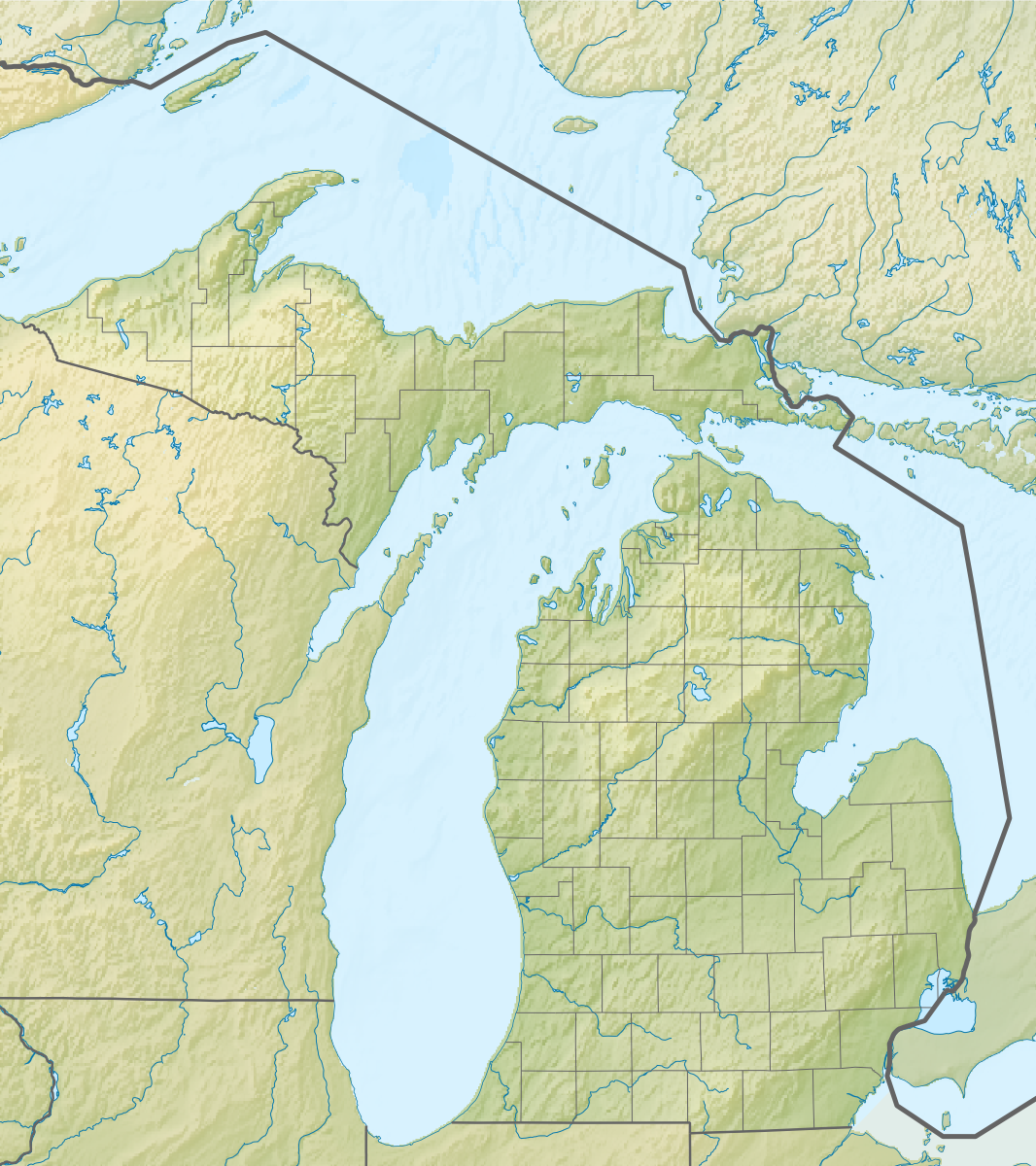
Big, beautiful Michigan does not want to fund its
schools properly. (At least, its government doesn't.)
Map taken from:
http://upload.wikimedia.org/wikipedia/commons/8/89/Relief_map_of_USA_Michigan.png


School Funding Proposals


According to Michigan Parents for Schools, the current proposals for school funding are as follows:


Governor's proposalHouse versionSenate versionInflation projections
Minimum: +$111 (to $7,187), 1.6% increase
Basic (maximum) +$83 (to $8,132), 1.0% increase
Minimum +$112,1.6% increase
Basic +$56, 0.7% increase
Min +$300,4.2% increase
Basic +$150,1.9% increase
2014 forecast: 1.3%
Avg. 2011-13: 2.3%
These increases do not reflect other changes, like "best practices" and pension plan cost changes, which may raise or lower the per-pupil funding available.

Or, as Christine Stead (AAPS school board member) succinctly states in describing the impact on Ann Arbor schools (this helped me visualize the numbers)
One would think that our FY15 will be much better [ed. note: due to the economic recovery] and we can look forward to investing again in one of our most important economic drivers: high quality education. Until you review the state’s proposals ($$ shows the impact for AAPS):
Governor’s proposal: $55,000
  Senate proposal: ($2,171,000)  House proposal: ($1,276,000) 
There is a serious disconnect in how our schools are funded, the state of our economy, and any local community’s ability to do anything about it (currently).
Multiply that by schools around the state. 


Talking Points


Michigan Parents' for Schools talking points:
At the very least, all districts deserve an increase in per-pupil funding that allows them to keep up with inflation. 
These increases should be calculated after the impact of other changes such as shifts in state pension costs, not before.  
Current law specifies that school districts should get a supplement in their per-pupil funding for every student from a family living below the poverty line. But we have never fully funded this provision, and the current spending level only covers half of what the law requires. We need to give our schools the resources they need to fight the impact of poverty, and all schools should be eligible for these funds. 
Right now, local school districts must take money from their general education funds in order to meet their important (and legally required) obligations to provide special education services. Our schools should not have to choose between meeting their moral and legal obligations to students with disabilities and having sufficient resources for all their students.
It's hard not to feel despairing about the impact we can have. 
But we need to keep trying.


Giving Input on Proposal A


Christine Stead is asking for some specific input. Here's why:


John [Austin, President of the State Board of Education], and the State Board of Education, has started a process to seek input from different organizations on the impact of Proposal A and the general funding experience for public education.  The process will shift to take input from community members and school systems over the next few months.  Presentations made so far can be found here.
I will accompany the Superintendent and CFO from the AAPS on June 17th to submit the AAPS experience and recommendations for changes to Proposal A.
If you have specific suggestions, Christine Stead would like to hear from you with your suggestions about changes to Proposal A. She writes, 
Folks can either email me or submit comments/questions to this site [k12christinestead.com]. I’ll do what I can to get answers to questions. I also don’t mind submitting folks’ comments to the State Board of Education as part of our testimony – especially if they lead toward solutions. You can use either email for me: steadc@aaps.k12.mi.us or christine.stead@gmail.com. 

Consider subscribing to Ann Arbor Schools Musings by Email!

Sunday, April 20, 2014

Why Girls and People of Color are Less Likely to Choose Science

One summer, in the middle of college, I worked for a Parks Council project in Central Park in Manhattan, supervising 24 high school students on a jobs training program. I wrote about this experience in the context of a proposed jobs bill by Obama back in September 2011.

In 1983, I scored a summer job working for the Parks Council in New York City.  I was a "supervisor" of two team leaders and 24 high school students for a CETA jobs program. There were 20 African-American kids and 4 Latino/Latina kids; the team leaders were a Latino community college student and an African-American student from Howard University. I was the only white person, for the first time in my life.
Do you remember CETA? It was the Comprehensive Employment and Training Act, a federal program that offered people with low incomes, as well as the long-term unemployed, with jobs and job training programs in the public and non-profit centers.
I think because I was white, I got assigned to the tony southern end of Central Park. Some of the other New York City parks were not so nice, and they had longer commutes from my house. At lunchtime I could sit by myself, or with my boyfriend, and watch Dustin Hoffman eat his lunch with his friends. Yes, he would come to the park too. 

The animals had been removed from the Central Park Zoo by 1983.
Our headquarters were in the Central Park Zoo, which was mostly closed for renovation in 1982--a good thing since the original animal stalls were truly prison cells. There is a nice history of the zoo here. The only animals that I remember still being at the zoo were the sea lions. (Photo taken from here.)
The kids taught me slang--"I've got my main squeeze and my two side squeeze"--as well as why we couldn't rake leaves in certain areas (rats). I'm not sure what I taught them. . .
But one day we were on a field trip and one of the girls came up to me. She had just finished 10th grade and she was probably the most diligent worker in the group. Her mother was from Jamaica and worked as a nurse's aide.
"I was thinking," she said to me, "that maybe I could become an LPN [Licensed Practical Nurse].""Great!" I said. "That's a great idea!"
But in my heart, I thought, "Why be an LPN? You're smart enough to be an RN or a BSN. In fact, why not be a doctor? You're smart enough to be a doctor."
I didn't say that to her though.
Why didn't I say that to her? Well, probably partly because I was only 20. I couldn't even give myself career advice.But probably also because I wasn't trained to have Great Expectations from poor black kids.
I flashed back to this memory when I heard Neil DeGrasse Tyson address the question, "Why don't girls choose science?" It's worth--really worth--listening to his answer. [I couldn't figure out how to set this to start at 1:01:31, but that's where you want to start it.]


Consider subscribing to Ann Arbor Schools Musings by Email!

AddThis