Pages

Showing posts with label legislators. Show all posts

Thursday, September 24, 2015

Reading--The Legislature Is Too Interested, the State Supreme Court Is Not Interested Enough

Third Grade Reading Bill Passes House Education Committee--What's In It?


The "third grade reading bill," as it is being called in shorthand, has passed the state house education committee. To my great disappointment, my representative (Adam Zemke) has signed on as a sponsor.


5) BEGINNING WITH PUPILS ENROLLED IN GRADE 3 DURING THE 2016-
8 2017 SCHOOL YEAR, ALL OF THE FOLLOWING APPLY:
9 (A) IF A PUPIL ENROLLED IN GRADE 3 IN A SCHOOL DISTRICT OR
10 PUBLIC SCHOOL ACADEMY IS RATED 1 FULL GRADE LEVEL OR MORE BEHIND IN
11 READING, AS DETERMINED BY THE DEPARTMENT BASED ON THE READING
12 PORTION OF THE GRADE 3 STATE ENGLISH LANGUAGE ARTS ASSESSMENT, THE
13 BOARD OF THE SCHOOL DISTRICT OR BOARD OF DIRECTORS OF THE PUBLIC
14 SCHOOL ACADEMY IN WHICH THE PUPIL IS ENROLLED SHALL ENSURE THAT THE
15 PUPIL IS NOT ENROLLED IN GRADE 4 UNTIL 1 OF THE FOLLOWING OCCURS:
16 (i) THE PUPIL ACHIEVES A GRADE 3 LEVEL READING SCORE AS
17 DETERMINED BY THE DEPARTMENT BASED ON THE GRADE 3 STATE ENGLISH
18 LANGUAGE ARTS ASSESSMENT.
19 (ii) THE PUPIL DEMONSTRATES A GRADE 3 READING LEVEL THROUGH
20 PERFORMANCE ON AN ALTERNATIVE STANDARDIZED READING ASSESSMENT
21 APPROVED BY THE SUPERINTENDENT OF PUBLIC INSTRUCTION.
22 (iii) THE PUPIL DEMONSTRATES A GRADE 3 READING LEVEL THROUGH A
23 PUPIL PORTFOLIO, AS EVIDENCED BY DEMONSTRATING MASTERY OF ALL GRADE
24 3 STATE ENGLISH LANGUAGE ARTS STANDARDS THROUGH MULTIPLE WORK
25 SAMPLES.

26 (B) IF A CHILD YOUNGER THAN 10 YEARS OF AGE SEEKS TO ENROLL
27 FOR THE FIRST TIME IN A SCHOOL DISTRICT OR PUBLIC SCHOOL ACADEMY IN 
1 GRADE 4, THE BOARD OF THE SCHOOL DISTRICT OR BOARD OF DIRECTORS OF
2 THE PUBLIC SCHOOL ACADEMY SHALL NOT ALLOW THE CHILD TO ENROLL IN
3 GRADE 4 UNLESS 1 OF THE FOLLOWING OCCURS:
4 (i) THE CHILD ACHIEVES A GRADE 3 LEVEL READING SCORE AS
5 DETERMINED BY THE DEPARTMENT BASED ON THE READING PORTION OF THE
6 GRADE 3 STATE ENGLISH LANGUAGE ARTS ASSESSMENT.
7 (ii) THE CHILD DEMONSTRATES A GRADE 3 READING LEVEL THROUGH
8 PERFORMANCE ON AN ALTERNATIVE STANDARDIZED READING ASSESSMENT
9 APPROVED BY THE SUPERINTENDENT OF PUBLIC INSTRUCTION.
10 (iii) THE CHILD DEMONSTRATES A GRADE 3 READING LEVEL THROUGH A
11 PUPIL PORTFOLIO, AS EVIDENCED BY DEMONSTRATING MASTERY OF ALL GRADE
12 3 STATE ENGLISH LANGUAGE ARTS STANDARDS THROUGH MULTIPLE WORK
13 SAMPLES.


In other words--typically a student could be held back based on just his or her performance on a state test. 

14 (C) SUBJECT TO SUBSECTION (12), IF A PUPIL IS NOT ENROLLED IN
15 GRADE 4 DUE TO THE OPERATION OF THIS SUBSECTION AND THE PUPIL HAS
16 DEMONSTRATED PROFICIENCY IN MATHEMATICS, SCIENCE, WRITING, OR
17 SOCIAL STUDIES AS DETERMINED BY THE GRADE 3 STATE ASSESSMENT IN THE
18 APPLICABLE SUBJECT AREA OR BY THE PUPIL'S GRADE 3 READING TEACHER,
19 THE BOARD OF THE SCHOOL DISTRICT OR BOARD OF DIRECTORS OF THE
20 PUBLIC SCHOOL ACADEMY SHALL ENSURE THAT THE PUPIL IS PROVIDED WITH
21 INSTRUCTION COMMENSURATE WITH THE PUPIL'S ACHIEVEMENT LEVEL IN THAT
22 SPECIFIC SUBJECT AREA. THIS INSTRUCTION MAY BE GIVEN IN A GRADE 4
23 CLASSROOM SETTING.


In other words, a student might be "moved up" to Grade 4 for math and science and social studies, and then pulled out for reading intervention, but not actually called a "4th grader" unless his or her reading progressed.

24 (6) FOR PUPILS WHO ARE NOT ADVANCED TO GRADE 4 OR CHILDREN WHO
25 ARE NOT ENROLLED IN GRADE 4 DUE TO THE OPERATION OF SUBSECTION (5),
26 THE SCHOOL DISTRICT OR PUBLIC SCHOOL ACADEMY SHALL PROVIDE A
27 READING INTERVENTION PROGRAM THAT IS INTENDED TO CORRECT THE 
1 PUPIL'S SPECIFIC READING DEFICIENCY, AS IDENTIFIED BY A VALID AND
2 RELIABLE ASSESSMENT, AND ADDRESS ANY BARRIERS TO READING. THIS
3 PROGRAM SHALL INCLUDE EFFECTIVE INSTRUCTIONAL STRATEGIES NECESSARY
4 TO ASSIST THE PUPIL IN BECOMING A SUCCESSFUL READER, AND ALL OF THE
5 FOLLOWING FEATURES, AS APPROPRIATE FOR THE NEEDS OF THE INDIVIDUAL
6 PUPIL:
7 (A) A REDUCED PUPIL-TEACHER RATIO OR 1-TO-1 READING
8 INTERVENTION WITH A VOLUNTEER.
9 (B) ASSIGNING TO THE PUPIL A HIGHLY EFFECTIVE TEACHER OF
10 READING AS DETERMINED BY THE TEACHER EVALUATION SYSTEM UNDER
11 SECTION 1249, THE HIGHEST EVALUATED TEACHER IN THE SCHOOL AS
12 DETERMINED BY THAT SYSTEM, OR A READING SPECIALIST.
13 (C) READING PROGRAMS THAT ARE RESEARCH-BASED AND HAVE PROVEN
14 RESULTS IN ACCELERATING PUPIL READING ACHIEVEMENT WITHIN THE SAME
15 SCHOOL YEAR.
16 (D) READING INSTRUCTION AND INTERVENTION FOR THE MAJORITY OF
17 PUPIL CONTACT TIME EACH DAY THAT INCORPORATES OPPORTUNITIES TO
18 MASTER THE GRADE 4 STATE STANDARDS IN OTHER CORE ACADEMIC AREAS.
19 (E) DAILY TARGETED SMALL GROUP OR 1-TO-1 READING INTERVENTION
20 THAT IS BASED ON PUPIL NEEDS, DETERMINED BY ASSESSMENT DATA, AND ON
21 DIAGNOSED BARRIERS TO READING AND THAT INCLUDES EXPLICIT AND
22 SYSTEMATIC INSTRUCTION WITH MORE DETAILED AND VARIED EXPLANATIONS,
23 MORE EXTENSIVE OPPORTUNITIES FOR GUIDED PRACTICE, AND MORE
24 OPPORTUNITIES FOR ERROR CORRECTION AND FEEDBACK.
25 (F) ADMINISTRATION OF ONGOING PROGRESS MONITORING ASSESSMENTS
26 TO FREQUENTLY MONITOR PUPIL PROGRESS.
27 (G) SUPPLEMENTAL RESEARCH-BASED READING INTERVENTION DELIVERED 
1 BY A TEACHER OR TUTOR WITH SPECIALIZED READING TRAINING THAT IS
2 PROVIDED BEFORE SCHOOL, AFTER SCHOOL, DURING REGULAR SCHOOL HOURS
3 BUT OUTSIDE OF REGULAR ENGLISH LANGUAGE ARTS CLASSROOM TIME, OR ANY
4 COMBINATION OF THESE.
5 (H) PROVIDES PARENTS AND LEGAL GUARDIANS WITH A "READ AT HOME"
6 PLAN OUTLINED IN A PARENTAL CONTRACT, INCLUDING PARTICIPATION IN
7 PARENT AND GUARDIAN TRAINING WORKSHOPS AND REGULAR PARENT-GUIDED OR
8 GUARDIAN-GUIDED HOME READING.


Yes, that would mean the teacher assessed as "highly effective" based in large part on test score evaluations. And who is going to pay for the reading interventions? 

[Side note, but totally relevant: The ACLU of Michigan had brought a lawsuit forward based on Highland Park's failure to teach kids to read, and the Supreme Court of Michigan just declined to hear it. People, it's all about funding, and poverty... Go to the end of this piece to read an excerpt of the ACLU statement, or follow the link.]

9 (7) IF THE SUPERINTENDENT OF THE PUPIL'S SCHOOL DISTRICT OR
10 CHIEF ADMINISTRATOR OF THE PUPIL'S PUBLIC SCHOOL ACADEMY GRANTS A
11 GOOD CAUSE EXEMPTION FROM THE REQUIREMENTS OF SUBSECTION (5)(A) FOR
12 A PUPIL, THEN A PUPIL MAY BE ADVANCED TO GRADE 4 WITHOUT MEETING
13 THE REQUIREMENTS OF SUBSECTION (5)(A). A GOOD CAUSE EXEMPTION MAY
14 BE GRANTED ONLY ACCORDING TO THE PROCEDURES UNDER SUBSECTION (9)
15 AND ONLY FOR 1 OF THE FOLLOWING:
16 (A) THE PUPIL IS A STUDENT WITH AN INDIVIDUALIZED EDUCATION
17 PROGRAM WHOSE INDIVIDUALIZED EDUCATION PROGRAM TEAM DETERMINES THAT
18 THE PUPIL IS INELIGIBLE TO TAKE THE STANDARD GRADE 3 STATE
19 ASSESSMENT, OR THE MI-ACCESS ASSESSMENT OR ANY SIMILAR ALTERNATIVE
20 STATE ASSESSMENT, ACCORDING TO HIS OR HER INDIVIDUALIZED EDUCATION
21 PROGRAM.
22 (B) THE PUPIL IS A LIMITED ENGLISH PROFICIENT STUDENT WHO HAS
23 HAD LESS THAN 2 YEARS OF INSTRUCTION IN AN ENGLISH LANGUAGE LEARNER
24 PROGRAM.
25 (C) THE PUPIL HAS RECEIVED INTENSIVE READING INTERVENTION FOR
26 2 OR MORE YEARS BUT STILL DEMONSTRATES A DEFICIENCY IN READING AND
27 WAS PREVIOUSLY RETAINED IN KINDERGARTEN, GRADE 1, GRADE 2, OR GRADE 
1 3.


For crying out loud! This implies that you could have 10 and 11 year olds in with your 8 year olds. Think that makes any sense developmentally? 

It's also worth noting that dyslexia organizations are upset this bill was developed without them. Reading disabilities are often not diagnosed until third or fourth grade.

Here's the full bill


***********************************************************

Supreme Court Refuses to Hear ACLU of Michigan lawsuit

The ACLU had brought forward a case filed on behalf of eight public-school students in Highland Park who contend that the district has failed to meet its obligation to ensure basic literacy skills among children in the district.


By car, it's a little over an hour to drive from Highland Park to Lansing,
but clearly it's a world away. Screenshot from Google Maps.
As the ACLU writes, "Today the state Supreme Court refused to hear a case that ruled against children whose schools have failed to teach them to read.   While the trial court decided that The appellate court said that the state has no enforceable duty to ensure that schoolchildren actually learn fundamental skills such as reading – but rather is obligated only to establish and finance a public education system, regardless of the quality of that system. Waving off decades of historic judicial precedent, the majority opinion contended that “judges are not equipped to decide educational policy"... 

Dissenting from the majority opinion, Judge Douglas Shapiro accused the Court of Appeals of “abandonment of our essential judicial roles, that of enforcement of the rule of law even where the defendants are governmental entities, and of protecting the rights of all who live within Michigan’s borders, particularly those, like children, who do not have a voice in the political process. 

ALSO (my summary): The Supreme Court ACKNOWLEDGED an abysmal failure of the system, but by refusing to hear the case essentially said, "It's not our problem."

 *************************************************************** 

Connect...the....Dots 

Guess what? In Highland Park, in the lawsuit, a majority of kids failed the state assessment for proficiency in reading. The district had no money. Has no money. Is under emergency management. Can you imagine having all those kids held back, for one, two, or three years?

The state is ABDICATING its responsibility to help kids in poverty-stricken districts, especially, and no amount of "third grade reading bills" that require expensive interventions but don't provide any money for them is going to solve that problem.

Consider subscribing to Ann Arbor Schools Musings by Email!

Sunday, June 7, 2015

Things I'm Reading about the State of Our State's Education

The Best Piece of the Week goes to Lindsey Smith at Michigan Radio.

Reporter’s Notebook: State needs to be more transparent about the schools it’s running is breathtaking, and at the same time damning.

Here is just a snippet:
The Emergency Loan Board is a public body. It should act like one 
Here's the thing about the Emergency Loan Board (ELB).
It has incredible power to keep schools and municipalities out of bankruptcy court. It can lend tens of millions of taxpayer dollars – repeatedly – to schools that are going broke. It even has subpoena power.
Yet there’s very little transparency.
Its three members all head state departments. Each handpicked by the governor.

ELB members (L-R) Department of Technology, Management and Budget Director David Behen; Department of Licensing and Regulatory Affairs Director Mike Zimmer; and state Treasurer Nick Khouri.
 ELB members (L-R) Department of Technology, Management and Budget Director David Behen; Department of Licensing and Regulatory Affairs Director Mike Zimmer; and state Treasurer Nick Khouri. CREDIT STATE OF MICHIGAN
The board has no webpage. Its meetings in Lansing are open to the public, but there is no schedule. Meetings are sporadic.
Meeting minutes aren’t available online, a common practice for public bodies. So you can’t just go somewhere to see what the board has been up to lately.
Meeting notices are sent via email. But there are no agenda or documents attached. If Michigan’s Department of Treasury doesn’t want you to find out ahead of time what it's going to approve, you won’t know.
Any decision the board makes must be unanimous, according to state law. Is that why it functions mostly as a rubber-stamp board?
The decisions the board makes are “vetted” and reviewed by Treasury staff, according to Treasury Department spokesman Terry Stanton.
Read the rest here.


Runner Up: Eclectablog's piece on some state legislators' agenda for schools.


An excellent post at Eclectablog calling out the agenda of some Republicans in our state legislature, for example Rep. Tim Kelly of Saginaw Township, who believes in "publicly-funded education," just not "publicly delivered."


Third Place: A New York Times Article, 'Opt Out' Becomes Potent Political Force.

You might not have seen this article because it is a New York Region article (and I found it courtesy of Diane Ravitch).

Key information:

At least 165,000 children, or one of every six eligible students, sat out at least one of the two standardized tests this year, more than double and possibly triple the number who did so in 2014, according to an analysis by The New York Times.As the vanguard of an anti-testing fervor that has spread across the country, New York’s opt-out movement has become a political force. Just two months ago, lawmakers from both parties, at the behest of Gov. Andrew M. Cuomo, a Democrat, increased the role of test scores in teacher evaluations and tenure decisions. Those legislators are now tripping over one another to introduce bills that guarantee the right to refuse to take tests.
The maps are really interesting to look at, they show the opt-out movement's growth over time.

Honorable Mention: From the Washington Post, Will Schools Lose Federal Funds if Kids Don't Take Mandated Tests? 


Here's how the article starts:
I’ve recently published a number of posts on the growth and impact of the standardized testing opt-out movement. As more parents choose against allowing their children to sit down for new mandated tests, the pushback from administrators is increasing in many places, with some of them threatening consequences to students who refuse to take the assessments.
Here’s a look at what is true and not true about the consequences attached to opting out from standardized testings. It was written by Monty Neill, executive director of the National Center for Fair and Open Testing, known as  FairTest, a nonprofit organization that works to end the misuses of standardized testing and to ensure that evaluation of students, educators and schools is fair, open, valid and educationally sound.

And I'm re-reading: 

I've gone back to an excellent series of articles by the Detroit Free Press, on how charter schools are not held accountable.


Consider subscribing to Ann Arbor Schools Musings by Email!

Wednesday, December 17, 2014

Keep the Pressure on Legislators!

It's a fast changing universe with lame duck session. Two groups that are following the details: Michigan Parents for Schools and the Tri-County Alliance for Education. Here is the latest update from MIPFS.

Final hours of lame duck - your voice needed now!
Dear Ruth,
 
The lame duck session of the legislature is drawing to a close, and two important measures that would hurt our local schools are still under intense discussion. We've reached the point where we need you to call your legislators personally.

The first measure, as you know, is funding for roads: while the state Senate opted to simply raise money directly with the gas tax, the House was afraid of raising any taxes and chose to take road funds from money that normally goes to schools as well as cities and towns. They have been negotiating over this for many days now, and as the deadline nears, the pressure to do something - anything - will grow.

Whatever solution they find must not remove funding from schools, period. Simply leave our kids out of it.

The second measure is the school district "deficit early warning" package, or, as we like to call it, the "Defund 'Em + Take 'Em Over" package. These bills do nothing to help local schools in financial trouble but do greatly expand the power of the stateTreasury Department to take over districts with budget problems. While the state bleeds funding from our schools, these bills would require districts to dedicate staff to write a whole slew of new reports to describe how they are in financial trouble. Bill sponsors weren't interested in the concerns of parents or school officials and pushed their punitive bills through the Senate. They may come up for a vote in the House today.


We really need you to call TODAY. Ask your lawmakers to:
  • Fix the roads, but leave our kids and schools out of it. (HB 4539, 5477, 5493)
  • Oppose the "Defund 'Em + Take 'Em Over" package (SB 951-954, 957)

Please CALL
Rep. Adam Zemke - (517) 373-1792
Sen. Rebekah Warren - (517) 373-2406
 
Thank you for your efforts to protect our local schools!
 
Steve Norton
Michigan Parents for Schools

Consider subscribing to Ann Arbor Schools Musings by Email!

Tuesday, May 13, 2014

State Budget Discussions: School Implications, Again

Budget Season is Back


Steve Norton of Michigan Parents for Schools wrote last week:


After a three-week break in April, the State Legislature is back at it again. It's budget season in an election year, which means that lawmakers will be trying to satisfy voters by showing some support for key programs such as our public schools -- or at least give the appearance of doing so.
He notes that the state's revenue projections, coming out this week, will have a major impact. The first projection came out today (two more coming tomorrow and Thursday), and at least the first projections don't look too good for schools--given that they are clearly an afterthought for Snyder and Company.

According to this article, the House Fiscal Agency projects that "The state will bring in about $400 million a year less in revenue than officials estimated in January." [Note: revenues are growing. Just not as much as the projections from earlier this year, which were revised to be ever more optimistic.]

Further, according to the article,
Net state revenue is projected to dip just under 1% in 2013-14, the report says. While general fund revenue is expected to dip 3% — or $290 million — to $9.3 billion. The net School Aid Fund revenue is expected to increase about 1.5% — or $169 million — to $11.4 billion. Net revenue still is expected to increase significantly in 2014-15 and 2015-16, just not by as much as projected earlier.
And--there is significant competition for any money that is seen as "extra" for road funding and the Detroit bankruptcy. And also--the Detroit News is reporting that the Education Achievement Authority administrators are jet-setting around the country while the rest of the state loans them money.


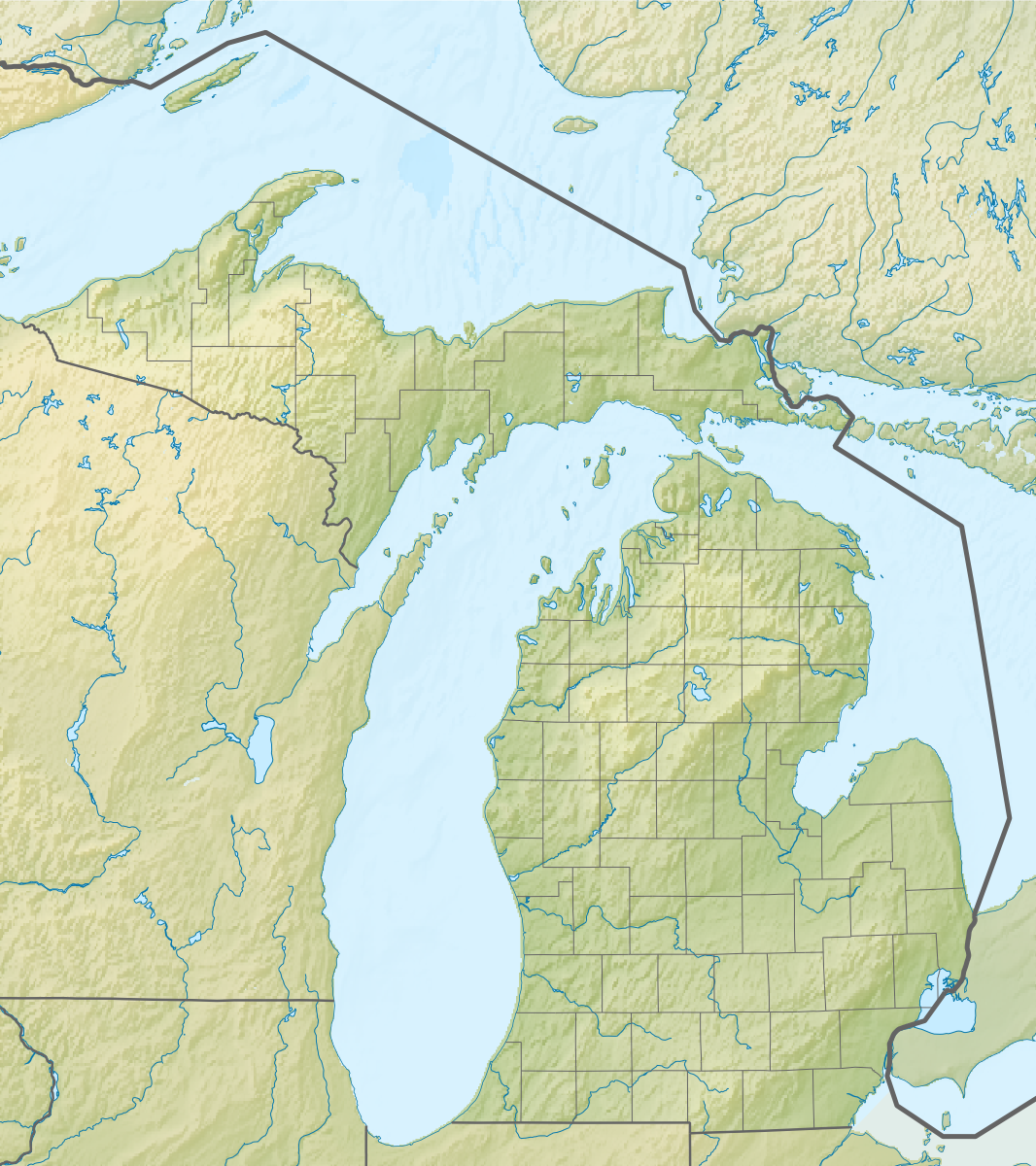
Big, beautiful Michigan does not want to fund its
schools properly. (At least, its government doesn't.)
Map taken from:
http://upload.wikimedia.org/wikipedia/commons/8/89/Relief_map_of_USA_Michigan.png


School Funding Proposals


According to Michigan Parents for Schools, the current proposals for school funding are as follows:


Governor's proposalHouse versionSenate versionInflation projections
Minimum: +$111 (to $7,187), 1.6% increase
Basic (maximum) +$83 (to $8,132), 1.0% increase
Minimum +$112,1.6% increase
Basic +$56, 0.7% increase
Min +$300,4.2% increase
Basic +$150,1.9% increase
2014 forecast: 1.3%
Avg. 2011-13: 2.3%
These increases do not reflect other changes, like "best practices" and pension plan cost changes, which may raise or lower the per-pupil funding available.

Or, as Christine Stead (AAPS school board member) succinctly states in describing the impact on Ann Arbor schools (this helped me visualize the numbers)
One would think that our FY15 will be much better [ed. note: due to the economic recovery] and we can look forward to investing again in one of our most important economic drivers: high quality education. Until you review the state’s proposals ($$ shows the impact for AAPS):
Governor’s proposal: $55,000
  Senate proposal: ($2,171,000)  House proposal: ($1,276,000) 
There is a serious disconnect in how our schools are funded, the state of our economy, and any local community’s ability to do anything about it (currently).
Multiply that by schools around the state. 


Talking Points


Michigan Parents' for Schools talking points:
At the very least, all districts deserve an increase in per-pupil funding that allows them to keep up with inflation. 
These increases should be calculated after the impact of other changes such as shifts in state pension costs, not before.  
Current law specifies that school districts should get a supplement in their per-pupil funding for every student from a family living below the poverty line. But we have never fully funded this provision, and the current spending level only covers half of what the law requires. We need to give our schools the resources they need to fight the impact of poverty, and all schools should be eligible for these funds. 
Right now, local school districts must take money from their general education funds in order to meet their important (and legally required) obligations to provide special education services. Our schools should not have to choose between meeting their moral and legal obligations to students with disabilities and having sufficient resources for all their students.
It's hard not to feel despairing about the impact we can have. 
But we need to keep trying.


Giving Input on Proposal A


Christine Stead is asking for some specific input. Here's why:


John [Austin, President of the State Board of Education], and the State Board of Education, has started a process to seek input from different organizations on the impact of Proposal A and the general funding experience for public education.  The process will shift to take input from community members and school systems over the next few months.  Presentations made so far can be found here.
I will accompany the Superintendent and CFO from the AAPS on June 17th to submit the AAPS experience and recommendations for changes to Proposal A.
If you have specific suggestions, Christine Stead would like to hear from you with your suggestions about changes to Proposal A. She writes, 
Folks can either email me or submit comments/questions to this site [k12christinestead.com]. I’ll do what I can to get answers to questions. I also don’t mind submitting folks’ comments to the State Board of Education as part of our testimony – especially if they lead toward solutions. You can use either email for me: steadc@aaps.k12.mi.us or christine.stead@gmail.com. 

Consider subscribing to Ann Arbor Schools Musings by Email!

Monday, March 3, 2014

Part I: Michigan Proposes New Special Education Rules--You're in the Twilight Zone!

Michigan's Special Education System is Under Fire by the Michigan Department of Education


I was first apprised of the proposed changes to the state's special education rules about a week ago. I hadn't heard anything about them before that. I'll bet you haven't either. Perhaps you, like me, were more focused on local school initiatives, or on your paid work, your family, or the wintry weather.

Even those of us who try to pay attention to the state's endless list of education-related legislation have had a "pay no mind" attitude to rules. Rules, essentially, guide the implementation of legislation. They can be changed, with a much less public process than legislation. [It is a public process--in the sense that it requires public notice, there is the opportunity for public comment, etc. But it is a less public process in the sense that it often escapes notice.]

In researching this post and the next one, I found myself at the web site for the Michigan Department of Education's Special Education section, on the page devoted to public comment for the changes to MARSE--the Michigan Administrative Rules for Special Education.

And there, I found a very interesting, SEXY video. JUST KIDDING! Really it's kind of dry. (I've been told if you put the word "sexy" in your blog posts you bump up your readership!)

But it's only five minutes long, and it explains the rule making process in a way that is clear, and at the same time makes you think that there is nothing to worry about for these rules.  That--by the way--is not at all true, as I will explain in tomorrow's post.

For today, I would like you to watch this sexy, dry, mundane, essential, scintillating, slightly terrifying, stupendous video. It was there that I learned about the state's Office of Regulatory Reinvention--who makes these names up? NOW do you see why I thought I was in the twilight zone?


Essentially, when the Michigan Department of Education decides to revise rules, they run it by the Regulatory Affairs Office at MDE and the Office of Regulatory Reinvention--which is part of the Department of Licensing and Regulatory Affairs (LARA).

[By the way, the Office of Regulatory Reinvention is sending out press releases that say things like: Office of Regulatory Reinvention Eliminates 1,500 Rules, Implements 100 Recommendations Making Regulations More Efficient.]

The Office of Regulatory Reinvention would have you believe that the main points of the special education rules revisions are that
The rules are being revised in order to incorporate currently used terms and law numbers to protect the rights of students with disabilities by: 1. Aligning Michigan administrative rules with the Individuals with Disabilities Education Act (IDEA) and its implementing regulations, 2. Providing consistency with other state offices and departments, and 3. Clarifying inconsistencies with other rules or regulations. (Link)
But that is not true. It is much, much more.

The rules would change the implementation of special education in our schools in ways that go way beyond providing consistency. Advocates tell me they would gut the system and make it much harder for kids to access special education services.

But here is the main thing. I'm writing about rule making because it happens behind the scenes--this is not a legislative process. The public commentary on the rules is open only until March 13th, 2014. They will not take comments by email or fax. Mailed comments go to a PO Box (which means, I'm told, that mail can't be sent certified). Bowing to pressure, MDE recently added the option of giving commentary using an online form, but the comments are set up in a very specific way which is--frankly--a pain in the butt to use. And there are only two public hearings planned for these revisions. Coincidentally, both of them will be held on the same day!

Wait--there's more! There is a small legislative component to this. The rules get forwarded to the Joint Committee on Administrative Rules, which is made up of 3 Republicans and 2 Democrats from each chamber. But they can only reject the rules under very specific circumstances. So even though I'm listing the legislators names here, the legislators should not, and cannot,  be the primary focus of complaints about the rules. Those comments have to go to the bureaucrats who are writing up the rule revisions.

JCAR Members

State Senators

Senator John Pappageorge, Chair in 2014
Senator Arlan Meekhof
Senator Jim Marleau
Senator Tupac Hunter
Senator Bert Johnson

State Representatives
Representative Tom McMillin, Alternate Chair in 2014
Representative Jim Stamas
Representative Amanda Price
Representative Harvey Santana
Representative Douglas Geiss

And there is a meeting of JCAR coming up Wednesday, March 12, 2014, but I don't believe it is the main one where they will be discussing the special education rules, because public comment on the rules is open until Thursday March 13th. 


If you can't wait until tomorrow to read the details of the rules and find out action steps for public commentary, here are a couple of preview links:

Blog post by Marcie Lipsitt

Council of Parent Attorneys and Advocates action alert


Read Part II--how to comment, and what to say, here.


Consider subscribing to Ann Arbor Schools Musings by Email!

Wednesday, December 4, 2013

Today, at the Michigan Capitol: Will Two Terrible Bills Go to the Full House?

Michigan Parents for Schools is reporting:


They may try to push the 3rd grade retention and A-F ratings bills out of committee and through the full House tomorrow. 


Bill #1: Third Grade Retention


The third grade retention bill says that kids have to read proficiently by third grade, or they'll be held back. MIPFS calls it an "all stick, no help" bill.

Writes MIPFS: 


They've softened the bill a bit since it was first introduced, but the basic thrust is still the same. Instead of helping schools serve challenged students, instead of providing the resources schools need to run quality reading programs, the bill proposes simply to hold students back. Does this make any sense to you? It certainly doesn't to us.

PLEASE: 
Take action on the third grade "read better, or else" bill here


Bill #2: Grading Schools Like an Appliance


Last year the schools were given a color-coding system as a way to "help" inform the public about school quality (based, naturally, on standardized testing). That system didn't make any sense to me,** and now the proposal is to scrap that for a replacement system in which schools would be graded from A to F. 

According to MIPFS, 


Now we have HB 5112, which proposes to scrap that whole (brand new) system and replace it with a simplistic rating that gives every school and district a letter grade from A to F. Not only that, but this "grade" would be based almost entirely on standardized test scores and would grade schools "on a curve," ensuring that some will always "fail." 

We're not shopping for toaster-ovens here.

PLEASE: 
Take action on the "grading schools like appliances" bill here.


Also, PLEASE: Share this information about these bills on facebook, twitter, your email lists--the children of this state thank you!


**By the way, if you are interested, Okemos Parents for Schools nicely dissected the ridiculousness of the color coding system in this post

Under the new model, every school receives a color on a scale of green, lime-green, yellow, orange, or red - in descending order:
A school earns a color based on the number of points it amasses — two points for each goal met, , one point for each goal met by demonstrating improvement, and zero points if the goal isn’t met at all. Schools that earn 85% or more of the points possible are assigned a green color. To get lime green, they have to earn 70% to 84% of their points; yellow, 60% to 69%; orange, 50% to 59%; and red, below 50%.Michigan to debut color-coded system for measuring school performance, Detroit Free Press, Aug. 19, 2013.
You can see how Okemos scored on the state's Accountability scorecard. As a district, Okemos scored "Orange," the second to lowest rating.  However, every building scored "Yellow," one step higher.  Yet, in every category, every building scored "Green."  How can that be?


Consider subscribing to Ann Arbor Schools Musings by Email!

Tuesday, October 1, 2013

Local, State, Federal Budget Thoughts (Slightly Random)

1. Tomorrow is Count Day. A day that makes a huge difference in the budgets of school districts around the state. Please make sure your kids go to school, or if they're sick, call them in for excused absences. Why does it make a difference? Read about Proposal A here.

2. Want to learn more about the Sinking Fund schools proposal on the Ann Arbor ballot? Here's your opportunity: There is a Community Forum on Wednesday, Oct. 2 from 6:30-8 p.m. at the Pioneer Annex.


3. There was an interesting piece last night on Michigan Radio on the effects of the sequester on education, especially special education and Head Start preschool. Listen to the story, or read it, here

4. At the state level, you might remember that the Legislature was fighting about the implementation of the Common Core curriculum last year. I think we were left, at the end of the last legislative session, with the legislative decision that no funding could go for the Common Core. (That, by the way, was heavily influenced by "tea party" Republicans.) So today, Gongwer News Service reports this ridiculousness (taken from the Michigan Parents for Schools facebook page): 
Tuesday, October 1, 2013, 10:24 AMMDE Website To Be Shuttered Under Common Core Spending Ban
The Department of Education website was still up this morning, but is expected to go offline sometime during the day because the site contains resources to help teachers implement the Common Core State Standards, officials said in an email to teachers and local school officials.
The new budget effective today prohibits the department from spending money to implement the Common Core or Smarter Balanced Assessment without legislative approval. Since that approval is still pending in the Senate, Martin Ackley, communications director for the Department of Education, said his department was asking the Department of Technology, Management and Budget to take the MDE site down because of the integration of Common Core into the site.
Pages of the site are to be restored as Education officials have time to review them for Common Core elements, Mr. Ackley said in his email.
The current budget also could affect some federal grants to districts, the email said, because implementing the Common Core is an element of the state’s No Child Left Behind waiver. That waiver expires essentially at the end of the current school year.
5. Oh yeah, and then there's the US government shutdown. Here is information from the U.S. Department of Education about the shutdown. And here is the scoop from Education Week.


AddThis