Pages

Sunday, June 1, 2014

June 2014: Infographics, Podcasts, and Partners--Maybe?


June Experiments

Last June, you might recall,
I joined a post-a-day "blogathon."

I had the goals of challenging myself to see if I could do it, and also seeing if it would increase my readership. It did both. I also learned some interesting blogging tricks and ideas, and I met some bloggers internationally. (I had guest posts from Singapore and Japan!)

But--it was exhausting. I do, after all, have a full-time job and kids.

So this year I am going to give myself a slightly different challenge, because--really--the reason that I started this blog had more to do with me than with schools.

Quick recap:
I was intrigued by blogging, but didn't fully understand it.
I felt the best way to learn about blogging was to learn by doing.
I searched for a topic and landed on local schools because
a) I already knew a fair amount about them and about education in general, and
b) I felt I wouldn't run out of things to say.

But--there are some blogging techniques I have not learned yet, and since this blog is supposed to be educational for me as well as for you, during June I am going to try to:

a) create at least two infographics, and 
b) record two podcasts or videos and post them.

Maybe I'll do more, but I'm hoping this will keep things fresh and fun--and by posting this, I'm hoping to keep myself accountable. [If you are good at this stuff, let me know because I may need to ask you some questions!]

I know that you are wondering--how can I cheer Ruth on?

Well. . . comments are nice.

Also--if anyone is interested in guest posting or coming on as a regular contributor, please let me know.


If you are a regular reader, you know that I have made this offer before, but I'll just point out that:

a. My youngest child is in high school. I could really use more information about the elementary and middle schools, and I also see that my time on this blog will have a natural end. . . you may be a few years behind me.

b. I don't have any kids utilizing special education services. I never have, in fact, so everything I learn about that system is from friends. . . but maybe you do have direct experience.

c. I do have teaching certification and an education background. But I am not teaching in any local school--public, private, or charter. But maybe you are.

d. I live in Ann Arbor and my kids have attended the Ann Arbor Public Schools. Let me tell you, the Ypsilanti, Dexter, Saline, Whitmore Lake, Manchester, Chelsea, Milan and Lincoln schools are crying out for more attention. And that's without even mentioning the need for coverage of charters! I'd love more out-county coverage.

e. History. Are you a history buff? There are lots of interesting stories in the education files at the Ann Arbor and Ypsilanti libraries, as well as in the local history society files. Would you like to shine a light on some of these stories?


Consider subscribing to Ann Arbor Schools Musings by Email!

Tuesday, May 27, 2014

AAPS Budget, Public Hearing, Rick DeKeon Wednesday May 28, 2014

Wednesday, May 28th, the Ann Arbor school board will have a public hearing on the proposed AAPS budget. The meeting starts at 7 p.m.

Here are some options:
1. Go and talk during public commentary
2. Watch the board meeting on t.v. (CTN Comcast Channel 18, and also available for online streaming, but not for on-demand replay--yet. The replay schedule is: Thursday @ 1:30pm, Saturday @ 8am, Sunday @ 1pm)
3. Email the school board with your thoughts at boe@aaps.k12.mi.us.

The board will vote on the budget at their next meeting, in two weeks.

Essential Reading


Here is the proposed AAPS 2014-2015 budget.

Here are the proposed expenditures and revenue enhancements. (Looks like a summary sheet, essentially.)

Here is the proposed budget plan. (How the budget gap will be closed.)

Compare the governor's, senate's, and house's education proposals and their impact on the AAPS budget. (There are also some slides from the new finance director--Marios Demetriou,
Assistant Superintendent, Finance and Operations--that, to be honest, I did not completely understand. Explanatory text would be nice.)

Major Proposals

How do you feel about the proposal to freeze all staff salaries, with no step or salary increases for any group? (Teachers, for example, took a 3% pay cut last year that was supposed to be a one-year pay cut. This would not be restored.)

How do you feel about the outsourcing of custodial work? (The main expected savings here has to do with the fact that the district has to pay into the state retirement fund for employees--if the positions are privatized, the state retirement fund doesn't have to be paid.)

Here are some things I've written about privatization in the past:

Transportation Lessons, 2010-2012 (February 2012)

Just Say No to Privatization (January 2010)

What do you think about Christine Stead's suggestion that the district should investigate whether there would be any possibility of suing the state for the constant cuts the district has had to make, since we are not being "held harmless?" (I LOVE IT.)

Let the school board know how you feel!

Special Bonus! 

Rick DeKeon
from a2schools.org
If you go to tomorrow's meeting. . . there is also a proposal to rename the Northside School Gym in honor of Rick DeKeon, well-loved Northside physical education teacher.

As the proposal says,

On behalf of Northside Principal, Monica Harrold, Northside staff, students, parents and alumni, it is my pleasure to present to you a recommendation, pursuant to Ann Arbor Public School Board of Education Policy 7150- Naming, to name the Northside Elementary School gym after former Ann Arbor Northside Elementary School physical education teacher and local coach Richard (Rick) Dekeon. 
Mr. Dekeon, a much beloved teacher at Northside for 25 years, passed away on November 8, 2013 leaving behind an incredible legacy that extends well beyond the Northside community.


Consider subscribing to Ann Arbor Schools Musings by Email!

Tuesday, May 20, 2014

Reflections on Ypsilanti Community Schools, Year 1: Take the Survey

It was--and is--a BIG DEAL.
Last year, Ypsilanti and Willow Run schools consolidated into Ypsilanti Community Schools, and it has been a year of firsts.

It's time for a little reflection. If you are a teacher, staff person, parent, student, community member with some thoughts about the district, I'm asking you to share your thoughts and ideas--the good, the bad, and what can be improved.

Take the survey! I will share results, probably sometime next week.

NOTE: You may have noticed that I removed the YCS logo. The district was concerned people might think this survey was endorsed, or organized, by the district. It isn't. It's organized by me alone. To share what the community is thinking. I hope there will be a wide cross-section of responses. 


Consider subscribing to Ann Arbor Schools Musings by Email!


Sunday, May 18, 2014

Mark Schauer's Education Platform

I went to a Mark Schauer fundraiser this afternoon. 

Mark Schauer is the Democratic candidate for governor. (I am hoping that you knew that already, but just in case you didn't...)

Find out more about Mark Schauer in general at markschauer.com.

Read about Mark Schauer's education platform here.

P.S. I also got to meet his wife, Christine Schauer. She herself is an elected official--the Calhoun County treasurer!


Tuesday, May 13, 2014

State Budget Discussions: School Implications, Again

Budget Season is Back


Steve Norton of Michigan Parents for Schools wrote last week:


After a three-week break in April, the State Legislature is back at it again. It's budget season in an election year, which means that lawmakers will be trying to satisfy voters by showing some support for key programs such as our public schools -- or at least give the appearance of doing so.
He notes that the state's revenue projections, coming out this week, will have a major impact. The first projection came out today (two more coming tomorrow and Thursday), and at least the first projections don't look too good for schools--given that they are clearly an afterthought for Snyder and Company.

According to this article, the House Fiscal Agency projects that "The state will bring in about $400 million a year less in revenue than officials estimated in January." [Note: revenues are growing. Just not as much as the projections from earlier this year, which were revised to be ever more optimistic.]

Further, according to the article,
Net state revenue is projected to dip just under 1% in 2013-14, the report says. While general fund revenue is expected to dip 3% — or $290 million — to $9.3 billion. The net School Aid Fund revenue is expected to increase about 1.5% — or $169 million — to $11.4 billion. Net revenue still is expected to increase significantly in 2014-15 and 2015-16, just not by as much as projected earlier.
And--there is significant competition for any money that is seen as "extra" for road funding and the Detroit bankruptcy. And also--the Detroit News is reporting that the Education Achievement Authority administrators are jet-setting around the country while the rest of the state loans them money.


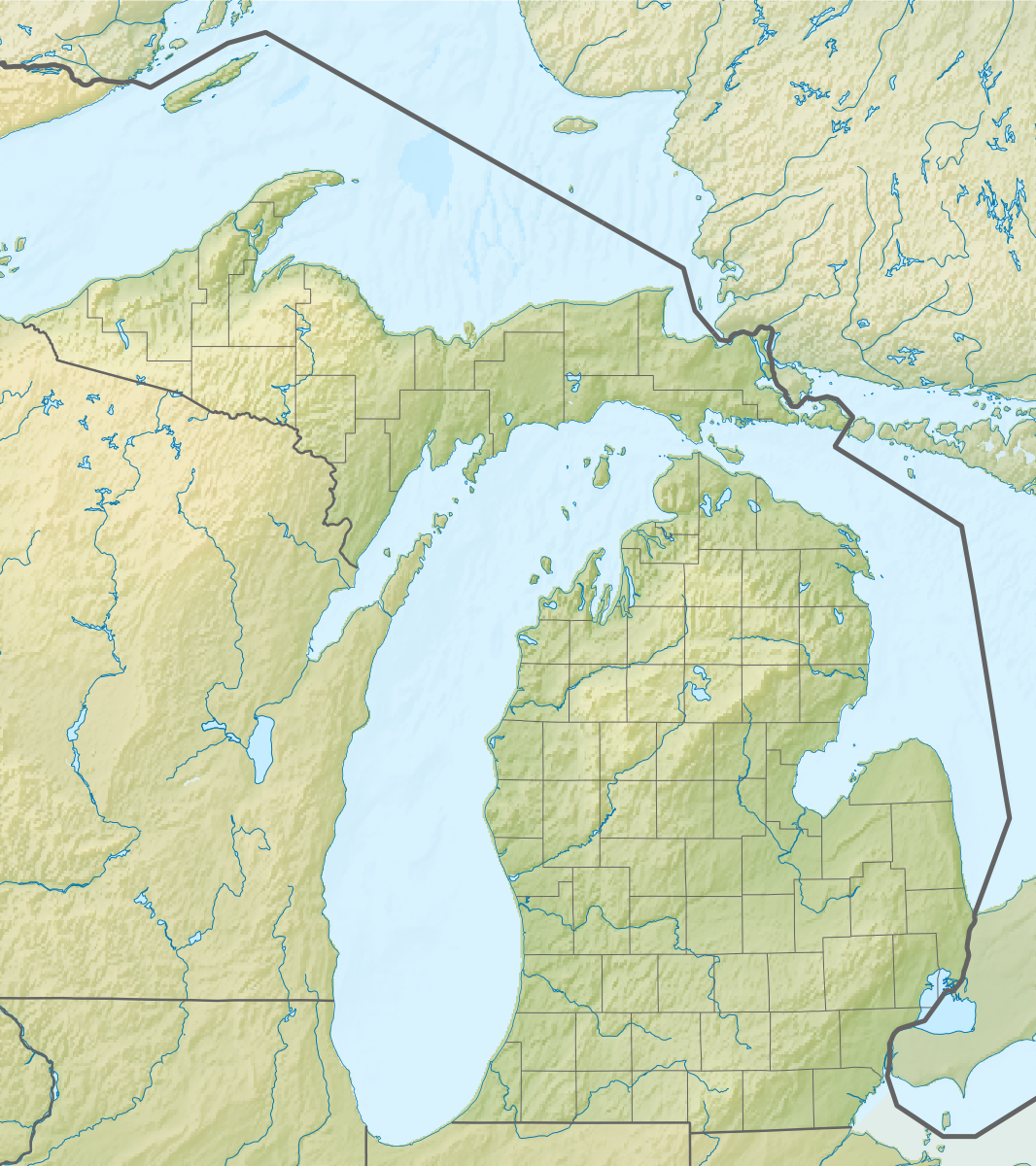
Big, beautiful Michigan does not want to fund its
schools properly. (At least, its government doesn't.)
Map taken from:
http://upload.wikimedia.org/wikipedia/commons/8/89/Relief_map_of_USA_Michigan.png


School Funding Proposals


According to Michigan Parents for Schools, the current proposals for school funding are as follows:


Governor's proposalHouse versionSenate versionInflation projections
Minimum: +$111 (to $7,187), 1.6% increase
Basic (maximum) +$83 (to $8,132), 1.0% increase
Minimum +$112,1.6% increase
Basic +$56, 0.7% increase
Min +$300,4.2% increase
Basic +$150,1.9% increase
2014 forecast: 1.3%
Avg. 2011-13: 2.3%
These increases do not reflect other changes, like "best practices" and pension plan cost changes, which may raise or lower the per-pupil funding available.

Or, as Christine Stead (AAPS school board member) succinctly states in describing the impact on Ann Arbor schools (this helped me visualize the numbers)
One would think that our FY15 will be much better [ed. note: due to the economic recovery] and we can look forward to investing again in one of our most important economic drivers: high quality education. Until you review the state’s proposals ($$ shows the impact for AAPS):
Governor’s proposal: $55,000
  Senate proposal: ($2,171,000)  House proposal: ($1,276,000) 
There is a serious disconnect in how our schools are funded, the state of our economy, and any local community’s ability to do anything about it (currently).
Multiply that by schools around the state. 


Talking Points


Michigan Parents' for Schools talking points:
At the very least, all districts deserve an increase in per-pupil funding that allows them to keep up with inflation. 
These increases should be calculated after the impact of other changes such as shifts in state pension costs, not before.  
Current law specifies that school districts should get a supplement in their per-pupil funding for every student from a family living below the poverty line. But we have never fully funded this provision, and the current spending level only covers half of what the law requires. We need to give our schools the resources they need to fight the impact of poverty, and all schools should be eligible for these funds. 
Right now, local school districts must take money from their general education funds in order to meet their important (and legally required) obligations to provide special education services. Our schools should not have to choose between meeting their moral and legal obligations to students with disabilities and having sufficient resources for all their students.
It's hard not to feel despairing about the impact we can have. 
But we need to keep trying.


Giving Input on Proposal A


Christine Stead is asking for some specific input. Here's why:


John [Austin, President of the State Board of Education], and the State Board of Education, has started a process to seek input from different organizations on the impact of Proposal A and the general funding experience for public education.  The process will shift to take input from community members and school systems over the next few months.  Presentations made so far can be found here.
I will accompany the Superintendent and CFO from the AAPS on June 17th to submit the AAPS experience and recommendations for changes to Proposal A.
If you have specific suggestions, Christine Stead would like to hear from you with your suggestions about changes to Proposal A. She writes, 
Folks can either email me or submit comments/questions to this site [k12christinestead.com]. I’ll do what I can to get answers to questions. I also don’t mind submitting folks’ comments to the State Board of Education as part of our testimony – especially if they lead toward solutions. You can use either email for me: steadc@aaps.k12.mi.us or christine.stead@gmail.com. 

Consider subscribing to Ann Arbor Schools Musings by Email!

Sunday, May 11, 2014

AAPS Assessment Task Force Member List

Here is the list of members of the Ann Arbor Public Schools Assessment Task Force

This spring, they are looking at elementary school assessments. (Maybe middle school too, I'm not sure about that.)

If you have thoughts or comments about testing, you should contact some of them!

I am lousy at formatting. If you want to see this in a nicely formatted, printable list, use this link.

Ann Arbor Public Schools 
Assessment Advisory Task Force 
April – June 2014  

Name,  Affiliation,  School(s)
I have put in bold all of the people who are parents or community members.

Jose’ Benki                                 Parent Bach 
Lisa Burlingame                         School Psychologist Tappan
Rose Marie Callahan                  Curriculum Coordinator Central Leadership
Amy Deller-Antieau                   Science Dept. Chair/Teacher Pioneer
Bruce Doughten                         Parent Clague 
Joan Doughty                             Exec. Dir. of Community Action Network King, Allen, Bryant,                                                                    Clague, Tappan, Pioneer, Clemente 
Marcus Edmondson                  Asst. Principal/Parent Huron 
Sam Firke                                   Parent Wines, Forsythe, Skyline 
Greta Furlong                           Parent Pattengill, Tappan, Pioneer 
Chuck Hatt                                 Principal Burns Park
Kathe Hetter                              Teacher Skyline
Michael Hopkins                      Parent Abbot 
Kelly House                               Teacher Wines
Jane Landefeld                           Exec. Dir. Student Data Central Leadership
Raven McCrory                        Community Member Angell, Community, Slauson 
                                                        AA Open, Huron 
Elizabeth Nelson                      Parent Eberwhite, Slauson 
Angela Newing                          Math Dept. Chair/Teacher Forsythe
Hyeuo Park                                Principal Bach
Jazz Parks                                  Principal Tappan
Catherine Peterson                  Parent Eberwhite 
Seth Petty                                  Teacher King
Laura Roth                                 Teacher Tappan
Francisco Sanchez                    Parent Haisley, Slauson, Community 
                                                            Pioneer 
Patricia Shure                            Community Member Tutors @ Skyline
Angela Smith                             Parent AA Open, WiHi 
Robyne Thompson                     Exec. Dir. of Secondary Ed Central Leadership
Susan Washabaugh                    Teacher Pioneer
Sean Waymaster                        Asst. Dir. of Special Ed. Central Leadership
Deborah Wolter                          Teacher Consultant AA Open

Facilitators 
Lee Ann Dickinson-Kelley Asst. Sup. of Instruction Central Leadership
Dawn Linden Ex. Dir. of Elementary Ed Central Leadership
Merri Lynn Colligan Ex. Dir. of Technology Central Leadership

Jeanice K. Swift Superintendent Central Leadership


Consider subscribing to Ann Arbor Schools Musings by Email!

Sunday, May 4, 2014

Why Did the WCC Faculty Take a No-Confidence Vote In the School President Last Week?

Last week, Washtenaw Community College's faculty took a no-confidence vote in the President of the school. WCC, you may know, is funded in large part by our tax dollars.

Why did they do this? And why did the vote pass by a huge margin? I asked the WCC faculty to explain.

Read on to get their point of view, and also to find the link to their blog.

For those outside of Washtenaw Community College, I'm sure that the most recent press about the vote of no confidence in President Bellanca's leadership could be alarming, confusing, or even amusing. 

From the inside, issues with Dr. Bellanca's leadership have been building for some time. Faculty were prepared for change when former president, Larry Whitworth, retired in 2011. However, instead of getting a progressive leader interested in using the expertise of the staff and faculty, we were faced with a growing executive administration, staff and mid-level manager turnover, and a distinct shift in how conversations could take place on campus: marketing became the name of the game. 

About 18 months ago, it became more than obvious to the WCCEA union leadership that relationships were not improving and that seeking help from the Board of Trustees was needed. Quietly, requests for help were made by the WCCEA but ignored by the Board. 

After the unprofessional handling of Vice President Blacklaw's firing in March 2013, a united faculty sought help from the Board of Trustees again, but we were essentially told that we were afraid of "change." Bewildered, we took time to regroup, hoping for a shift in what was becoming a hostile work environment with a president who wanted to dictate instead of lead, with the Board co-signing every step. 

The growing number of executive administrators, recent resignations of three of our five academic deans, along with resignations of key staff throughout the college left us little choice but to bring forth a vote of no confidence to the faculty. With nearly 88% of the faculty supporting this vote, our issues are not imagined or vague as some on the Board want to believe. Now that the vote has occured, the WCCEA is ready to find a way through this and get back to what we do very well: teaching and learning. 

Please follow our blog at http://wccea.wordpress.com/.


Julie M. Kissel
Professional Faculty - English Department
WCCEA Representative

Following the vote of no confidence, the president of the WCCEA wrote this, in part, in a press release: 

Often,  faculties come to the point of calling for No Confidence Votes when their salaries or job security is on the line.  That is not the case here. What we are doing here is, I think, unique.  We are not focused on increasing our compensation from the school, and we are not asking for more time off.  We are asking for accountability from an administration that has failed to instill confidence and trust with the faculty.  People, whether they are faculty or not, are NOT comfortable speaking up.  People do Fear retribution.  Because of this, as faculty members at WCC, we are concerned about the health and future of the school… a school that many of us have served for decades.  


(Respectful) thoughts about the vote of no confidence and the situation at WCC are welcome in the comments.

Also--if you are thinking about running for the WCC Board of Trustees, now would be a good time to collect petitions!


Consider subscribing to Ann Arbor Schools Musings by Email!

Monday, April 28, 2014

Choosing A Kindergarten, Ready for Graduation: Looking at the "Long Haul"

As I've written about before, when my oldest son was ready for kindergarten, I was choosing between the local Hebrew Day School, our local public school, and Ann Arbor Open.

On the side of the Hebrew Day School: all-day kindergarten; small classes; an immersion language curriculum; and a school that was willing to let us sit in on classes and observe.

On the side of Ann Arbor Open: multi-age classrooms; progressive education; and the requirement to volunteer and observe a classroom.

On the side of our local public school: basically, nothing, even though it has a stellar reputation, because I had myself experienced and loved "open" education. It had the same negatives as Ann Arbor Open (half-day kindergarten and larger class sizes than the private school) and--in my opinion--none of the positives. I couldn't sit in on a class there, and kindergarten roundup was very unsatisfying.

To round things out, my husband was a strong public schools proponent and thought we should try the public schools first.

That was then...


In any case, I was reminded of this the other day when I heard someone say they were choosing between a private school or the new Northside STEAM program but were wondering about who the teachers would be at the STEAM school.

[Funny--I just realized I was never worried about the teacher quality at any of the schools I considered.]

I was giving the biggest weight to the full-day kindergarten.

One day I was talking to my colleague Cheryl, whose kids went to the Open School and were much older (like, fifth or sixth grade!)--and she said,

"Ruth, kindergarten is only eight months long. 

You have to look at the long haul!"


And so I did. 

That was the best advice I ever got about choosing a school. If you don't want to be someone whose kids change school every year or two, then you need to think about the long haul.

Gabe and me: This is now!

Maybe because that conversation is embedded in my mind, it's hard to believe that this weekend, the little kid I was worried about then graduated from college.

Time flies when you're having fun!

(Just for fun: You can read a piece Gabe let me publish a few years ago when he was still in high school.)


Consider subscribing to Ann Arbor Schools Musings by Email!

Sunday, April 20, 2014

Why Girls and People of Color are Less Likely to Choose Science

One summer, in the middle of college, I worked for a Parks Council project in Central Park in Manhattan, supervising 24 high school students on a jobs training program. I wrote about this experience in the context of a proposed jobs bill by Obama back in September 2011.

In 1983, I scored a summer job working for the Parks Council in New York City.  I was a "supervisor" of two team leaders and 24 high school students for a CETA jobs program. There were 20 African-American kids and 4 Latino/Latina kids; the team leaders were a Latino community college student and an African-American student from Howard University. I was the only white person, for the first time in my life.
Do you remember CETA? It was the Comprehensive Employment and Training Act, a federal program that offered people with low incomes, as well as the long-term unemployed, with jobs and job training programs in the public and non-profit centers.
I think because I was white, I got assigned to the tony southern end of Central Park. Some of the other New York City parks were not so nice, and they had longer commutes from my house. At lunchtime I could sit by myself, or with my boyfriend, and watch Dustin Hoffman eat his lunch with his friends. Yes, he would come to the park too. 

The animals had been removed from the Central Park Zoo by 1983.
Our headquarters were in the Central Park Zoo, which was mostly closed for renovation in 1982--a good thing since the original animal stalls were truly prison cells. There is a nice history of the zoo here. The only animals that I remember still being at the zoo were the sea lions. (Photo taken from here.)
The kids taught me slang--"I've got my main squeeze and my two side squeeze"--as well as why we couldn't rake leaves in certain areas (rats). I'm not sure what I taught them. . .
But one day we were on a field trip and one of the girls came up to me. She had just finished 10th grade and she was probably the most diligent worker in the group. Her mother was from Jamaica and worked as a nurse's aide.
"I was thinking," she said to me, "that maybe I could become an LPN [Licensed Practical Nurse].""Great!" I said. "That's a great idea!"
But in my heart, I thought, "Why be an LPN? You're smart enough to be an RN or a BSN. In fact, why not be a doctor? You're smart enough to be a doctor."
I didn't say that to her though.
Why didn't I say that to her? Well, probably partly because I was only 20. I couldn't even give myself career advice.But probably also because I wasn't trained to have Great Expectations from poor black kids.
I flashed back to this memory when I heard Neil DeGrasse Tyson address the question, "Why don't girls choose science?" It's worth--really worth--listening to his answer. [I couldn't figure out how to set this to start at 1:01:31, but that's where you want to start it.]


Consider subscribing to Ann Arbor Schools Musings by Email!

Friday, April 18, 2014

Alaska History Lesson: The Good Friday Earthquake

I was looking for some recent news about earthquakes, and I found the most fascinating information about the 50th anniversary of the Good Friday Earthquake in Alaska. Sometimes the web is a wonderland.

If you have some time this weekend, I highly recommend a documentary, Though the Earth Be Moved, of the first 72 hours after the earthquake. I couldn't get it to embed, but here is the link.

Here is a photo tour of Alaska after the earthquake.

Here are photos from the USGS Photographic Library and lots of additional information here.

Here is a fact sheet on Enduring Legacies. (It turns out that this earthquake helped prove a lot of theories about subduction zones and plate tectonics.)

Many films are available from the Alaska Film Archives.

And many more links can be found here.

All of this was fascinating, but it makes me glad I live in a state that doesn't have a lot of threats of natural disasters.


Consider subscribing to Ann Arbor Schools Musings by Email! It's worth every penny!

Thursday, April 17, 2014

First Step: Ann Arbor Open Is Allowed to Abandon the NWEA MAP Test

Ann Arbor Open parents got this letter today from Kit Flynn, Ann Arbor Open's principal:

Dear parents, 
AAPS Superintendent Dr. Swift, (in consultation with LeeAnn Dickinson-Kelly, Dawn Linden and me), has decided to forego any further administration of the NWEA MAP Test for Ann Arbor Open School. There is agreement that this particular measure is not the best fit for our program.
The balloons were not part of the letter
Kit Flynn sent out. They reflect my feelings.
I took the picture from this free clip art site:
http://www.clipartbest.com/celebration-pictures-free-clip-art

The teachers at Ann Arbor Open are committed to preparing all of our students for any required assessments that are mandated by the district and the state. Quality instruction includes quality assessment as part of the learning process. Our goal is to inform students and parents on areas where students show growth or may need further support, and to inform teachers on the instructional needs of specific students. We believe that authentic learning of needed skills will result in student growth, and want to use assessments that we believe will contribute to their success.
The district assessment committee's charge is to examine current assessment practices, understand state requirements, clarify core values and bring forward proposals to inform and advise an amended Assessment Plan for 2014-15. They will begin meeting soon.
While the district assessment task force begins their work, we will also be considering how to best measure our students' growth. Ann Arbor Open staff will spend time reviewing possible assessments and methods for monitoring progress for our students, especially students who need additional support or are below grade level in key curricular areas.
The staff members of Ann Arbor Open are feeling very grateful today - grateful to our supportive parent community, and grateful to the leadership of Ann Arbor Public Schools for acknowledging our program's unique needs.

Sincerely,

Kit Flynn

I hope this is the beginning of a trend. I think this decision means that right now the only Ann Arbor middle school giving the MAP test is Scarlett Middle School. However, all of the other elementary schools are still giving the test.

Also, the long-awaited Assessment Task Force is going to start meeting next week.So, in general--toast this small success, but recognize it for the baby step that it is, and let's keep working  toward more authentic assessment, and less testing.

Monday, April 14, 2014

Passover, Pedagogy, and Liberation

Consider subscribing to Ann Arbor Schools Musings by Email!

(I know! I put that at the top! Radical, right? Initially, it was an accident, but the good kind. By the way, if you do try and subscribe by email, remember that you need to "verify" your subscription.)


What follows is a repost from April of 2011. While I am busy preparing for Passover (and since--fair play--I'll have a Good Friday post up on Friday) I thought I would repost this discussion of a major Passover theme--liberation--and why the Passover Seder is such a fantastic example of good educational practice.

So here it is.

Passover, and...

Pedagogy of the Oppressed

Several years ago, we asked friends and family coming to our house for the holiday to each focus on a particular section of the Passover Seder. Seder means "Order" in Hebrew, and at Passover, Jews tell the story of the Exodus from Egypt at a Seder, using a Haggadah, a book that means "Telling," and that has a certain order to it. One of the sections of the Haggadah is called Maggid, loosely translated as the Story. In other words, it's the narrative.

So, my friend brings this question about the Maggid section:
This is the Story part of the Haggadah, but there is no story here--at least, no story about the Exodus. Instead, there is a description of four kinds of children (wise, wicked, simple, and one who doesn't know how to ask)--and a suggestion as to how to answer their questions.
There are songs and activities.
There is a place where the youngest person at the table asks four questions about the Seder's symbols.
There are obscure references to historical occurrences that on the surface don't seem to have anything to do with the story of the Exodus from Egypt.


Why is there no story in the Story?
Is this really the Socratic Method? Depending on who you talk to, the Socratic Method means slightly different things, all involving questions and answers. Rick Garlikov describes the Socratic Method as "Teaching by Asking Instead of Telling." According to Wikipedia,
The Socratic method (also known as method of elenchus, Socratic irony, orSocratic debate), named after the classical Greek philosopher Socrates, is a form of inquiry and debate between individuals with opposing viewpoints based on asking and answering questions to stimulate critical thinking and to illuminate ideas.[1]
No, this is not the Socratic method. But the Seder uses outstanding educational techniques--requiring interaction between members of the group; hands-on activities; thought-provoking questions; and even some performance (traditionally, the youngest person in the room masters and chants four questions). And the result? The seder is probably the most observed Jewish practice in the world.

*   *    *    *    *    *
Pedagogy of the Oppressed is the most well-known book of Paolo Freire, and it is a book that, I confess, I have not been able to read all the way through (dense!)--but the essence is this:
In the book Freire calls traditional pedagogy the "banking model" because it treats the student as an empty vessel to be filled with knowledge, like a piggybank. However, he argues for pedagogy to treat the learner as a co-creator of knowledge. (Wikipedia)
[Note: Freire is referring to "traditional pedagogy" as the pedagogy common in Europe and the Americas in the 1800s and 1900s.]

Ultimately, the Haggadah is at least a thousand years old in one form or another, and the story of the Exodus from Egypt is even older. Since it is a story of slaves throwing off the shackles of slavery, so I will close with a few quotes from Paolo Freire's Pedagogy of the Oppressed:
"Looking at the past must only be a means of understanding more clearly what and who they are so that they can more wisely build the future."
"The greatest humanistic and historical task of the oppressed: to liberate themselves..."  
 "… Without a sense of identity, there can be no real struggle…" 
"No one is born fully-formed: it is through self-experience in the world that we become what we are."  
"Knowledge emerges only through invention and re-invention, through the restless, impatient, continuing, hopeful inquiry human beings pursue in the world, with the world, and with each other." 

Thursday, April 10, 2014

Smarter Balanced Pilot: How Will the Testing Be Given? Can You Get Out Of It?

Read Part I:
Smarter Balanced Test: Try It Out Before Your Kids Take It

Read Part II:
Smarter Balanced Comes to Ann Arbor a Year Early. Why?


Read Part III:
What is in the Smarter Balanced Test?


Part IV: How Will These Tests Be Given in the Ann Arbor Schools? What Are the Likely Impacts?

Reduced learning for freshmen, sophomores, and seniors

To begin with, each school in Ann Arbor has been given some latitude in how the tests will be administered. In some buildings, the principals may choose to shorten the other classes in a day, and clump the tests at one time (for all the juniors). In other buildings, the principals may choose to pull out the students only from their English and Math classes.

Either way, you end up interrupting the other classes. For example, in the case of math, where students may be a year ahead, at grade level, or a year behind, an Algebra 2 class may have sophomores, juniors, and even a few freshmen or seniors. So when you pull the juniors out of the math class for the pilot test, will the teacher continue to teach the other grades? If they teach them something substantive, the juniors lose out on the lesson and the teacher will likely need to repeat it. If they don't teach the other students something substantive, then it's likely a waste of time for the others. Either way, that is a lose-lose situation.

Another choice is to change the length of time for the class periods. In that case, every class would meet on a certain day (say, for 35 minutes instead of the usual class period). If that happens, then every class is shortened, and the other grades also have less time in school.

In the winter, when the schools gave the (mandatory) MEAP to juniors, my son (a freshman) had a couple of days off in school, and another day where the classes were half an hour long. Whatever you think of the testing itself for the juniors, that was definitely a waste of time for him.

Access to Computers

Probably the other largest area of concern has to do with access to computers. At the comprehensive high schools I think there are 350-400 students in the junior classes. In order to take the test, every junior needs a computer. This is between 10 and 15 classes worth of students. Can the schools even give every junior a test at the same time? Do they need to commandeer every mobile computer lab? Take over all the general purpose computer labs? During that week (just like during the NWEA MAP test, which will be given in the elementary and middle schools in May, again), other students won't be able to use those computers for research, powerpoints, web site creation, or computer programming.

Notification of Parents

Parents were notified immediately before spring break. A friend sent me the notice that Skyline parents got. Here is a copy of the letter. And here is a copy of the "Smarter Balanced" fact sheet.

I personally thought the letter was pretty reasonable. (I couldn't tell if it was only sent to parents of juniors or to all parents--it reads like it was sent to all parents.)

But one friend whose children are at Skyline had a slightly different reaction:

REALLY????? MORE testing for Juniors? And they make it sound like we've won a prize!
Dear Valued Skyline Families,
Skyline High School was chosen by the Michigan Department of Education to participate this spring in the pilot of the Smarter Balanced Assessment.  (Emphasis added.)

At Skyline, the principal (Cory McElmeel) writes:
For our school, students in 11th grade have been selected to take the pilot test in English Language Arts and Mathematics. The mathematics portion of the assessment for non-accommodated students will take place during 4th and 5th periods on Tuesday, April 15th and Wednesday, April 16th.  Students with accommodations will take the mathematics assessment during 1st and 2nd periods on those same days.  The English language Arts portion of the assessment for non-accommodated students will take place during 1st and 2nd periods on Tuesday, April 23rd and Thursday, April 25th and during Skytime on Wednesday, April 24th.  Students with accommodations will take the English Language Arts assessment during 4th and 5th periods on those same days.


So, the letter is not the problem--but you might think it's a problem that students will lose a couple of hours of school on four different days. And as I mentioned, that cannot help but affect students in the other grades. Or, as a second friend wrote me, 


Here’s my beef:  Juniors just had a bunch of testing in mid-March, which came the week before final exams. Now here were have another bunch of testing, coming just a few weeks before AP exams.
COULD WE GET A LITTLE EDUCATION WITH OUR EDUCATION?

The Solution Is In Our Reach: Opting Out Is Easy

Now, the real reason I said I feel the letter is reasonable? Try this part of the letter: 

Participation is voluntary and confidential, and your child’s grades will not be affected by his or her participation. . . If you do not want your child to participate in the pilot or if you have any questions regarding your child’s participation, please contact me.

In other words--the district is making it very easy to opt out of this test. Just email the principal of the school your child is in, and say, "I do not want you to administer the Smarter Balanced test to my child."  

And by the way--the NWEA MAP test is coming soon to an elementary or middle school near you, and you can employ the "opt out" strategy for that test as well. It's not mandatory. 


Consider subscribing to Ann Arbor Schools Musings by Email!

Monday, April 7, 2014

What is in the Smarter Balanced Pilot Test?

Read Part I:
Smarter Balanced Test: Try It Out Before Your Kids Take It

Read Part II:
Smarter Balanced Comes to Ann Arbor a Year Early. Why?


And here is Part III.

What is in the Smarter Balanced Pilot Test and How Will It Be Given?

The Smarter Balanced Test is a non-timed test (although there is a certain amount of time that they expect the test to take. It is given on a computer. The testing can be split up over several days. The test itself includes a variety of types of questions, including questions that are "drag and drop" (you drag objects into a location and "drop" them there); "click stick" (also known as click-stick-click-drop, and it requires less fine motor skills); multiple choice; and short answer questions. All of the answers, including the short answers, are graded by a computer. Smarter Balanced calls the computer program that delivers the test the "test delivery system." I'm not sure why I find that so humorous, but I do.

There are two parts to the Smarter Balanced Test. There is a "non-performance task" section--estimated to be two hours long for the English Language Arts section, and two hours long for the Math section. And there is a "performance task" section, which involves a half-hour classroom activity that is supposed to provide a "baseline" for a theme, and related to that there is an ELA section (estimated at two hours long) and a Math section (estimated at an hour and a half).

The idea of the performance-based task is that it allows testing of critical thinking and problem solving. The example I was given was that if you had a class task about teen driving restrictions, that there would be baseline information shared about those, and students would then be able to incorporate that information into their activities.

The classroom task itself is considered "non-secured," but at the same time, "Students may take notes during this time, but the notes must be collected before proceeding to the PT. Students may not use notes taken during the classroom activity for the PT." (Source.) Also, if students are absent the teachers are supposed to try to give the students who missed a similar experience.

The pilot tests are not "adaptive," they are "fixed." (In other words, they are the same for every student. Supposedly, the actual test will be made adaptive next year.)

Read lots more about the Smarter Balanced test here:

Classroom Task and Performance Task Administration Guidelines

Frequently Asked Questions for Spring 2014 Field Test

Here are the goals of the Smarter Balanced test, as taken from the Smarter Balanced Assessment web site:

  • Accurately describe both student achievement and growth of student learning as part of program evaluation and school, district, and state accountability systems; 
  • Provide valid, reliable, and fair measures of students’ progress toward, and attainment of the knowledge and skills required to be college- and career-ready; and 
  • Capitalize on the strengths of computer adaptive testing—efficient and precise measurement across the full range of achievement and quick turnaround of results. (emphases added)


Just a comment about that "valid, reliable, and fair measures" piece. In case it's not obvious, if you don't read well, you are not going to do well on the math test, even if you are a math whiz.

As for "efficient and precise measurement," given that computers will be assessing students' writing, I'm not sure how precise it will be, although it certainly will be efficient!


But enough about the test.
I'm more interested in the testing.


Consider subscribing to Ann Arbor Schools Musings by Email!

Sunday, April 6, 2014

"Smarter Balanced" Comes to Ann Arbor a Year Early. Why?

A few weeks ago, a couple of teachers emailed me. Here's a sample email.

"If you haven't already heard, I thought I'd alert you that Pioneer (and some of the other comprehensive high schools) have added at the state's request about ten hours of additional testing - 4 1/2 in English and 4 1/2 in math. It is some sort of pilot of the Smarter Balanced test. This will happen in April, right before APs, for the junior class. The juniors will miss 5 English and 5 math classes in April! There is an "explanation" but it all seems really fishy to me. There was mention of the state paying us do do this, but then we were told that wasn't true. It all seems suspect to me and really a crime against our juniors who have already done the MME." (Emphases added.)
I started doing a little investigating,  and that's why I wrote, last week:


Smarter Balanced Test: Try It Out Before Your Kids Take It


(You can find the link to a sample test there.)

I also asked for some information from the school district, and I appreciate the time that Jeanice Swift, LeeAnn Dickinson-Kelly, Jane Landefeld and Merri Lynn Colligan spent explaining both the pilot test and the district's point of view to me. I think it's fair to say that the district's point of view is not the same as the parents' or teachers' or kids' point of view (at least not based on the emails I've gotten or seen posted on Facebook). That is at least partly because the district is beholden to the state in a way that the parents, teachers, and kids are not.

So, in fact--yes. All of the high schools will be piloting at least some portion of the Smarter Balanced test--with the exception of Community, which apparently did this pilot last year.  By ALL of the high schools, I mean: Pioneer, Skyline, Huron, Ann Arbor Tech, and Clemente. Huron will only test the English Language Arts (ELA) test, and the others will test both ELA and Math. The decision of which schools to test was made by the Smarter Balanced Consortium itself and not by the district.

The test window is from April 7th to May 16th for all of the schools (which really means it starts April 14th since the schools are closed this week), but Pioneer got an extension to June 6th. (I don't know why, but...) Each school has a fair amount of autonomy as to how the tests will be given. More about that later.

So why is this happening? 

The district got a Technical Readiness Infrastructure Grant. To receive it, the district needed to promise to meet nine criteria. (I think some other districts in the county also got this, but I don't know which ones. In the grant they refer to charter schools as "districts" as well.) I am hoping to get the district's grant itself, soon, but in the meantime, you can enjoy reading the RFP and the FAQ and all that other good stuff from the state Department of Education itself. One of the requirements is that at least 20% of district students "pilot" online assessments of various stripes--there are many more of those than even I was aware of!

Read the state's RFP. Here's a little excerpt:

PURPOSE OF THE GRANT: 

The Technology Readiness Infrastructure Grant Program will fund the following
activities:

1. Developing and implementing collaborative purchasing arrangements for
statewide network services, and personal learning and assessment devices.
2. Establishing sustainable, cost effective collaborations of technology and data
related services to assist schools and districts to become “test ready.” 

3. Building the capacity of educators at ISDs, public school districts, and public
school academies to effectively plan and implement online assessments and
“Any Time, Any Place, Any Way, Any Pace” learning.
Update 4/7/2014: Just to give a balanced perspective here--even though I read the grant's purpose as being All About Testing, a friend who is a teacher in another district that has this same grant wrote me (after I posted this), that there are some very good things coming out of the technology infrastructure grants. 

She wrote, 
In my experience, it's not at all about extra testing. Our team is 100% responsible for implementation and we are using it to do teacher training on subjects like using gaming in classrooms and integrating byd (cell phones etc) into classrooms without access to computer labs. I'm using my time to do pilot programs on 20time which is very unschooling and open in philosophy, and a minecraft classroom.

And here are some reasons that the district thought applying for this grant, and doing this extra testing, would be a good idea. (And here, I'm trying to put forth the district's "best foot," so to speak.)

Smarter Balanced is going to replace the MEAP next year, and:

a. since the test will be given online, this gives the district a chance to test their systems and technology
b. allows teachers and administrators to get a much better idea of what the test is like (those "sample" tests you can take don't really do it)--this could allow them to prepare for professional development and prepare students as to what to expect
c. they get paid for it--not a huge amount, but $10/student in the district. Given the tightness of the budget, that is not insignificant. (Although it does also tell you how much staff time and effort these online assessments take. I think the district sees this as a mostly-break-even deal.)

Last, but not least, the district sees this as preparing for mandated, high-stakes testing.

There is more that I could say. There is more that I will say. (All week!)

But for right now, I think the key points to remember are:

a. It may be state mandated in the future, but it isn't mandated this year. This year, it is voluntary.

b. When it is mandated, it is really high stakes for the district, but not really for the students. (It won't be used, for example, for grade promotion.)

c. Current plans from the state are for the Smarter Balanced test to be given to 3d to 8th graders, and high school juniors.

d. Kudos to the district for making it clear that taking the test is voluntary, and making it easy for parents to opt their children out of these tests. You just have to send the principal an email or letter saying that is what you are doing.

Read more about the money flowing between the various companies for all this testing. But Michigan's school districts are so hungry for cash that they will comply for chump change.

Coming soon:
--What is in the pilot, and how is it being given in different schools?
--What does the school letter look like? How are parents and teachers reacting?
--Word choice: assessment vs. testing
--Will other kids/classes (9th/10th/12th; other subjects beside English and Math) lose out?
--If we didn't use tests, what other outcomes could we use?


Consider subscribing to Ann Arbor Schools Musings by Email!

AddThis