Pages

Showing posts with label bright ideas. Show all posts

Sunday, October 9, 2016

Who's In For Scholarships? Join Me At Rick's* Run For Kids!

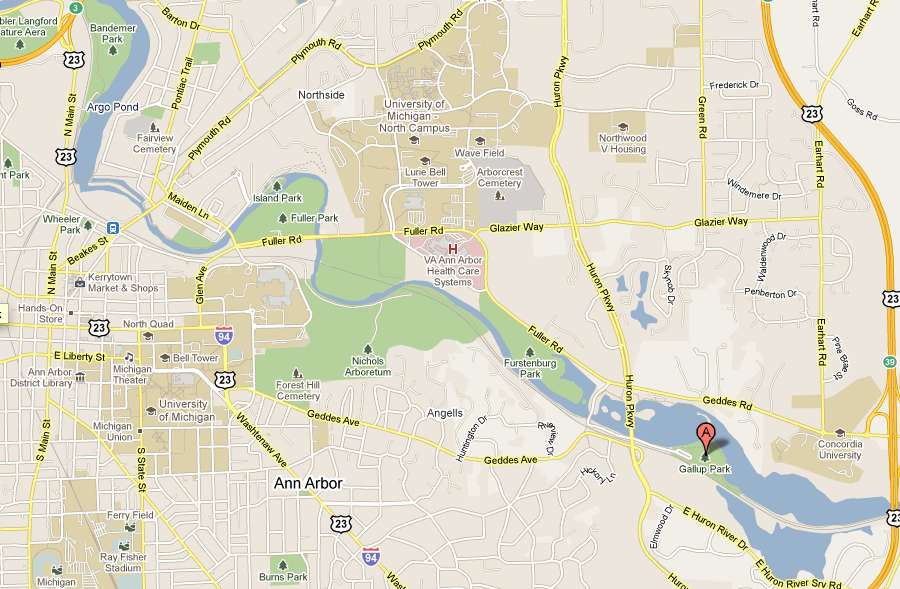
Next Saturday, October 15th, in the morning, you will find me at Rick's Run For Kids, doing a mixture of running and walking around beautiful Gallup Park to raise scholarship money for Ann Arbor Public Schools Rec & Ed. 

Why? 

Rick's Run For Kids is one way that Rec & Ed raises money for scholarships that allow lower-income families in our district to access all the wonderful extra-curricular work that Rec & Ed does. That includes summer camps, after school language and dance programs, youth soccer (baseball, volleyball, field hockey, etc.), exercise and educational classes, and so much more.

I'm on the Recreation Advisory Committee for AAPS, and this really does make a difference.

MORE RUNNERS/WALKERS=MORE SCHOLARSHIPS!

Please join me. Sign up here! 

Online registration goes until noon on October 12th, you can register in person after that.

The 5K starts at 9:00 A.M.
There is a Kids' Dash for kids 10 and under that starts at 10:15 a.m.


*Who was Rick?


No, in this case, Rick does not refer to our state's governor. (You laugh, but I was asked that by a couple of people.)


Rick refers to Rick Dekeon, a beloved Physical Education teacher at (then) Northside Elementary, who also served on the Recreation Advisory Committee for many years and was a Rec & Ed coach and official. He believed that athletics are for everyone, and through RAC and several other PE committees, his influence went far beyond the halls of Northside. He volunteered his time to run a before-school running club for kids, and that's why a Run for Kids seems like a great way to memorialize him.

So won't you join me?  (Bring a couple of friends, too--why not?!)

Consider subscribing to Ann Arbor Schools Musings by Email!

Sunday, September 11, 2016

Introducing...Educate Ann Arbor

Those of you who have been reading this blog for years know that this year, my youngest child is entering his senior year of high school! Where did the time go?

[Digression: He writes, too--follow the Community High School Communicator, people--it's got good stuff!]

So anyway, you know that I'm planning on phasing out my writing here as he phases out his career. (Or--I'm willing to "sell" this blog--for $0.00!--if anyone else wants to take on writing about our county schools. Seriously, maybe that's you.) MORE SERIOUSLY, I cannot do "this" alone.

So anyway, what I've been thinking about is the subject of "this": what comes next? I don't mean for me personally--I mean for the movement to educate people about our schools, promote transparent decision-making, support children and teachers, advocate for better school finance arrangements, oppose testing and the educational reform agenda...just for starters. These are not short-term issues; they require long-term attention.

Across the nation, people are organizing. Diane Ravitch helped establish the Network for Public Education.

Many thanks to Pete Sickman-Garner for the fantastic logo and to Meredith Buhalis for web site design.


Here in Ann Arbor, we are organizing too, and I'm proud to say that I'm part of the group that has established a new "organization," (it is so informal at this point that it is kind of a "baby organization") and a new web site, educateannarbor.org.

I am excited about our mission and our platform. It's a bit long, but hey--education is kind of complicated. I didn't know it at the time, but the platform very much echoes the platform of the Network for Public Education.

I'm posting the "overview" part of the mission below.

I very much hope that you will visit the web site and ENDORSE our platform. Eventually we will have a list of people who have endorsed the platform on the web site (which is why you have the option of "endorsing" anonymously--in case you cannot or don't want to be public). And eventually, this will not just be a small group of people with a vision, but a large group of people with many action plans.

Educate Ann Arbor is a group of parents, teachers, school staff, students and citizens who care about our public school systems and work toward educating our community about public education. We believe parents should have an active voice in their children’s education. We believe teachers are professionals and should be treated as professionals. We believe in teacher-driven assessment. We support the rights of teachers, paraprofessionals, and other school staff to unionize. We endorse community-driven decision-making. We insist the State of Michigan make school funding a priority.
Read the rest of our platform/philosophy here, and join us!


Consider subscribing to Ann Arbor Schools Musings by Email!

Wednesday, September 7, 2016

Good, And Plenty

Exactly three years ago I wrote a post about how I hate the "Exceptional" tag that the Ann Arbor Public Schools uses to promote their schools. You can read that post here.

I've thought some more about it. I still hate it. Because exceptional doesn't mean good, or excellent; exceptional means that we are better than everybody else.

That's not my goal. We don't need to think of ourselves as better than everybody else. I was thinking about it earlier this summer, and I believe there is a candy that represents my goal.


Here's what I want, for all schools.

Schools that are good, and that have plenty of opportunities for all kids.

That's my new slogan: Good, and Plenty


Consider subscribing to Ann Arbor Schools Musings by Email!

Wednesday, June 24, 2015

Key Updates--And A Survey

1. Have you liked Monet Tiedeman's live blogging of the school board meetings?
Find her work again tonight (the meeting is at Huron High School, by  the way):

https://annarbivore.wordpress.com/

Bookmark it!

2. Congratulations to Scott Westerman, for getting the Ann Arbor Preschool named after him. Dr. Westerman was Superintendent of the Ann Arbor Public Schools for many years and has stayed active in the community. (Yes, even now! He's still on the AAPS Blue Ribbon Advisory Group.)

3. Regarding the rumor that TAs might be outsourced, the school district would like to put that rumor to rest. Here's a comment from David Comsa, the Deputy Superintendent for Human Resources and Legal Services:

There is no chance of AAPS outsourcing teaching assistants. First, the district is actively bargaining with the Paraeducator unit, which includes teaching assistants. Second, state case law considers most teaching assistants to be protected from outsourcing. 
4. Lieutenant Governor Brian Calley has been doing a lot of work on the needs of kids who qualify for special education services in this state.

He has had meetings around the state, and now he has got a survey going, and he's hoping for a better response.

Find the survey at michigan.gov/calley.

I think most parents who have kids with special education needs have been impressed by Lt. Gov. Calley's work on this issue, so...help him out!


5. Need shots? The Regional Alliance for Healthy Schools is offering free immunizations:
Student Immunization Clinics
Walk-ins available from 9 am - 1 pm     
July 29th, 30th  &  August 5th, 6th, 12th, 13th
RAHS - Scarlett Middle School
You do not need to be a registered student at these schools to receive services. RAHS accepts insured and uninsured patients, regardless of ability to pay.
Washtenaw County Public Health staff bringing in polio vaccines.
In the 1950s. From Old News at the Ann Arbor District Library.


Consider subscribing to Ann Arbor Schools Musings by Email!

Thursday, March 26, 2015

Activism Means Action: Performance Art and School Board Activity on Safety and Dangerous Weapons

Guns With History: Performance Piece or Educational Video?


This is a very interesting performance art education piece on the implications of carrying a gun around. I am still trying to think about whether I like it or not, think it is effective, or not. There is something about it that bothers me a bit, but as performance art it's definitely dramatic. And it's so sad! What do you think? Let me know in the comments.

Update 3/29/2015: I was asked by a reader who found the Guns with History video very upsetting to take it down, and I have done so. [Even though I don't agree with her reasons--I did ask what people thought about it, and that was the only reaction I've gotten.] It'a s youtube video uploaded by Prevent Gun Violence, and anyone who really wants to see it can do a web search.

Thank You


Meanwhile, it's time to give thanks to the Ann Arbor school board and administration, for trying to write up policies that will restrict weapons on school property, and at the same time will stand up against a likely court challenge!  I am pasting in, below, the policies under consideration. As usual, you can share your thoughts with the entire school board and the superintendent, by emailing: boe@aaps.k12.mi.us. (And yes--even if they don't respond--they do read their emails.)

I, for one, am very appreciative of the school board's efforts.

DRAFT POLICY 5410 – Safe & Disruption-Free Environment


In accordance with the authority granted by the Revised School Code to ensure the safety and welfare of students while at school or a school sponsored activity or while en route to or from school or a school sponsored activity and to exercise powers incidental or appropriate to the performance of functions related to educating pupils, the Board of Education designates all property owned or by the Ann Arbor Public Schools “Dangerous Weapon & Disruption-Free Zones”. 

The Superintendent shall create and implement any regulations and procedures necessary to enforce such zones in order to prevent and mitigate actual or potential emergencies and threats to the safety of our students, faculty, staff, families, and citizens.

The Superintendent may exercise any power necessary, as granted and required by Michigan law, to educate students and maintain a safe and productive educational environment at all times.

The Superintendent shall ensure our commitment to the least disruptive school environment possible by refusing any person (students, employees or the public at large) attempting to access school property in order to preserve order in the educational process or to protect students from potential harm without violating any fundamental right to go onto or access school.1 This refusal may occur if the person causes either actual or a reasonable forecast of material disruption to the educational process.

1 WD Mich 2002

The Superintendent shall create and implement any regulations and procedures necessary to enforce such zones in order to prevent and mitigate actual or potential emergencies and threats to the safety of our students, faculty, staff, families, and citizens.
The Superintendent may exercise any power necessary, as granted and required by Michigan law, to educate students and maintain a safe and productive educational environment at all times.
The Superintendent shall ensure our commitment to the least disruptive school environment possible by refusing any person (students, employees or the public at large) attempting to access school property in order to preserve order in the educational process or to protect students from potential harm without violating any fundamental right to go onto or access school.1 This refusal may occur if the person causes either actual or a reasonable forecast of material disruption to the educational process.
1 WD Mich 2002


DRAFT POLICY 5420 – Dangerous Weapon and Disruption-Free Zones

The Board of Education, operating within their legal duty to ensure student safety while at school, en route to school, or at school sponsored activities, and an educational environment free from disruption, declares all properties owned or leased by AAPS as Dangerous Weapon and Disruption-Free Zones. 
No person in possession of a dangerous weapon will be allowed to remain on property owned or leased by AAPS at any time when students are at school, en route to or from school or at a school sponsored activity in accordance with Board Policy 5410 to maintain the least disruptive educational environment and to ensure the safety and welfare of students. 
A dangerous weapon shall include a firearm (including a starter gun or pistol) or any device which will or is designed to or may readily be converted to expel a projectile by the action of an explosive, any destructive device or any explosive, incendiary, or poison gas bomb, grenade, rocket having a propellant charge of more than four (4) ounces, missile having an explosive or incendiary charge of more than one-quarter ounce, mine or similar device; a dagger, dirk, stiletto, knife with a blade over three (3) inches in length, or pocket knife opened by a mechanical device, an iron bar or brass knuckles or, any other weapon as set forth in 18 USC&921. Also, any electronic device that inflicts or causes pain or suffering is likewise considered a weapon.* 
This prohibition does not apply to officers duly sworn to and in good standing with public law enforcement agencies. The Superintendent or Superintendent’s designee may authorize additional exceptions with subsequent and timely notice to the Board. 
The Superintendent shall create and implement any regulations and procedures necessary to enforce such Dangerous Weapon and Disruption-Free Zones in order to prevent and mitigate actual or potential emergencies, disruptions and threats to the safety of our students, faculty, staff, families and citizens.


Click on this link and you, too, can subscribe to Ann Arbor Schools Musings by Email!

Tuesday, March 24, 2015

Worth Your Time! Parent Presentation to AAPS Assessment Committee on Opting Out of the MSTEP

Angie Smith, one of the parents on the Ann Arbor Schools Assessment Advisory Committee, shared this powerpoint presentation with the committee this week, and has given me permission to share it with the rest of the world.

One more thing: in the "settings" on Google Slides (the little wheel option on the right side of the black bar at the bottomo), you can choose to look at the speaker notes, and I think you will find them helpful.


Consider subscribing to Ann Arbor Schools Musings by Email!

Thursday, March 12, 2015

Ann Arbor Public--And School Board--Want Guns Out of the Schools

In case you missed it, at last night's board meeting there were some nice statements from Superintendent Jeanice Swift, President Deb Mexicotte, and Secretary Andy Thomas. And there was also agreement from the board to ask the state to change the law. Show the school board some love for stepping up to the challenge! (In other words, tell them thank you.

Meanwhile, Josh Wade, the guy who started the whole thing off by bringing his gun into a choir concert, called schools "mass murder enablement zones" during public speaking time. You can't make these things up! Aside from the Wade family, most of the "open carry" people came from out of the county.

Read: 

Dr. Swift's Comments

Nice quote:

The presence of guns in schools runs contrary to everything we are wired for in education, and we believe it is counterproductive to maintaining a rich, productive, and healthy learning environment for our children.

Deb Mexicotte's Comments

Nice quote: 
There are those that somehow think that this discussion is outside of our purview as a Board, or that we are somehow passive bystanders as the debate around school safety and the law ensues. That the law is the law and we are simply the willing sheep that follow and enforce it. That is not the case...We are bound to follow the law, but we are not required to agree with it. As a matter of fact, if there is law that is detrimental to what we believe is in the best interests of our students or our citizens, it is our responsibility to work to get that law changed. We pass resolutions, lobby Lansing and chide the Governor on a regular basis when we think something is in need of change. The policy on CPL owners in gun free zones is no different than railing against the funding model of Proposal A, or the interpretation of the State Constitution allowing alternate uses of the School Aid Fund.

Andy Thomas' statement

Nice quote: 
First, the “open carry” law as it exists in Michigan and as it applies to our schools places our principals and teachers in a completely untenable position. The presence in a school of an individual with a gun is a potential threat to the safety of children. Principals and teachers will have to act very quickly to assess the threat. The stakes involved in making the wrong assessment are incalculable, adding even more stress to an already stressful profession. Open carry needlessly turns principals and teachers into security guards instead of educators.

Teacher Trevor Staples asked people on twitter to show what they would like to open carry. I like this one: 


We definitely need more clipboards, fewer guns.
Screen shot from twitter, 3/12/2015.

I asked for haikus about Open Carry. I got these two: 

Thank you haiku artists! Screen shot from twitter, 3/12/2015.


Consider subscribing to Ann Arbor Schools Musings by Email!

Tuesday, September 16, 2014

What Questions Do You Have for Ann Arbor and Ypsilanti School Board Candidates?

I am gearing up for the contested school board elections in Ann Arbor and Ypsilanti. To that end, I will be asking school board candidates to answer some questions, and I will be placing them on this blog.

You can help me by taking my survey, and suggesting questions to ask the (potential) school board members. In some cases, you may have a specific question or two for specific school board candidates.

Let me know what you would like to know! --Thanks, Ruth


Consider subscribing to Ann Arbor Schools Musings by Email!


Sunday, August 10, 2014

Can an On-line Course Teach Poetry Slams? A Guest Post by A3 Teacher

This is Part 2 of two posts about online learning by A3 Teacher. Here is Part 1.


Last week I wrote about my experience as a student taking an online course. In my experiences, as both a student and teacher, critical thinking skills are better developed in a traditional classroom.


Many on-line schools would like to give you the idea that you can teach or do (almost) anything virtually that you can do in person. For example, for the past several years, the Michigan Virtual University has hosted a Poetry Slam Contest.  Check out the video below.


Anyone who has been to an Ann Arbor Poetry Slam will be able to clearly see, hear, and feel the difference.  


Screen shot from a Communicator article which featured
the high school poetry slam. Videos are embedded
in the article.

[Editor's Note: I couldn't figure out how to embed any of these videos, BUT if you click on the link you can watch several videos from an Ann Arbor Poetry Slam.]


In this case, I believe that the coaching, mentoring, and collaboration of face-to-face meetings results in a drastic comparison.  This is just one comparison that is an example of the depth of learning and skill-building that can happen in a classroom.  


Classrooms benefit from face-to-face interaction and discussions.  Most private schools in the Ann Arbor area do not offer online classes but instead focus on the development of relationships and cultivating inquiry and deep critical thinking skills.  Some classes are taught “seminar-style” where discussion about topics and texts is in-depth and focuses on critical engagement and theory work.  Programs such as International Baccalaureate build on the concept of mastery through the intense development of discussion, verbal practice, and depth of knowledge. Certain assessments for the IB are audio recorded and sent to other countries for objective assessment.  

I am not yet convinced that online learning has reached the ability to adequately serve even the highest achieving students.


Something different happens in a classroom discussion that cannot be replicated online.  In the on-line class I took, most of the time I spent posting to the online discussion took 5-10 minutes each.  I could also be very selective in what I read (whose posts I read) and which posts I responded to.  In contrast, a Socratic Seminar, or a discussion that pulls in students’ perceptions and opinions, or a real-time discussion that can go on for over an hour is an important skill for students to master (this being said, discussions can also go very poorly without clear parameters or an instructor who knows how to guide students).  


When students engage in sustained reading, writing, and thinking, they develop critical thinking skills that develop true depth and mastery.  A Harvard professor has students spend three hours in an art gallery staring at a painting as part of an assignment.  She states that “Every external pressure, social and technological, is pushing students in the other direction, toward immediacy, rapidity, and spontaneity—and against this other kind of opportunity. I want to give them the permission and the structures to slow down.”  This is crucial.  


When a student spends 45 minutes with a primary document, or 70 minutes discussing a 10-line poem, or 50 minutes debating the ethics of cloning, students learn how to slow down, listen, and think.  This does not mean that discussions won’t get messy (sometimes good discussions have no definite result or a clear decisive outcome), but it means that students will develop deep critical thinking skills that will benefit them in a variety of areas in life.  Students learn impulse control and to consider multiple viewpoints as opposed to seeing the world in a reactionary and simplistic way. 

Something different happens in the human brain when students spend long amounts of time thinking, reading, writing, and listening. These processes - reading, writing, and thinking - go hand in hand. Isn't that what we want?


Consider subscribing to Ann Arbor Schools Musings by Email!

Tuesday, July 1, 2014

Freedom Summer (50 Years Old) and Independence Day Thoughts

I was trying to think of an appropriate blog post in honor of Independence Day, when I heard on the radio that this summer is the 50th anniversary of Freedom Summer.

Ahhh. Something I know a little bit about. Something highly meaningful. Something with an interesting curriculum!

What was Freedom Summer? According to the Congress of Racial Equality:

Freedom Summer was a highly publicized campaign in the Deep South to register blacks to vote during the summer of 1964.
During the summer of 1964, thousands of civil rights activists, many of them white college students from the North, descended on Mississippi and other Southern states to try to end the long-time political disenfranchisement of African Americans in the region. Although black men had won the right to vote in 1870, thanks to the Fifteenth Amendment, for the next 100 years many were unable to exercise that right. White local and state officials systematically kept blacks from voting through formal methods, such as poll taxes and literacy tests, and through cruder methods of fear and intimidation, which included beatings and lynchings. The inability to vote was only one of many problems blacks encountered in the racist society around them, but the civil-rights officials who decided to zero in on voter registration understood its crucial significance as well the white supremacists did. An African American voting bloc would be able to effect social and political change.Freedom Summer officials also established 30 "Freedom Schools" in towns throughout Mississippi to address the racial inequalities in Mississippi's educational system. Mississippi's black schools were invariably poorly funded, and teachers had to use hand-me-down textbooks that offered a racist slant on American history. Many of the white college students were assigned to teach in these schools, whose curriculum included black history, the philosophy of the Civil Rights Movement, and leadership development in addition to remedial instruction in reading and arithmetic. The Freedom Schools had hoped to draw at least 1000 students that first summer, and ended up with 3000. The schools became a model for future social programs like Head Start, as well as alternative educational institutions.Freedom Summer activists faced threats and harassment throughout the campaign, not only from white supremacist groups, but from local residents and police. Freedom School buildings and the volunteers' homes were frequent targets; 37 black churches and 30 black homes and businesses were firebombed or burned during that summer, and the cases often went unsolved. More than 1000 black and white volunteers were arrested, and at least 80 were beaten by white mobs or racist police officers. But the summer's most infamous act of violence was the murder of three young civil rights workers, a black volunteer, James Chaney, and his white coworkers, Andrew Goodman and Michael Schwerner. On June 21, Chaney, Goodman and Schwerner set out to investigate a church bombing near Philadelphia, Mississippi, but were arrested that afternoon and held for several hours on alleged traffic violations. Their release from jail was the last time they were seen alive before their badly decomposed bodies were discovered under a nearby dam six weeks later. Goodman and Schwerner had died from single gunshot wounds to the chest, and Chaney from a savage beating. (Emphasis added.)

Wait--there was a Freedom Schools Curriculum?


Yes--they took themselves seriously! There was a full and interesting curriculum.
The Freedom Schools met across the state of Mississippi, and you can access the curriculum right here.
Details of the curriculum and PDFs can be found here.

Take a Look


Here is a short excerpt from Unit IV: Introducing the Power Structure.

Concept: That there are many kinds of power we could use to build a better society. What is power? (Power is the ability to move things.) What kinds of power are there? Discuss.

MississippiPolice state
Intimidation
One party
No vote
Unjust laws
Citizens Council
control, banks, jobs etc


Physical Power(Power to coerce or frighten)

Political Power
(Power to influence)


Economic Power
(Power to buy)
Freedom MovementFederal intervention
Vote
Convention Challenge
Negro candidates
Boycott,
Strikes

Do these “powers” balance each other? Do they succeed in bringing the two sides together or do they tend to pull apart? Are there other kinds of power?

Truth Power
(Power to Convince or Persuade)
Does persuasion pull people apart? Is it a different kind of power? Can we use truth to reveal the lies and myths? What happens once they are revealed? Once someone is convinced or persuaded, can they join with us? Is the better world for them too?

Soul Power
(The Power to Love)
Can you love everyone like you love your family or your friends? What does compassion mean? Is that a kind of love? Is there something in other people that is like what is in you? Can soul power change things? How?


The Freedom Schools had a convention in August 1964, and this was the Education Platform that resulted. A lot of it will sound familiar!

     In an age where machines are rapidly replacing manual labor, job opportunities and economic security increasingly require higher levels of education. We therefore demand:
1. Better facilities in all schools. These would include textbooks, laboratories, air conditioning, heating, recreation, and lunch rooms.
2. A broader curriculum including vocational subjects and foreign languages.
3. Low fee adult classes for better jobs.
4. That the school year consist of nine (9) consecutive months.
5. Exchange programs and public kindergarten.
6. Better qualified teachers with salaries according to qualification.
7. Forced retirement (women 62, men 65).
8. Special schools for mentally retarded and treatment and care of cerebral palsy victims.
9. That taxpayers’ money not be used to provide private schools.
10. That all schools be integrated and equal throughout the country.
11. Academic freedom for teachers and students.
12. That teachers be able to join any political organization to fight for Civil Rights without fear of being fired.
13. That teacher brutality be eliminated.

Why do I share all of this? 

Two reasons.

1. From the editors of Education and Democracy,

The Freedom School Curriculum is one of the best examples of an effective progressive curriculum whose goal was to give students academic as well as democratic citizenship skills.  This site includes the original curriculum with supporting primary source materials, a brief historical context (editor’s introduction) and suggestions for how to use the FSC as curriculum today. Among those that we hope will find this material helpful are people starting modern freedom schools, high school and middle school teachers as well as progressive historians and teacher educators.
Photo by Tom Arthur. Used under a Creative Commons license.
Found here: http://en.wikipedia.org/wiki/Voting#mediaviewer/File:Voting_United_States.jpg

2. It's Independence Day this week. While we are out celebrating with fireworks, popsicles, parades and barbecues, let's not forget that a lot of the history of this big and beautiful country rests on the right to vote. The original "tea party" wasn't about "no taxation." It was about "no taxation without representation." Voting--it's something we shouldn't take for granted.

HAPPY INDEPENDENCE DAY!


Click here to subscribe to Ann Arbor Schools Musings by email!

Sunday, June 1, 2014

June 2014: Infographics, Podcasts, and Partners--Maybe?


June Experiments

Last June, you might recall,
I joined a post-a-day "blogathon."

I had the goals of challenging myself to see if I could do it, and also seeing if it would increase my readership. It did both. I also learned some interesting blogging tricks and ideas, and I met some bloggers internationally. (I had guest posts from Singapore and Japan!)

But--it was exhausting. I do, after all, have a full-time job and kids.

So this year I am going to give myself a slightly different challenge, because--really--the reason that I started this blog had more to do with me than with schools.

Quick recap:
I was intrigued by blogging, but didn't fully understand it.
I felt the best way to learn about blogging was to learn by doing.
I searched for a topic and landed on local schools because
a) I already knew a fair amount about them and about education in general, and
b) I felt I wouldn't run out of things to say.

But--there are some blogging techniques I have not learned yet, and since this blog is supposed to be educational for me as well as for you, during June I am going to try to:

a) create at least two infographics, and 
b) record two podcasts or videos and post them.

Maybe I'll do more, but I'm hoping this will keep things fresh and fun--and by posting this, I'm hoping to keep myself accountable. [If you are good at this stuff, let me know because I may need to ask you some questions!]

I know that you are wondering--how can I cheer Ruth on?

Well. . . comments are nice.

Also--if anyone is interested in guest posting or coming on as a regular contributor, please let me know.


If you are a regular reader, you know that I have made this offer before, but I'll just point out that:

a. My youngest child is in high school. I could really use more information about the elementary and middle schools, and I also see that my time on this blog will have a natural end. . . you may be a few years behind me.

b. I don't have any kids utilizing special education services. I never have, in fact, so everything I learn about that system is from friends. . . but maybe you do have direct experience.

c. I do have teaching certification and an education background. But I am not teaching in any local school--public, private, or charter. But maybe you are.

d. I live in Ann Arbor and my kids have attended the Ann Arbor Public Schools. Let me tell you, the Ypsilanti, Dexter, Saline, Whitmore Lake, Manchester, Chelsea, Milan and Lincoln schools are crying out for more attention. And that's without even mentioning the need for coverage of charters! I'd love more out-county coverage.

e. History. Are you a history buff? There are lots of interesting stories in the education files at the Ann Arbor and Ypsilanti libraries, as well as in the local history society files. Would you like to shine a light on some of these stories?


Consider subscribing to Ann Arbor Schools Musings by Email!

Tuesday, May 20, 2014

Reflections on Ypsilanti Community Schools, Year 1: Take the Survey

It was--and is--a BIG DEAL.
Last year, Ypsilanti and Willow Run schools consolidated into Ypsilanti Community Schools, and it has been a year of firsts.

It's time for a little reflection. If you are a teacher, staff person, parent, student, community member with some thoughts about the district, I'm asking you to share your thoughts and ideas--the good, the bad, and what can be improved.

Take the survey! I will share results, probably sometime next week.

NOTE: You may have noticed that I removed the YCS logo. The district was concerned people might think this survey was endorsed, or organized, by the district. It isn't. It's organized by me alone. To share what the community is thinking. I hope there will be a wide cross-section of responses. 


Consider subscribing to Ann Arbor Schools Musings by Email!


Tuesday, May 13, 2014

State Budget Discussions: School Implications, Again

Budget Season is Back


Steve Norton of Michigan Parents for Schools wrote last week:


After a three-week break in April, the State Legislature is back at it again. It's budget season in an election year, which means that lawmakers will be trying to satisfy voters by showing some support for key programs such as our public schools -- or at least give the appearance of doing so.
He notes that the state's revenue projections, coming out this week, will have a major impact. The first projection came out today (two more coming tomorrow and Thursday), and at least the first projections don't look too good for schools--given that they are clearly an afterthought for Snyder and Company.

According to this article, the House Fiscal Agency projects that "The state will bring in about $400 million a year less in revenue than officials estimated in January." [Note: revenues are growing. Just not as much as the projections from earlier this year, which were revised to be ever more optimistic.]

Further, according to the article,
Net state revenue is projected to dip just under 1% in 2013-14, the report says. While general fund revenue is expected to dip 3% — or $290 million — to $9.3 billion. The net School Aid Fund revenue is expected to increase about 1.5% — or $169 million — to $11.4 billion. Net revenue still is expected to increase significantly in 2014-15 and 2015-16, just not by as much as projected earlier.
And--there is significant competition for any money that is seen as "extra" for road funding and the Detroit bankruptcy. And also--the Detroit News is reporting that the Education Achievement Authority administrators are jet-setting around the country while the rest of the state loans them money.


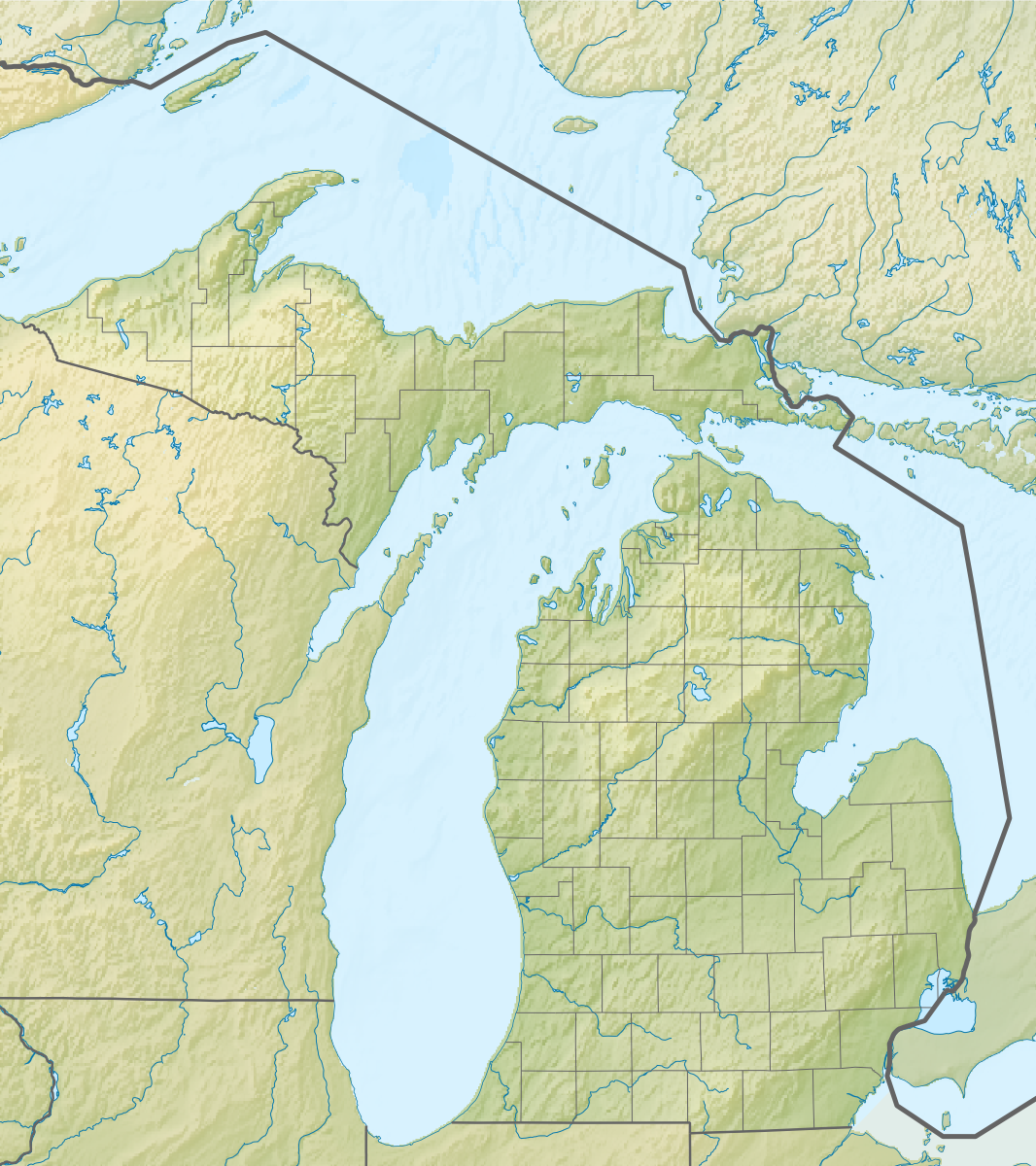
Big, beautiful Michigan does not want to fund its
schools properly. (At least, its government doesn't.)
Map taken from:
http://upload.wikimedia.org/wikipedia/commons/8/89/Relief_map_of_USA_Michigan.png


School Funding Proposals


According to Michigan Parents for Schools, the current proposals for school funding are as follows:


Governor's proposalHouse versionSenate versionInflation projections
Minimum: +$111 (to $7,187), 1.6% increase
Basic (maximum) +$83 (to $8,132), 1.0% increase
Minimum +$112,1.6% increase
Basic +$56, 0.7% increase
Min +$300,4.2% increase
Basic +$150,1.9% increase
2014 forecast: 1.3%
Avg. 2011-13: 2.3%
These increases do not reflect other changes, like "best practices" and pension plan cost changes, which may raise or lower the per-pupil funding available.

Or, as Christine Stead (AAPS school board member) succinctly states in describing the impact on Ann Arbor schools (this helped me visualize the numbers)
One would think that our FY15 will be much better [ed. note: due to the economic recovery] and we can look forward to investing again in one of our most important economic drivers: high quality education. Until you review the state’s proposals ($$ shows the impact for AAPS):
Governor’s proposal: $55,000
  Senate proposal: ($2,171,000)  House proposal: ($1,276,000) 
There is a serious disconnect in how our schools are funded, the state of our economy, and any local community’s ability to do anything about it (currently).
Multiply that by schools around the state. 


Talking Points


Michigan Parents' for Schools talking points:
At the very least, all districts deserve an increase in per-pupil funding that allows them to keep up with inflation. 
These increases should be calculated after the impact of other changes such as shifts in state pension costs, not before.  
Current law specifies that school districts should get a supplement in their per-pupil funding for every student from a family living below the poverty line. But we have never fully funded this provision, and the current spending level only covers half of what the law requires. We need to give our schools the resources they need to fight the impact of poverty, and all schools should be eligible for these funds. 
Right now, local school districts must take money from their general education funds in order to meet their important (and legally required) obligations to provide special education services. Our schools should not have to choose between meeting their moral and legal obligations to students with disabilities and having sufficient resources for all their students.
It's hard not to feel despairing about the impact we can have. 
But we need to keep trying.


Giving Input on Proposal A


Christine Stead is asking for some specific input. Here's why:


John [Austin, President of the State Board of Education], and the State Board of Education, has started a process to seek input from different organizations on the impact of Proposal A and the general funding experience for public education.  The process will shift to take input from community members and school systems over the next few months.  Presentations made so far can be found here.
I will accompany the Superintendent and CFO from the AAPS on June 17th to submit the AAPS experience and recommendations for changes to Proposal A.
If you have specific suggestions, Christine Stead would like to hear from you with your suggestions about changes to Proposal A. She writes, 
Folks can either email me or submit comments/questions to this site [k12christinestead.com]. I’ll do what I can to get answers to questions. I also don’t mind submitting folks’ comments to the State Board of Education as part of our testimony – especially if they lead toward solutions. You can use either email for me: steadc@aaps.k12.mi.us or christine.stead@gmail.com. 

Consider subscribing to Ann Arbor Schools Musings by Email!

Sunday, April 20, 2014

Why Girls and People of Color are Less Likely to Choose Science

One summer, in the middle of college, I worked for a Parks Council project in Central Park in Manhattan, supervising 24 high school students on a jobs training program. I wrote about this experience in the context of a proposed jobs bill by Obama back in September 2011.

In 1983, I scored a summer job working for the Parks Council in New York City.  I was a "supervisor" of two team leaders and 24 high school students for a CETA jobs program. There were 20 African-American kids and 4 Latino/Latina kids; the team leaders were a Latino community college student and an African-American student from Howard University. I was the only white person, for the first time in my life.
Do you remember CETA? It was the Comprehensive Employment and Training Act, a federal program that offered people with low incomes, as well as the long-term unemployed, with jobs and job training programs in the public and non-profit centers.
I think because I was white, I got assigned to the tony southern end of Central Park. Some of the other New York City parks were not so nice, and they had longer commutes from my house. At lunchtime I could sit by myself, or with my boyfriend, and watch Dustin Hoffman eat his lunch with his friends. Yes, he would come to the park too. 

The animals had been removed from the Central Park Zoo by 1983.
Our headquarters were in the Central Park Zoo, which was mostly closed for renovation in 1982--a good thing since the original animal stalls were truly prison cells. There is a nice history of the zoo here. The only animals that I remember still being at the zoo were the sea lions. (Photo taken from here.)
The kids taught me slang--"I've got my main squeeze and my two side squeeze"--as well as why we couldn't rake leaves in certain areas (rats). I'm not sure what I taught them. . .
But one day we were on a field trip and one of the girls came up to me. She had just finished 10th grade and she was probably the most diligent worker in the group. Her mother was from Jamaica and worked as a nurse's aide.
"I was thinking," she said to me, "that maybe I could become an LPN [Licensed Practical Nurse].""Great!" I said. "That's a great idea!"
But in my heart, I thought, "Why be an LPN? You're smart enough to be an RN or a BSN. In fact, why not be a doctor? You're smart enough to be a doctor."
I didn't say that to her though.
Why didn't I say that to her? Well, probably partly because I was only 20. I couldn't even give myself career advice.But probably also because I wasn't trained to have Great Expectations from poor black kids.
I flashed back to this memory when I heard Neil DeGrasse Tyson address the question, "Why don't girls choose science?" It's worth--really worth--listening to his answer. [I couldn't figure out how to set this to start at 1:01:31, but that's where you want to start it.]


Consider subscribing to Ann Arbor Schools Musings by Email!

AddThis