Pages

Showing posts sorted by relevance for query Proposal A. Sort by date Show all posts

Sunday, October 18, 2009

Does It Take A Millage?

I have been hearing, and reading,  a lot of discussion about the proposed county-wide 2 mill education millage. If you are a county resident, you get to vote on it this coming November 3d. And if you've been reading this blog semi-regularly, you know that I have said Please, Raise My Taxes. Still, when I first heard about this county-wide millage proposal, my first reaction was NOT, "Oh, goody! Someone is listening to me." My first reaction was to get even madder about Proposal A than I already am. Under Proposal A, the Ann Arbor schools get pointed at critically because Ann Arbor is a "hold harmless" district and gets "so much money" (when Proposal A was developed, 44 [corrected 10/19/09] hold harmless districts were told if they bought in, they wouldn't lose money on the deal).  Yet thanks to Proposal A, we have lost control of how much money we can raise for our district, because that authority is ceded to a bunch of clueless state legislators. AND, to add insult to injury, we are still a "donor" district, meaning that more of our money goes out of the district than stays in the district.
As far as I am concerned, Proposal A was a deal with the devil. We lose control of our own destiny, and we don't get the security that was promised. So here's the essence of my thoughts. When I said, "Raise my taxes," I had in mind a state-level solution, one that would likely include a progressive income tax, instead of a flat income tax, which is what we have now. It doesn't look like that is happening anytime soon, but understand this: the real action around school funding is happening at the state level. The local millage question is peanuts in comparison.

Further, the choice of a county millage is simply the product of a loophole at the state level. We can't have district operating millages (only ones that cover things like construction). And one thing that I really don't like about this kind of millage is that it seems unfair to some parts of the state. Sure, Kalamazoo and Monroe counties might have supported county education millages, but I don't think we'll be getting all 83 counties on board. Which means even more disparities. And the *only* thing that Proposal A got right was the goal of reducing disparities among school districts.

After reading comments about the millage question on arborupdate.com and annarbor.com, I get the feeling that a lot of people are upset that (here are some arguments that I have heard, along with my response):
  • Teachers get paid too much. I don't believe they do--teachers are generally over-educated and hard-working. Sure, I want the burned out teachers to leave. But the millage vote will not affect their decisions. Why shouldn't a teacher make what an engineer makes? They have about the same amount of education.
  • Teacher health insurance is too good. I might argue instead that other people's insurance is too crummy. But even if I were to agree, it's not something I can control. It's a very clumsy tool to think that voting "no" on a millage will mean that teachers have to pay more for health insurance.
  • I'm suffering, you should suffer too. Well, of course, if you need to--if you are suffering--vote your pocketbook. But remember, it's not about the administrators suffering. It's about whether the kids need to suffer. So if you are not personally suffering, don't rely on this for your agrument. And since as the schools go, so go property values, it's likely that school cuts mean we will suffer even more. Schools are major economic engines, and employ thousands of people who live in our county.
  • I don't like that the district built Skyline--or closed Kettering, or moved the sixth grade into the elementary schools.  It's done. Let's move on.
  • I don't like that the new Ypsilanti superintendent is getting paid so much. I agree, especially since the district is asking the teachers for concessions. But it's done. Next time, you run for Ypsi school board and make a different decision.
  • I don't want money to go to Willow Run--it's not well-managed. I agree that it's not well-managed, but their huge deficit does not make it any easier for them. It makes it harder, and I'm hoping times will change and that the management will change.  
  • If I vote for a millage, I want it to be "value added." This seems like maintenance. It is. That is because of the state budget cuts. Call your state legislators and tell them to fund schools adequately.
  • The schools should cut administration first. I agree. And I think the school boards shy away from that. So why is it that so few people actually ran for school board in the last go-round? You should run for school board! I mean it. I would like to see contested contests in every district in the county. And when you do win the election, remember--even if you cut administrative costs in half, the vast majority of school costs are related to instruction.
  • The millage doesn't guarantee accountability. That's true, but that is not just true about the millage. We need to demand accountability, with or without the millage.
The truth is, the choices we get are shaped by the choices we have. Since I didn't run for school board, I don't get to vote on the superintendent's salary. I don't get to negotiate with the teachers or principals union. I don't get to decide what should be cut from the budget--and I think it's a lot harder than it looks. Perhaps, given a choice of cuts, you and I wouldn't agree. You might want to cut athletics, and I know that sports made the difference in my high school experience. I might want to cut all AP classes, and you might think Advanced Placement classes are essential.

The choices we get are shaped by the choices we have. We can't have a single district millage because that is forbidden by Proposal A. Anyway, would that be for the best? The Washtenaw County area is a more-or-less integrated economic unit. In my neighborhood in Ann Arbor, I know there are teachers from Dexter, Ypsilanti, Ann Arbor and Willow Run school districts. Those are just the ones I know. So what happens to teachers in Dexter or Willow Run will affect my neighborhood.

It's all about the kids. And voting is not enough. Public schools need caring people to run for school board, join committees, advocate at the state level, and volunteer in the schools. So however you vote, take that next step too, and ENGAGE.

But, yes. I am voting yes. I will be putting up a yard sign in my yard. And I have the literature for making a donation to the vote yes campaign sitting in my "in" box. I invite you to join me.

P.S. I've been very fortunate that so far I haven't had to remove a single comment or stop anonymous commenting.  That's because people have generally been respectful. Regarding taxes, passions run high. You don't have to agree with me, but please don't be snarky, mean, or rude. Thanks!

Tuesday, October 30, 2012

On the Ballot: These Proposals Will Affect Education

There are six proposals on the ballot. Three of them could have a direct, discernible impact on education in our state. These are non-partisan and toward the bottom of the ballot. Don't miss them!

Michigan Radio has done a terrific series on the ballot proposals, and you can find it here. Each proposal has its own story.

For the back story on the proposals, I would start with the Michigan Radio pieces, but I'm just going to give you a thumbnail sketch regarding the potential impact on the educational system from the ballot proposals--and I'm telling you how I am going to vote on them.

Proposal 1: This is a referendum on the Emergency Manager law

The current emergency manager law gives emergency managers a vast array of tools at their disposal, but in the process it completely disenfranchise the voters. The city council members, mayors, or school board members who have been elected by the residents of a particular locale have no say in what happens, and there is no specific timeline for returning power to them. A no vote says that this emergency manager law goes too far, and a yes vote says that you like this emergency manager law. Although I believe that the old emergency manager law should have been tweaked, I believe this goes too far and I am voting no. If you are interested, I have written about this emergency manager law and its connection to civil rights and justice here; and its connection to school taxation, here.

Proposal 2: This is the proposal that puts collective bargaining as a right into the constitution

Should collective bargaining be in the constitution? That is the essential question here. Lately there has been talk of attempting to turn Michigan into a right-to-work state. If Proposal 2 fails, I'm not sure there is any guarantee that Michigan would become a right-to-work state, but there isn't a guarantee that it wouldn't, either. I think it's reasonable to protect collective bargaining, and I'm voting yes. 

Proposal 5: This proposal would require a supermajority for any tax hike

You may remember that Proposal A, a 1994 proposal, is responsible for much of the difficulties in the ways that education is funded in Michigan. Steve Norton, executive director of Michigan Parents for Schools, a terrific watchdog agency, has also described the problems with Proposal A and state funding. Oh, and I've written a little bit about it as well, here.

When Matty Moroun, the owner of the Ambassador Bridge, got this on the ballot, he wasn't really thinking about schools, but I am. Any reform of state education funding is likely to affect taxation; in fact, any reform of state funding period is likely to affect taxation; and I don't want a supermajority for that. Our legislature is "stuck" enough as it is. So, I am voting no on proposal 5.

Proposal 6: The Bridge proposal

True, this has nothing to do with education. It has everything to do with Matty Moroun (see Proposal 5 above), who wants to preserve his monopoly on bridges. Bridges should be public, not private, as far as I'm concerned. In fact, one of the best things Governor Snyder has done has been to work out a deal with Canada where they pay the costs of an international, public bridge. Let's support that, and vote no on proposal 6.

Wednesday, November 13, 2013

School Finance: Can We Change Proposal A?

This discussion took place in the comments section of this blog post. I thought it was worth sharing more widely. Many thanks to Steve Norton of Michigan Parents for Schools for providing such great detail!

CG said...
Is anyone talking about making a campaign to amend the Proposal A section of the constitution? It seems like that's what it would take to fix this situation.
Steve Norton, MIPFS said...
There is always some talk about changing Proposal A, especially now that nearly 20 years has passed since its adoption. But it's a complex issue, and changing the constitution might not be the best way to fix school funding.

What I'm hearing most about right now are some proposed constitutional amendments (in the Legislature) that would restrict use of the state School Aid Fund to K-12 education only. (Currently, some of it is being used to pay for higher education - a use that is allowed under the Constitution but was clearly not anticipated by the authors of Proposal A.) As we saw last year, constitutional amendments are hard to sell to the public, but this one might have momentum. However, it would not truly solve the problems.

The funding system created by Proposal A has a lot of pieces, not all of which are in the Constitution. Different people dislike different parts of it: some upstate residents are angry that per-pupil funding has not yet been fully equalized across the state; some districts are frustrated that they cannot vote to increase their own taxes to support school operations; most people like the limits on the growth of taxable value of property but many - especially those in real estate - do not like the fact that taxable value resets to SEV when a property is sold (the "pop-up tax").

There are really two approaches to changing the funding system: giving local districts more control, and changing the funding stream. A lot of districts, typically those with high property values, would love to be able to increase their own local taxes to fund school operations. However, across the state, most districts have a pretty modest tax base and would not benefit much from that (and they worry it would increase inequality and reduce pressure to increase funding for all schools). It would be very hard to move any but the most limited proposal along these lines through the Legislature, though it can be changed in statute and does not need a constitutional amendment.

The other approach is to change the funding stream - and this can also be done in statute. Increases in the 6 mill State Education Property Tax are difficult - the constitution requires a 3/4 super-majority in both houses of the Legislature to do this. However, most of the state School Aid Fund comes from the sales tax and the income tax. Changing the rate of the sales tax might take a constitutional amendment (and would be undesirable for other reasons), but extending the tax to services can be done by the Legislature with a normal change in the law. Since services have been the growing part of the economy, and retail sales have not grown as fast as the economy, this would fix one of the built-in limitations of the current funding system. Similarly, the formula for earmarking income tax receipts to School Aid can be changed with normal Legislative action.

But recently, we've been going in just the opposite direction. As part of Gov. Snyder's proposal to end the Michigan Business Tax and replace it with a much smaller Corporate Income Tax (passed into law in 2011), the state School Aid Fund permanently lost $750 million per year that had been earmarked from the MBT but was not replaced. This helped turn the dip in school aid caused by the recession into a permanent state of affairs.

The true battleground is tax policy. If we want to fund education adequately state-wide, we need to change the funding stream to education. There is no mystery about how to do this. What is lacking is the political will - in the Governor's office and in the Legislature - to even discuss raising revenue for the benefit of education.

Steve Norton
Executive Director, Michigan Parents for Schools
CG said...
Thank you, Steve, for this--very informative. How can interested people (like me) help?
Steven Norton said...

That's a good question: how can interested people help?

There are several layers to this. One is local, and it has to do with getting the community re-engaged with our local public schools and reminding people that we have a responsibility to our community and our future when we consider options for our schools. We're not customers, we're owners - and that implies both authority and responsibility.

But on the state level, residents of the Ann Arbor Schools region need to be a little creative. Unlike parents in much of the western and northern parts of the state, our state legislators are almost universally supportive of more funding for education and community control of our schools. Voting for state-wide offices is important. But perhaps most important is to take the lead in shifting the debate on education policy.

Ann Arbor is in a special position to lead on this issue, because we are an affluent community that cares about quality education but wants it for all children, no matter where they live. We don't have a problem sharing resources; we just want to be able to keep what is best about our schools at the same time. This gives us the opportunity to take the moral high ground: what we want for our children is what we want for all children. My organization has taken precisely this position on hot-button issues like the Education Achievement Authority, and as a result we were able to bring together groups that don't usually work with each other, from both upstate and western Michigan and Detroit. We need to break down the regional barriers that have fractured the parent community and prevented us from uniting behind a common purpose.

How to do this? Well, all Ann Arbor citizens can help back up our state lawmakers when they argue for sound education policy in Lansing; we can also reach out directly to lawmakers from other regions. Parents and citizens can participate in state-wide efforts to unite those who care about authentically public education, giving strength to the efforts of organizations like Michigan Parents for Schools. We can and should form alliances with people of goodwill in all parts of the state. And we can use the intelligence and energy of our community to change the public discourse about education all across our state. The current trend to denigrate community-governed public education is based on some core (flawed) ideas; we need to spread other ideas that remind people why our nation has always put a top priority on democratically-governed public education.

It won't be easy or quick. The current situation, where education is seen as just another consumer good and market competition its salvation, has been decades in the making. If we are to turn it around, we must all look beyond the walls of our own schools and the borders of our neighborhoods, and ask others to do likewise.

Steve Norton
Executive Director, Michigan Parents for Schools

Thursday, January 26, 2012

Highland Park: The New Kalkaska?

The other day I was surprised to hear, on NPR, that Governor Snyder was telling the parents of students in the Highland Park, Michigan school district, that the district might run out of money and have to shut its doors even before the end of the school year--and/or he might appoint an emergency financial manager. (Snyder has already determined that there is a financial emergency.)

Maybe I shouldn't have been surprised. This is a road that Willow Run could be going down as well, as I described a few days ago. Just a few short weeks ago Highland Park got an emergency loan from the state to cover payroll.

According to this Detroit Free Press article,
The [emergency financial review] team found that a financial emergency exists based on factors including ending the school year on June 30 with an $11.3-million deficit, a 51% increase from the previous year.
The district had an operating deficit in excess of revenues for five of the six years evaluated and an average operating deficit of $2.3 million over seven years, [Michigan Department of Education Deputy Superintendent] Wolenberg said in her presentation on behalf of the review team.
The district saw a decrease in enrollment from 1,858 students in 2010 to 1,331 in 2011. There are currently 969 students enrolled, and about 40% of them live in Detroit, Wolenberg said. (1/21/2012)

Based on this determination, Governor Snyder sent out a letter to parents of students in the district. According to district officials,
the letter sends a deceptive message and could be taken as a warning to parents to get out of the district.
"If you were a parent this would be intended to scare you," said Highland Park school board secretary Robert Davis. "This is unprecedented communication with the parents. Why wouldn't you notify district officials?"
That's not the governor's perspective.
Sara Wurfel, a spokeswoman for Snyder, said the letter was meant to address the anger, fear and frustrations of the district's parents.
(Both quotes taken from a 1/24/2012 article in the Detroit Free Press, Highland Park schools 'in jeopardy of closing,' Snyder tells parents.)


Do you even know where Highland Park is? It is a small, impoverished urban community (fewer than 12,000 people) completely surrounded by the City of Detroit.

It also happens to be nearly 93% African-American. Just like many other communities that either have had emergency financial managers assigned to them or have the threat of them being assigned hanging over their heads.

And the city of Highland Park itself has been under emergency management for most of the decade of the oughts (as the 2000s can be called).

Do you even know where Kalkaska is? It is a small, poor (but not as poor as Highland Park) rural community with a population of under 2300, located in Kalkaska County in the northwestern part of the Lower Peninsula. The school district is geographically (and populationally--yes, I know that is not a word, but I like it anyway) larger than the village of Kalkaska, with something closer to 13,000 residents. (I'm not sure of the boundaries so I can't be too exact.) 

Oh, and Kalkaska happens to be over 96% white.

So in some ways, Kalkaska is a mirror image of Highland Park. But they also have a lot in common. This article from the Ludington Daily News of March 6, 1993, "Kalkaska system on brink of early closing as funds run out," explains it nicely.


Kalkaska (and other districts, too, like Ypsilanti!) was under a lot of financial stress--and the district famously closed three months early, at the end of March, in 1993.

And this "shot heard round Michigan," (if not the world) created a lot of impetus for the development of Proposal A. And as we see now, Proposal A solved some problems, but it created a whole host of others.

In 2012, Highland Park is not the only school district faced with the possibility of closing. Only this time, rather than the decision being made by the people who live there, the decision would be made by the state.

And I wonder, will any of this be the necessary catalyst for change? And if not, why not? Would race have anything to do with it?


Monday, November 5, 2012

Election Eve: Voting Reminders

Of course it's important that you vote, and remember--an educated voter is the best voter. To get your personalized ballot and read candidate statements, visit the League of Women Voters web site: www.vote411.org.

Another useful source of information is the Citizens Research Council of Michigan. Look for information on their web site at: http://election.crcmich.org/


Here are links to the pieces I've written about the election: 

School board races and more: 

2012 Washtenaw County Education-Related Items on the Ballot (with lots of links to other information)
This includes information about school board races across the county, including school board races in Ann Arbor, Saline, Dexter, Chelsea, Manchester, Ypsilanti, Whitmore Lake, Lincoln Consolidated, Willow Run, and Milan.

On the Ballot:

1. Non-partisan candidates matter for education (and I give some examples of why)

2. The proposals really matter for education (and I give some examples of why)

3. Washtenaw Community College board election (and I share some important background information) about why I am voting for Morton and Landau.


Ypsilanti/Willow Run Consolidation:

1. On the ballot: Ypsilanti/Willow Run Consolidation 

2. Thoughts about the consolidation from a guest poster (YpsiAnon)


Here are the things I am thinking about as I figure out who and what I am voting for:

1. In some of the cases above I've told you who I'm voting for:
For Supreme Court, I'm voting for Kelly, Johnson, and McCormack. I don't usually know too much about the Supreme Court candidates, but I had the opportunity to hear Bridget Mary McCormack, and she was truly impressive in discussing how the administration of law can change lives. Lots of educational issues do go through the courts (as I discuss, linked above) and I believe these three candidates will make an important difference.

2. On the proposals, I'm voting:
Proposal 1--No (ends the current emergency manager law)--as I explain, I see this as a civil rights issue--here is why.

Michigan Parents for Schools suggests you vote No on Proposal 1 because:
1) We urge you to vote NO on Proposal 1, the referendum on the most recent emergency manager law (PA 4 of 2011). A NO vote is a vote to repeal the law, leaving the previous emergency financial manger law in force (PA 72 of 1990).
Why? The nonpartisan Citizens Research Council of Michigan said it best: "The great departure in PA 4 [from previous law] is the granting of powers to emergency managers that are significantly greater than those that may be exercised by locally elected officials and the extension of those powers into every aspect of the local government." [emphasis added]
In short, PA 4 was an unprecedented intrusion into local democratic control of our schools and communities. Emergency Managers of school districts were given power not only over financial matters but also over curriculum decisions. Locally elected school boards were stripped of all power and effectively disbanded. Perhaps the most startling use of this power by EMs was the decision to close local school districts and replace them with charter school networks in two Michigan communities.
While the state government may have legitimate cause to intervene in local finances when things go awry, the extraordinary powers granted by PA 4 take this much too far. We urge a NO vote on Proposal 1.

Proposal 2--Yes (puts collective bargaining in the constitution). I think teachers and other workers need this protection.
Proposal 3--Yes (energy)--I don't see this as an education issue but I'm worried about climate change.
Proposal 4--leaning toward Yes (home health aides being allowed to organize--I don't see this as an education issue)
Proposal 5--No (supermajority for taxes)--this proposal is probably the most important one on the ballot regarding education, and it's funded by Matty Moroun--please, please, please vote no (read why using the link above).

Michigan Parents for Schools suggests you vote No on Proposal 5 because:
2) We also strongly urge you to vote NO on Proposal 5. This proposal, backed by a narrow array of anti-tax groups and special interests, would require a two-thirds majority vote in both houses of the Legislature for any increase in taxes. This notion might be appealing to some citizens, but the consequences for our schools and our state would be devastating.
The share of state personal income which state taxes now collect is close to the lowest levels seen since the Headlee Amendment was approved in 1978. The Michigan Legislature has been underfunding education for years and has locked our school funding into a tax structure that is not keeping up with inflation, let alone educational needs. This proposal would give a handful of legislators veto power over all efforts to increase revenue for education and other public services. For example, as few as 12 State Senators could block new sources of school funding.
Proposal 6--No (bridge proposal--another proposal funded by Matty Moroun

3. Ypsilanti/Willow Run consolidation--Ypsilanti and Willow Run are very much between a rock and a hard place here. I don't believe that this is the best deal they could have gotten, and there are significant risks associated with it. On the other hand, this is the deal they got, and it might be better than the alternatives. You can read more about the choices at:
http://www.together4ss.org/http://voteyes4kids.weebly.com/index.html

4. I know, you want to know how I'm voting for the Ann Arbor school board. I am voting for Deb Mexicotte. I appreciate that she works very hard, has educated herself on a lot of school issues, and appears to be honest and tell people what she's thinking and not necessarily what they want to hear. Having said that, I've had several occasions where she and I have not agreed, and if there were other candidates whom I thought agreed with me more I would probably support them. There aren't. At least not in this go-round.


Tuesday, May 13, 2014

State Budget Discussions: School Implications, Again

Budget Season is Back


Steve Norton of Michigan Parents for Schools wrote last week:


After a three-week break in April, the State Legislature is back at it again. It's budget season in an election year, which means that lawmakers will be trying to satisfy voters by showing some support for key programs such as our public schools -- or at least give the appearance of doing so.
He notes that the state's revenue projections, coming out this week, will have a major impact. The first projection came out today (two more coming tomorrow and Thursday), and at least the first projections don't look too good for schools--given that they are clearly an afterthought for Snyder and Company.

According to this article, the House Fiscal Agency projects that "The state will bring in about $400 million a year less in revenue than officials estimated in January." [Note: revenues are growing. Just not as much as the projections from earlier this year, which were revised to be ever more optimistic.]

Further, according to the article,
Net state revenue is projected to dip just under 1% in 2013-14, the report says. While general fund revenue is expected to dip 3% — or $290 million — to $9.3 billion. The net School Aid Fund revenue is expected to increase about 1.5% — or $169 million — to $11.4 billion. Net revenue still is expected to increase significantly in 2014-15 and 2015-16, just not by as much as projected earlier.
And--there is significant competition for any money that is seen as "extra" for road funding and the Detroit bankruptcy. And also--the Detroit News is reporting that the Education Achievement Authority administrators are jet-setting around the country while the rest of the state loans them money.


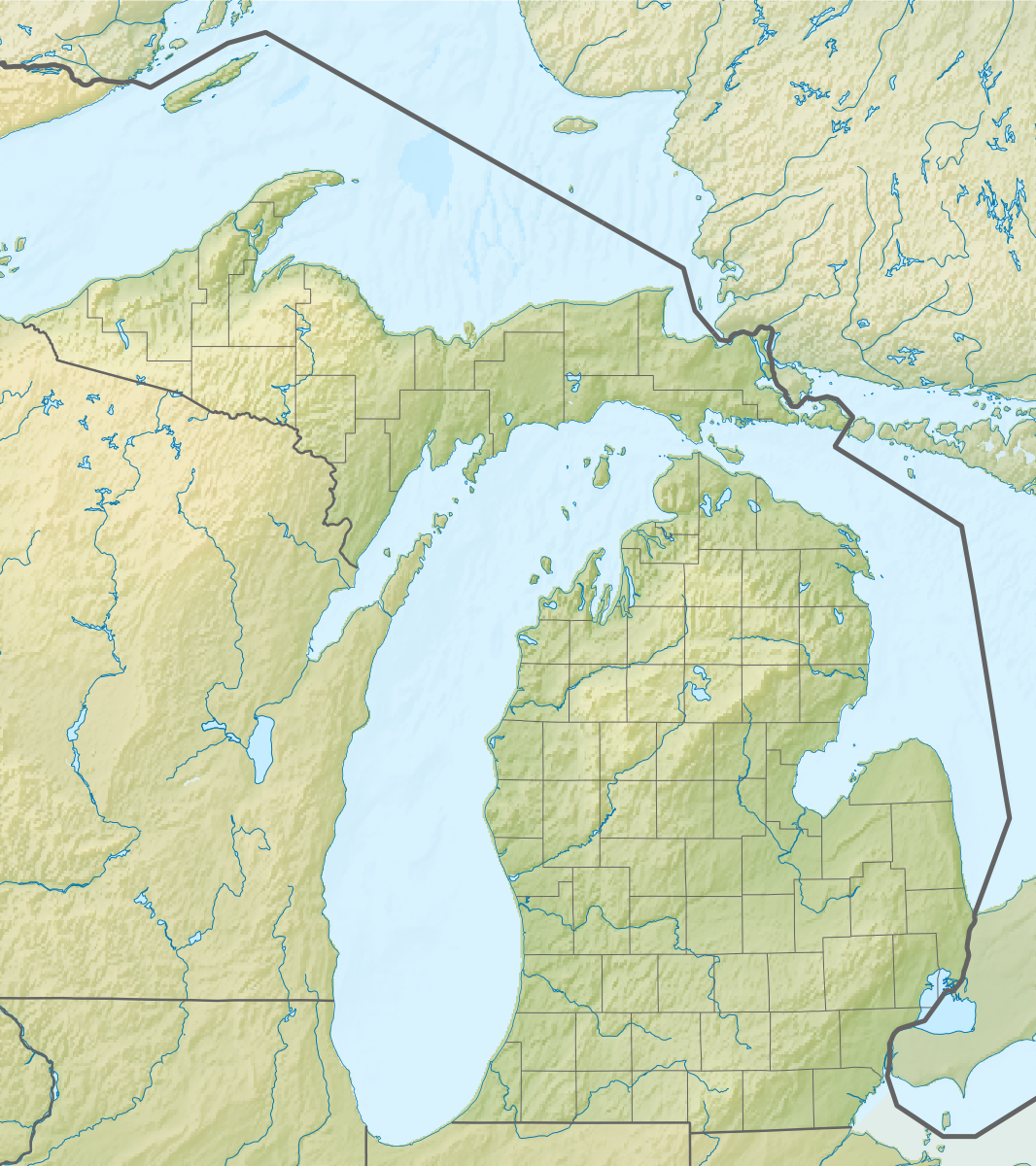
Big, beautiful Michigan does not want to fund its
schools properly. (At least, its government doesn't.)
Map taken from:
http://upload.wikimedia.org/wikipedia/commons/8/89/Relief_map_of_USA_Michigan.png


School Funding Proposals


According to Michigan Parents for Schools, the current proposals for school funding are as follows:


Governor's proposalHouse versionSenate versionInflation projections
Minimum: +$111 (to $7,187), 1.6% increase
Basic (maximum) +$83 (to $8,132), 1.0% increase
Minimum +$112,1.6% increase
Basic +$56, 0.7% increase
Min +$300,4.2% increase
Basic +$150,1.9% increase
2014 forecast: 1.3%
Avg. 2011-13: 2.3%
These increases do not reflect other changes, like "best practices" and pension plan cost changes, which may raise or lower the per-pupil funding available.

Or, as Christine Stead (AAPS school board member) succinctly states in describing the impact on Ann Arbor schools (this helped me visualize the numbers)
One would think that our FY15 will be much better [ed. note: due to the economic recovery] and we can look forward to investing again in one of our most important economic drivers: high quality education. Until you review the state’s proposals ($$ shows the impact for AAPS):
Governor’s proposal: $55,000
  Senate proposal: ($2,171,000)  House proposal: ($1,276,000) 
There is a serious disconnect in how our schools are funded, the state of our economy, and any local community’s ability to do anything about it (currently).
Multiply that by schools around the state. 


Talking Points


Michigan Parents' for Schools talking points:
At the very least, all districts deserve an increase in per-pupil funding that allows them to keep up with inflation. 
These increases should be calculated after the impact of other changes such as shifts in state pension costs, not before.  
Current law specifies that school districts should get a supplement in their per-pupil funding for every student from a family living below the poverty line. But we have never fully funded this provision, and the current spending level only covers half of what the law requires. We need to give our schools the resources they need to fight the impact of poverty, and all schools should be eligible for these funds. 
Right now, local school districts must take money from their general education funds in order to meet their important (and legally required) obligations to provide special education services. Our schools should not have to choose between meeting their moral and legal obligations to students with disabilities and having sufficient resources for all their students.
It's hard not to feel despairing about the impact we can have. 
But we need to keep trying.


Giving Input on Proposal A


Christine Stead is asking for some specific input. Here's why:


John [Austin, President of the State Board of Education], and the State Board of Education, has started a process to seek input from different organizations on the impact of Proposal A and the general funding experience for public education.  The process will shift to take input from community members and school systems over the next few months.  Presentations made so far can be found here.
I will accompany the Superintendent and CFO from the AAPS on June 17th to submit the AAPS experience and recommendations for changes to Proposal A.
If you have specific suggestions, Christine Stead would like to hear from you with your suggestions about changes to Proposal A. She writes, 
Folks can either email me or submit comments/questions to this site [k12christinestead.com]. I’ll do what I can to get answers to questions. I also don’t mind submitting folks’ comments to the State Board of Education as part of our testimony – especially if they lead toward solutions. You can use either email for me: steadc@aaps.k12.mi.us or christine.stead@gmail.com. 

Consider subscribing to Ann Arbor Schools Musings by Email!

Tuesday, June 18, 2013

Michigan School Finance Primer: Part 1 (With Awesome Graphics)

My friend and I were discussing the Ann Arbor schools budget. (I know, wild and crazy, right?) She was saying, "Why can't we do X," and "Why can't we do Y," and I was saying, "It's because of how Michigan's school finance system works." And she said, "It's so confusing. I need a graphic or something."

So here is my attempt at graphics. Over the coming year I will try and do a series of pieces about Michigan's school finance system. Yes, it's all stuff you need to know.

Shelly, these are for you (and for the rest of you too.) Apologies for the white out--my high school friends used to say I could never write a complete page without crossing something out...

This fine drawing done by Ruth Kraut (2013). It's ok to use it if credit is given.
And I think if you want to see it better, just click on it to enlarge it.

This fine drawing done by Ruth Kraut (2013). It's ok to use it if credit is given.
And I should have mentioned in the graphic that in the post-Proposal A
world, the state generally was providing 80% of the school funding.
If you want to see the drawing better, just click on it to enlarge it.


The basics come from a paper done by the Senate Fiscal Agency in 2004 by Kathryn Summers-Coty, Proposal A: Are We Better Off? A Ten-Year Analysis 1993-1994 through 2003-2004. We'll take a closer look at that in a later post, but I found this paper to be stunning. It uses certain assumptions to compare 1993-1994 (all thoroughly described in the paper) and concludes that ten years later,

out of 553 school districts, 28 are better off with Proposal A and 525 are worse off in terms of combined State and local revenue. Essentially, this means that comparing actual 2003-04 State Aid payments plus districts' actual 2003-04 local property tax revenue with estimated State payments and local revenue if Proposal A had not happened, yields less money for 95% of the districts (p. 2, emphases added).


Wednesday, March 17, 2010

Unintended Consequences

I know you've all been waiting for this post. 
At the end of the 1985 reorganization, several schools were closed: Bader, Clinton, Freeman, Lakewood, Newport, and Stone schools. In addition, the K-6 elementary schools became K-5 schools; the 7-9 middle schools became 6-8 schools; and the grade 10-12 schools became 9-12 schools. In addition, the Open School got a School Of Its Own, at Bach.
Now, back in the day--pre-proposal A--decision-making did not take into account the number of students in the district the way that it does today. Of course, overall the size of the district population mattered, but ten students here or there did not make any significant difference. In fact, the five-year forecasts the 1985 committee used showed the elementary school population growing slightly, and the middle and high school populations decreasing slightly. The 1984 total head count was 13,772 students, and the Committee on Excellence used a 1990 projected head count of 12,741 students.
After the decision was made to close the schools, the district had to decide what to do with them, and the decision was made to sell some, and keep others.
Bader (which is in Ann Arbor Hills) was bought by a preschool, the Ann Arbor Hills Child Development Center.
The district held onto Freeman (which is in the Dixboro area), and gave a long-term lease to Go Like The Wind Christian Montessori. Side note: Rec & Ed soccer games are still sometimes played there.
Clinton (which is halfway between Stone School and Bryant, and which abuts Clinton Park) was bought by the Jewish Community Center, and both the JCC preschool and the Hebrew Day School are located there.
The district held onto Lakewood School (on the west side of Ann Arbor near Dolph Park), and reopened it in 2001--at which point it got some fairly extensive renovations. After being closed for 15 years, it probably needed them.
Newport School (on Newport Road) was sold and became the Rudolph Steiner School.
Stone School (at the corner of Stone School and Packard) has been used by the district for various things over the years--for Rec & Ed, for the New School (an alternative high school), and now for another alternative high school, Stone School.
When you close a school, who are potential buyers? For whom is a building like a school perfectly suited? Why, for another school. 
One of the unintended consequences is that, in selling schools to other schools, the district set up competition for itself. This doesn't seem to have been anticipated at all, and in fact--pre-proposal A--what mattered most was whether the community would support the schools, and not the exact number of students in the public schools.

So, for instance, the Rudolph Steiner School started in 1980 with a handful of students, and grew slowly until 1986, when it was able to occupy Newport School. By 1999, the Steiner School had 298 students--the vast majority in their K-8 lower school (313 students K-12, 2009).
In 1985, the Hebrew Day School was in very inadequate space, and had under 50 students. By 1999, the Hebrew Day School had over 100 students (87 students K-5, 2009).
Go Like the Wind Christian Montessori school, which only opened in 1987, had over 100 students by 1999 (101 students K-8, 2009). 
And Ann Arbor Hills Child Development Center goes through age 8, with a K-2 primary school program that in 1999 had 35 students (33 students K-2, 2009).

Of course, not all of those 500 or so students live in Ann Arbor, but probably about 75% of them do. (That is an unscientific number, based largely on the people I know who send their children to these schools.) In addition, at least three of these schools have feeder preschools, so children who get started there are likely to stay there.
Certainly, all this was an unintended consequence.

All of this didn't matter so much then, but it matters a lot more now, when per-pupil counts matter so much--and I feel that in some sense, we gave these schools the freedom to expand. Sure, they might have found space anyway (several of the charters have), but we made it easy for them. Obviously, excess capacity can be a drag on the system. However, there were estimated savings at the time--have they come to pass? I don't know, but if you include the per-pupil costs, I think the closings probably haven't saved money.

And in the "this might be too far-fetched to consider" category, I will add one more possible unintended consequence: the building of Skyline High School and the building of the Ann Arbor Preschool and Family Center. Regarding Skyline, I say this because, today, we still have significant excess capacity at the middle school level. (Remember, this was also true in 1985, and one of the proposals that wasn't implemented included closing a middle school.) At the time, putting sixth graders in the middle schools kept the middle schools at essentially the same size, and adding the ninth graders to the high schools put Huron and Pioneer essentially at capacity. I say that the building of Skyline as an unintended consequence "might be too far-fetched to consider" for two reasons: first, the estimates of student enrollment only went out five years, and the estimates were essentially flat. This turned out not to be the case, at least ten years out, when the fall head count had grown by 1500 students. The other reason is that educational trends can be like bulldozers, and the trend to move to having ninth graders in high schools reached its ascendancy many years ago. I don't think there would be much traction for moving ninth graders back to middle school--at least, I never heard it entertained as a serious suggestion during the whole time that building a new high school was discussed.

In a similar vein, it seems to me that the building of the AAPS preschool center admits the importance of having feeder preschools to the K-12 AAPS program--something these private schools figured out years ago. Yet, at the point at which this was identified as a need, there was no obvious building for locating all of the preschool programs.
[As to what I think about the excess middle school capacity--I think that there is a lot of demand for K-8 schooling, and one of the middle schools could become a K-8 school. But that is a subject for a different post.]

Last, but not least--the planners did not (and I would say, probably could not) have anticipated the ascendancy of charter schools. Charter schools have undoubtedly had an impact on some of the schools' enrollment, particularly in the elementary schools. The Committee on Excellence had a goal of ensuring that all elementary schools have enrollments over 300. In 2009, three elementary schools fell short of that (I'll give Abbott a pass at 297), with Pittsfield School having the lowest enrollment--and my understanding is that at least some of the reason that Pittsfield is so small is due to the fact that charters have attracted many "potentially Pittsfield" students.

So--unintended consequences--is this what you thought I would say?

P.S. Because this is the last post I will write on this for a while (at least I think it is), I just want to say that I believe the Committee on Excellence did a really good job with the information at hand, and the reason is that the process was good. The process was used to the advantage of the school district. The process involved a citizens' committee gathering input from the larger community, bringing a proposal to the School Board, with the administration serving as support for the committee. Read about that process in the report itself. That was then, this was now--let's learn from our past. And if you see any of the members of the Committee around town (some have passed on, but some are still here), you can thank them, because I'm posting the list of members:
1. Mary Austin
2. Ronald Bishop
3. Vincent Carillot
4. Patricia Chapman
5. Susan Doud
6. Cheryl Garnett
7. Leonard Gay
8. George Goodman
9. Charles Kieffer
10. Norma McCuiston
11. R. Griffith McDonald
12. Bettye McDonald
13. Melinda Morris
14. Merrill Nemiroff
15. Duane Renken
16. Ingrid Sheldon
17. Joann Sims
18. Estelle Titiev
19. James Wanty
20. Ronald Woods

Tuesday, February 16, 2016

Understanding the Impact of the Governor's Budget Proposal on Michigan Schools

Michigan Parents for Schools has a detailed summary of the Governor's budget proposal and its impact on Michigan schools.

I'm including a few excerpts here, and then you should really read the whole thing. With these state proposals, the devil is n the details.

Per-pupil funding underlines the distribution of school funds. 


The governor's executive budget recommendation is headlined by a modest increase in per-pupil funding. Districts at the current minimum level of $7,391 - which includes some 60% of all students - would receive $120 more per pupil for their general operating needs. Districts at or above the state maximum (currently $778 higher or $8,169) would get an increase of $60 per pupil.
Districts at the current minimum level of funding: think Manchester and Whitmore Lake.
Districts at or above the state maximum: think Ann Arbor.

Compare this to the year my daughter was born (which is also the year Proposal A started): 

Put another way, the small number of districts which were at the bare minimum spending level when Proposal A took effect in 1994 are still doing better than when they started, adjusted for inflation, but they have not recovered the levels they saw in 2010-11. Districts which started out at the "basic" level of funding ($5,000 in 1994) have lost some ground and are below where they started in 1994, adjusting for inflation, wiping out the gains from the first decade of this century. Districts at the higher end have done even worse: if they received what was the state maximum in 1994 ($6,500), they have lost ground against inflation nearly every year since then and the draft budget would let them buy about 17% less now than they were able to 22 years ago. (Emphasis added. Yes, that describes Ann Arbor.)
Retirement funding significantly affects school district resources.

Costs of the state-run school employee retirement system (MPSERS) continue to have a major impact on the budget. Unfortunately, unlike some other states, Michigan does not cover these costs from other funding sources, but instead uses money from the school aid budget. The cost of funding the retirement system has risen astronomically in recent years, and not because benefits are getting richer. As districts shed teachers and other staff in downsizing, and as more services are privatized, there are fewer employees paying into the system while the number of retirees is growing. . . As a result, contributions equal to about 36% of payroll have to be made by the state and school district employers (employees also make their own contributions). Ten years ago, this rate stood at a little over 16%.  (Emphasis added.)
Who was RIchard Headlee and why should you care?
Image used under a Creative Commons license
and taken from here.

Read the rest here. There is much more.

A lot of people think this stuff is a bit boring. And complicated.

Even if you are one of those people, you should know that it's essential for us to wrap our heads around 20j, the Headlee Amendment, plans for Detroit and Flint schools (among others), funding for charter schools, and how funding for higher education interacts with the School Aid Fund.

They are our schools--but only if we claim them.


Consider subscribing to Ann Arbor Schools Musings by Email!

Tuesday, April 12, 2011

Spy High: Tweeting the Night Away

Well, this is my first experiment with tweeting a meeting. I was at the Skyline High School PTSO meeting and I tweeted the meeting. (You can follow me at twitter.com/schoolsmuse if you like.)
What I've decided to do is paste in my tweets here, and then add some more commentary.

Skyline PTSO meeting starts with a unanimous endorsement of the special ed. millage. Yes!
If you want more information, visit this web site: washtenawfriends.org

Now Sulura Jackson is giving a pitch for security cameras. Says there are fewer community assts. and more students.
If I wondered if this would be a neutral proposal, the answer is now clear--no, it's not.

Says students are in the building after 5 with no adults.
The custodians are there, but of course their job is not student supervision. Students are there, generally, related to after school programs (athletics, theater, robotics...).

Says she read my blog! And wants to address idea of misuse. "Typically" videos are not monitored. (Of course they could be-are pub. record.)
Of course she reads my blog! Doesn't everybody? (Just kidding!) Here she is referring to my comment, in my last post, that in other districts, video cameras have been misused--to "out" kids regarding whom they are kissing; to stalk attractive students; to monitor the actions of racial minorities. So, first of all, I don't find "that will never happen here" to be very convincing, and second of all, the videos are public record. They are FOIA-able.

Says of course we will still have problems.
In other words, they're not going to solve everything. But you already knew that.

Sulura Jackson summarizes it as safe vs. Sorry. I would characterize it as waste of $ and civil rights violation.
In other words, she thinks this will make students and staff safe. I disagree. I think it will give the illusion of safety, but it won't create safety.

Walking a fine line between saying school is safe vs. not safe. Wants to say it is safe now but that it won't be.
Here Ms. Jackson is trying to say that it's safe now, but of course if it is safe now, why do you need surveillance? So then she wants to say that it is unsafe, but wait, she doesn't quite want to say that.

Says school board is the ultimate decider.
I wasn't at the last PTSO meeting, but my friend says she said there that it wouldn't go forward without the support of the PTSO. Now it seems maybe it will go forward in any case? The room seems split.

Funding not in the budget yet and doesn't have an estimate. Doesn't know how much crime went down after Pi/Huron cameras installed.
Here she says the funding is not in the budget. Later she says the funding would come from a "different source," not the general fund. I assume that she means it would come from the building bonds. That might convince me not to vote for those next time. Anyway, if there's building bond money to spend on Skyline, I've got my own wish list. How about removing the banisters from the middle of the stairs so kids can get up and down in time for class? Those were crowded when there were just freshmen in the school! How about getting some BOOKS in the library?! I think there are about 100. (OK, a few more than that, but not many. Try to find a memoir for a class assignment, and good luck with that.)

Parent says at Pioneer crime stayed the same but big fights went down.
This was in response to the question, how did crime change at Pioneer before and after the cameras were put in. This question was first put to Ms. Jackson, who didn't know the answer. Actually, I'm not sure if it was a parent, or the school's police officer, who answered this question.

Wiring at Skyline is already in place.
Presumably this means it would cost less to install the cameras than at Pioneer or Huron. But I'm just guessing there. The square footage might be different.

There is no proposal yet. No policies on how long they last.
Listening to this presentation, I'm having a hard time believing that no proposal has been batted around. The "No policies on how long they last" refers to a question a parent asked as to what the policy would be for how long the video would be kept, and what the policies are at Huron and Pioneer. Ms. Jackson said there was no proposal yet, and she didn't know the policies in the other schools.

Security cameras have not been discussed at a full teacher meeting. Dislikes the term crimes and prefers to call them "code violations."
This was in response to a question about what teachers think. Everyone is using the term crime and Sulura says she dislikes the term.

Wait-we're discussing violating civil rights for "code violations?!" Parent says, are they or aren't they crimes? Ms. Jackson says code viol(ations)--my tweeting characters ran out!
Here is an example of why we "need" security cameras. A student switched the signs of the men's and women's restrooms, causing confusion and in at least one case, embarrassment. This is not a crime, this is a code violation.

Discussing the idea of putting security cameras at Skyline at the PTSO meeting.
I'm getting tweet-happy here, the way radio stations give their call letters.

Parent. If we're talking abt code violations, need to teach students to be citizens. Jackson; doesn't want to be reactive.
Here the parent's point is that if it's not about crime, and it is about "code violations," then this is not about safety, it's about civics. Jackson doesn't want to be reactive.

Student describing gay harrassment. Believes cameras would help but not solve the problem completely.
Now a student is talking about being harrassed because he is gay. This upsets me (and a lot of other people there too!) because I've heard some other stories about LGBT kids being harrassed at Skyline--in fact, that it is the least LGBT-friendly school in the district. I don't know that the school has done a good job bringing in really good speakers and programming on this issue.
However, based on his accounts, I think this harrassment would just move off-camera, if there were cameras. That commonly happens at other schools.

Another tweeter asks me about ethernet in the school and about the foia coordinator for the video footabe.
Liz Margolis is foia coordinator. Question came up of how long video footage is kept. The school is already wired.
(I think she's the foia coordinator. She's the communications director.)

Passionate students. If we react to video isn't that reactive? Students are req'd to be in schools. Crime rate (data provided) very low.
I thought this student had a great point--if you are responding to video, you are still being reactive. Prevention is proactive. The ACLU FOIA'd data about crime rates. They are really low. (No wonder they want to call the issue "code violations!") I'm going to try to figure out if I can upload the data, if I can I'll point you to the right place here.

Parent summarizes statement of Mike Steinberg of @ who says it is a civil rights violation.
That is, that putting in surveillance cameras would be a civil rights violation.

Officer Morales, cameras everywhere. It is a tool to investigate. We don't have time to review & misuse cameras.
Officer Morales is saying that in the greater world, cameras are everywhere, and that he just sees them as a useful tool. He doesn't believe they will be misused because "we don't have time."

Parent: Cameras everywhere, it is reality. Thinks it will help with harassment.
This parent is pro-surveillance cameras.

Ath. Director: he and custodians only one in building here late. Thinks it would help w/ security.
That is the Athletic Director. Goes into the "if it were my child here I'd want cameras here." Honestly, I find that a little patronizing. I have a child here, and I don't want cameras. But I think he might have a child here, and he does! Call it a draw--just don't tell me what I should think. I think most people like to think for themselves.

Jackson: staffing mtg abt more comm assts; funding diff set of funds (I guess bonds); wants to form a committee; if get CAs won't go 4 cams
Ms. Jackson says there is another staffing meeting about adding community assistants--they are the people who patrol the halls. She believes that Skyline will not get additional community assistants even though the school is growing, due to the budget cuts. She sort of implies that if she got the community assistants she wouldn't feel the need to go after the cameras, but another parent (later) told me he got the impression she would go after the surveillance cameras anyway, so I might have mis-tweeted. Anyway she does want to form a committee--apparently of teachers, administrators, students-and then she does add parents after someone asks. She also says she's going to have a "debate" with the students.
I don't actually think she's at all interested in what the parents or students have to say, she's made up her mind. But of course she can't say that.

Refers to Chelsea murder of Piasecki as reason for cameras. That would not have been prevented with cameras!
She says that "all" the comprehensive high schools in the county have cameras except Skyline. (I wonder--is that true?) She says, "Of course" Chelsea has cameras "after what happened." People want to know what happened. She suggests people google it(!). What happened is that the Superintendent was killed, and the principal and the union representative were also shot, by a disgruntled teacher who had been fired (or was being fired?). You can read more about it here. It was tragic, but surveillance cameras wouldn't have made any difference. As she pointed out in the beginning, they're not typically monitored. As a student pointed out, they're typically reactive. There was no question of the identity of the killer, and the killer went to prison. 

Jackson is planning on moving forward with the proposal for video cameras at Skyline.

Just one more addendum--Jackson said that she "couldn't" get the costs without an RFP. That is not true, and what we've seen from our City Council is that RFPs take a whole lot of staff time and pull you very far down a path that you may not want to go down. Sure, if the school board wants to go down that path they can put out an RFP, but way before that some companies could give some ballpark estimates. I think when people see the cost, they might be unhappy.

They should be. Have you seen the interim Superintendent's budget presentation? Find it here. 

Heck, I'm unhappy already. You can contact the school board at boe@aaps.k12.mi.us

Tuesday, June 10, 2014

AAPS Budget Vote Wednesday 6/11/2014: Custodian Outsourcing, State Budget Realities

A Packed AAPS Day on June 11: Planning, Executive, Board Meetings

This coming Wednesday, the Ann Arbor school board is expected to vote on a budget. Front and center will be the question of out-sourcing the positions of custodians.

That question finds itself on the agenda of the Planning Committee first, at 9 a.m. on the 11th.
Location: Balas Administration Building, Main Conference Room
Members: Christine Stead (Chair), Glenn Nelson, Irene Patalan
Then in the evening there is an executive session at 5 p.m. According to the agenda, the purposes of the executive session are:
Closed session of the board for the purposes of:Section 8(h) - considering material exempt from disclosure under attorney/client privilege informationSection 8(c) - strategy and negotiation sessions connected with a collective bargaining agreement, requested by the Superintendent.
 I'm not sure what is going to be part of the discussion there, but it could be related to the custodians since there is a union contract for the custodians (personnel issue) involved. And in addition, the district's budget proposal involves salary freezes for every staff person, and so really there are several unions involved.
Location: Ann Arbor District Library - 4th Floor Conference Room A
343 S. Fifth Ave., Ann Arbor

The regular meeting will begin early, at 6 p.m.

Ann Arbor District Library - 4th Floor Conference Room A
343 S. Fifth Ave., Ann Arbor


This meeting will be Broadcast live on CTN Comcast Channel 18
Replays: Thursday @ 1:30pm, Saturday @ 8am, Sunday @ 1pm
VIEW LIVE STREAMING: http://a2edutv.pegstream.com/

Custodians and the Expense Side of the AAPS Budget

The "fun" will begin with public comment. Right now the Custodial RFP, the Food Service RFP, and the Budget are all scheduled for special or second briefings, and then they are on the Consent Agenda. 
So, first of all:
1. The Custodian RFP has been on a very fast course. The RFPs were due on Monday and the vote is scheduled for tomorrow. The goal is to decide on the cost savings in the budget. This is a special briefing.
The Custodians, meanwhile, have come up with an idea of a "worker co-op" that would save most of the money from the budget [the bulk of the savings come from the district not having to pay for retirement costs]. In fact, the custodians assert that it "could save AAPS more money than it currently projects to save in the draft 2014-15 Budget (first reading) by eliminating 100+ AAPS jobs as there would be additional savings from not having to set aside an $200,000 for unemployment compensation currently shown in the budget."
Let's ask the school board to put the expected savings in the budget, but to table voting on the RFP to see if they can work something out with the custodians. They don't need to vote on the RFP the same night as the budget, and I have argued before that process is really important and the board shouldn't try and rush things through with "special" briefings. [And there are 4 special briefings at this meeting: the custodians' RFP; A2Tech and STEAM construction projects; the Pioneer High School cooler; and MHSAA membership resolution. Really? Do all four of those need to be special briefings?!]
Read about the custodians' idea here in their pre-proposal. 

2. Second of all, an astute reader noted in the comments of this blog the other day, 
Reader comment on this article:
Last Year's Candidate, Brian Osborne, Takes Superintendent Job in New Rochelle, NY

As you see, key decisions are embedded in the budget.
In any case, there is a lot to look at on the expense side of the budget. Email your thoughts to: boe@aaps.k12.mi.us

And/or show up for public commentary or to listen to the budget discussion! It's sure to be an interesting...and long...night.


On the Income Side of the Budget:

A budget was voted out of the state conference committee, 4-1, and according to Gongwer: 

This would provide a $50 per-pupil increase to all districts, with a new equity payment of up to $125 per pupil for districts with a foundation allowance less than $7,251.
The effective minimum allowance would be $7,251 with the basic at $8,099.
The budget in total is higher than what Mr. Snyder and both chambers originally suggested. It is a 4.1 percent increase from the current year budget at $13.87 billion ($114.9 million General Fund, a 51.1 percent decrease).

According to MIRS: 


And Rep. Brandon DILLON (D-Grand Rapids) said lawmakers were moving backwards. Dillon added that under the plan a cyber school in his district would see a $175 per-pupil increase while Detroit public schools would see a $50 increase. 
[As an aside--this proposal--which will probably be signed by the Governor--also says that state schools will need to use the MEAP next year, rather than Smarter Balanced. That's going to be a lot of work in a short time for Michigan Department of Education employees.]

So, I can't really tell--because I can find the agenda for the board meeting [here] BUT AT THE MOMENT THERE ARE NO DOCUMENTS ATTACHED [and yes, I am shouting because it is less than 24 hours before the meeting]--or at least if they are there I don't know where to look for them--

So, I can't really tell based on the last budget documents presented, but I *think* that the district was using the Governor's proposed budget numbers and I *think* the conference proposal is a few dollars better than that--but I'm not sure...

Tomorrow--will you be at the board meeting?

If you can't be there...will you email the board your thoughts? boe@aaps.k12.mi.us


Consider subscribing to Ann Arbor Schools Musings by Email!

Thursday, October 20, 2011

AAPS Board Candidate: Andy Thomas


Many thanks to Andy Thomas for responding to the questionnaire (and being the first one to turn his responses in to me!) If you have further questions for him, you can put them in the comments and perhaps he will answer them. I believe all of the candidates are also willing to answer questions independently if you send them an email or make a phone call to them.
To parents who are wavering between sending their child to the Ann Arbor Public Schools and a charter or private school, what would you say to convince them to try the Ann Arbor Public Schools (besides that they would save money if they are considering private school)?
AAPS offers a wide choice of educational experiences unmatched in Washtenaw County.  From  our neighborhood elementary schools to the innovative curriculum at Ann Arbor Open, from the many opportunities offered at Huron and Pioneer, to the more intimate environment of Community High, from the specialized services offered at Roberto Clemente and Ann Arbor Tech to Skyline’s four career-track magnet programs and the world-class academics of the new International Baccalaureate program, Ann Arbor offers a tremendous range of choices, and outstanding educational programs in multiple disciplines.  Introductory Spanish and instrumental music are offered in all our elementary schools; additional foreign languages and advanced algebra are available in our middle schools.  Our high schools feature numerous advanced placement classes, outstanding programs in the arts and humanities – and a Grammy Award winning music program rated best in the nation.
What specific ideas do you have for engaging parents and taxpayers in AAPS decision-making and governance beyond the individual child-school level?
There are many opportunities for parents, students and community members to participate in AAPS decision-making.  Four community groups – AAPAC, PTO Council, Black Parent-Student Support Group, and Youth Senate –meet regularly with District staff and present reports  at all regularly scheduled Board meetings.  The District has made a practice of scheduling community forums around major areas of concern, including the budget and hiring of the new superintendent.  Community members also participated in the development and revision of the District’s strategic plan.  I would continue these community outreach efforts, but would also encourage outreach specifically aimed at groups who traditionally have not been highly engaged with our schools, including our low-income communities, our foreign-speaking population and various minority groups.  Much of this could be done through establishing regular meetings at various community centers.  The District also needs to do a better job of responding to inquiries from the public in a timely and meaningful way.  The District needs to improve its customer service on all fronts. Personally, I intend to continue engaging the community as much as I can by attending events and community meetings as well as having regular “coffee hours” with constituents.
What ideas do you have for making the AAPS web site more user friendly for parents, staff, students and taxpayers?
The web site underwent a major overhaul last year, resulting in a much cleaner appearance and more logical design.  Unfortunately, there is still a lot of room for improvement.  If you are looking for very general information (such as a copy of the bus schedule, or a listing of schools and their web sites)  it is pretty easy to get.  But if you are looking for more specific information – MEAP test results --  it is very difficult to find (you have to know to look under the “Academics” tab and then under “Assessments”.  And certain information is simply missing.  The staff e-mail directory, for example, is not functional.  The information relating to strategies for closing the achievement gap is nowhere to be found (or if it is, I can’t find it)  There are other gaps.  I would offer three concrete suggestions for improving the site:  First, the buttons that direct people to relevant content (parents, students, staff) need to be more clearly marked as gateways to information. More of the site content ought to be available through those gateways, and we probably ought to make one for the general community as well.  Second, there needs to be a site map.  And third, there should be an organizational chart, with names, phone numbers and e-mail addresses.
Describe your personal approach to district-union negotiations, not just for teachers but also for administrators, custodial staff, etc.  What is your primary goal?
In the face of economic uncertainty, it is important to establish and maintain positive relationships with our unions.  The AAEA, in particular, has really stepped up in terms of supporting innovation, including the U of M partnership, revisions to the teacher evaluation process, and efforts to control health care expenses.  My primary goal is to engage in a partnership with our bargaining groups in which both sides recognize the fiscal constraints, and work together to create win-win solutions.  I do not think it is appropriate or helpful to include BOE representatives in actual contract negotiations, or to hold open negotiation sessions.  My approach would be to give overall direction to our superintendent with regard to what we wish to accomplish, and ask them for regular feedback on the progress of negotiations.
Do you generally support Rick Snyder’s approach to education and education reform?  Do you support any of the listed reforms that he and the legislature have made/proposed?  Such as:
a.     Emergency manager legislature
b.     Changes to the School Aid Fund, including funding colleges as well as K-12 education from the SAF
c.     Changes in the rules around charter schools, including removal of caps on number of charter schools
d.     State-driven teacher evaluation system that erelies on standardized testing  
NO, NO,  NO and NO.
The Emergency Manager legislation seems designed to subvert local control and focuses exclusively on cutting costs rather than providing services.
The use of School Aid Funds for purposes other than K-12 education is a grievous betrayal of the public trust, and a violation of the spirit (if not the letter) of the law as enacted by the people under Proposal A.
We already have a surplus of charter schools, and the record of charters in improving academic performance is spotty, at best. We should focus our efforts on helping traditional school districts serve their students better.
The State is mandating a “one size fits all” evaluation model that is impractical and invalid (just how do you use the MEAP to evaluate a music teacher, or an art teacher, or a PE teacher, or a foreign language teacher, or for that matter, a high school physics or chemistry teacher?) – another example of the State trying to micromanage districts.

At this point, would you call the privatization of transportation services a success or a failure?  (NOTE: This refers to the decision to give transportation services to the WISD, not to the level of service chosen last spring).  If faced with the same question today(should transportation be privatized, and if so to whom), what kind of decision would you make and based on what information?
First, a clarification:  Transportation has NOT been privatized. “Privatization” means contracting services to a private sector for-profit company whose chief motivation is maximizing financial return, rather than serving the best interest of our children.  Transportation has been consolidated under the Washtenaw Intermediate School District, and is thus still subject to public control and scrutiny. 
Many have advocated the consolidation of services (such as transportation) for some time as a way to reduce cost and improve efficiency.  Last year, the transition to WISD went very smoothly, and in fact, many parents told me it was actually better under WISD than under AAPS.  This year has been much more problematic.  WISD has not stepped up to meet the challenge.  We need to work closely with WISD, apply pressure to improve service, and hold them more accountable.  Having said that, many of these problems have already been worked out, and the level of service is improving each day.  I would still make the same decision to consolidate services, based on the amount of money that can be saved through consolidation.  We are the Ann Arbor School District, not the Ann Arbor Transportation Authority.  Our business is education, not transportation.  If you read the entire strategic plan, as well as all the back-up documents, you will not find a single reference to transportation.  Every dollar we save on transportation is a dollar that can be used for our primary mission, providing the best possible education for our children.
What was your most influential K-12 school experience (good or bad)?  How does it influence your approach to the school board?    
It all goes back to the teachers.  When I attended public schools some 50 years ago in St. Joseph, Missouri, we had none of the technology we have today.  Text books were often old and out-of-date.  We had little in the way of a performing arts program.  We had no swimming pool or fancy athletic facilities.  And yet I feel I received a very solid education, mostly through the efforts of a small number of truly extraordinary teachers.  There were more than a few average-to-mediocre teachers, as well, but it a few was a few great ones who taught me how to write coherently and persuasively, to know how to ask the right questions, to love and appreciate great poetry and literature, to be able to solve empirical problems efficiently and objectively, and to see the complexity and ambiguity of national and world events from multiple points of view while challenging the assumption that our side is always right.  Times change, technologies change, the base of knowledge increases exponentially, but these are still the factors that make a great education.  We must never forget the importance of great teachers, or the lasting impact they can have on many lives. 


AddThis